
Harriet Hageman (R-WY)
To prohibit the use of Federal funds to pay reparations issued by international bodies or courts for violations of international law.
A Republican bill with 4 Republican cosponsors · See all 4 cosponsors
Last activity — Referred to the House Committee on Foreign Affairs.
In committee
Introduced and handed to a committee in the chamber it started in.
The committee holds it, and most bills are never heard from again. A hearing or a committee vote would be news; silence is the usual outcome, and it kills the bill without anyone voting against it.
Its path through Congress
- Introduced
- In Committee
What this bill would do
H.R. 5431 is a bill designed to stop the use of Federal funds to pay reparations. These reparations include restitution, compensation, and satisfaction ordered by international courts or bodies for violations of international law. Federal funds cannot be used for these payments unless Congress specifically approves them through an Act of Congress passed on or after this Act's enactment date.
Yes· 3 of 4
- Scored +3
Does this make the government pay for what it commits to?
Ensures Congressional oversight and approval before federal funds are spent on international legal judgments.
- Scored +2
Does this reduce what the federal government spends?
Prohibits the use of federal funds for international reparations payments.
- Scored +2
Does this make what the government does easier for the public to see?
Requires an explicit Act of Congress for reparations payments, increasing transparency of fund usage.
The opposite
- Scored -5
Does this send more money or help to other countries?
Blocks federal payments for international reparations, which could be viewed as a reduction in foreign obligation fulfillment.
- Scored -4
Does this strengthen ties with allied countries?
May strain relations with international bodies and allies by refusing to honor court-ordered reparations.
- Scored -3
Does this favour talking over confrontation abroad?
Limits the executive's ability to resolve international legal disputes through financial satisfaction.
Who it would affect, and how
Potential Positive Impacts for People
- Protection of Federal Funds: By prohibiting payments for reparations issued by international bodies without specific Congressional approval, the bill ensures that Federal funds are not spent unless Congress explicitly agrees to it under Section 1.
Potential Negative Impacts for People
- Restriction of Reparations: The bill prevents the use of Federal funds to provide restitution, compensation, and satisfaction for violations of international law unless a new Act of Congress is passed, as stated in Section 1.
Groups and Interests Ranking
Every group the model scored this bill for, from -10 to +10. Tap or hover a score for the reason it gave.
- National Security And Foreign Policy
- Does this send more money or help to other countries? — Blocks federal payments for international reparations, which could be viewed as a reduction in foreign obligation fulfillment. Does this strengthen ties with allied countries? — May strain relations with international bodies and allies by refusing to honor court-ordered reparations. Does this favour talking over confrontation abroad? — Limits the executive's ability to resolve international legal disputes through financial satisfaction.
- Economy And Finance
- Does this make the government pay for what it commits to? — Ensures Congressional oversight and approval before federal funds are spent on international legal judgments. Does this reduce what the federal government spends? — Prohibits the use of federal funds for international reparations payments. Does this reduce what the federal government owes? — Prevents potential large expenditures on international reparations without specific approval.
- Governance And Ideology
- Does this make what the government does easier for the public to see? — Requires an explicit Act of Congress for reparations payments, increasing transparency of fund usage.
- 10/21/2025
- 1 Cosponsor added.
- 10/3/2025
- 1 Cosponsor added.
- 9/26/2025
- 1 Cosponsor added.
- 9/17/2025
- Referred to the House Committee on Foreign Affairs.
- 1 Cosponsor added.
- Introduced in House
 Warren Davidson
Republican · Ohio
 Scott Perry
Republican · Pennsylvania
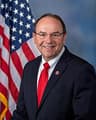 Thomas Tiffany
Republican · Wisconsin
 David Taylor
Republican · Ohio