Bill · H.R. 5427· House(119-HR-5427)
Billionaires Income Tax Act
- Introduced
- 9/17/2025
- Last activity
- 9/17/2025 — Referred to the House Committee on Ways and Means.
- Sponsored by
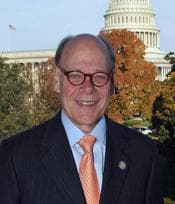
- Steve Cohen
- Cosponsors
- - 33 - 0
- Introduced
- In Committee
What this bill would do
This legislation, known as the Billionaires Income Tax Act, amends the Internal Revenue Code of 1986 to require individuals with extreme wealth or high income to pay taxes on their assets annually. It targets tax planning strategies like buy, borrow, die, which previously allowed ultra-wealthy individuals to defer taxes indefinitely. The bill establishes mark-to-market rules for tradable assets and mandates a deferral recapture amount for nontradable assets and deferred compensation. It also removes specific tax exemptions on small business stock, certain life insurance contracts, and qualified opportunity funds for applicable taxpayers. Finally, the legislation modifies estate and trust rules to prevent the transfer of untaxed appreciated assets to heirs completely tax-free.
Yes· 3 of 7
Does this raise taxes on the highest earners?+10
The bill establishes annual mark-to-market taxation and closes wealth-shielding loopholes specifically targeting individuals with extreme wealth or high income.
Does this reduce what the federal government owes?+8
Imposing annual taxes on billionaire assets and closing major loopholes is expected to significantly increase federal revenue.
Does this make the government pay for what it commits to?+7
By eliminating indefinite tax deferral strategies for the ultra-wealthy, the bill promotes greater tax equity and fiscal responsibility.
The opposite· 3 of 7
Would high-income households be better off under this?-10
The legislation explicitly targets high-income and high-net-worth individuals with mark-to-market taxes and loophole closures.
Would people with substantial wealth be better off under this?-10
Individuals holding assets over $1 billion are directly impacted by annual mandatory tax rules on tradable and nontradable assets.
Would the very wealthiest people be better off under this?-10
The bill is specifically designed to eliminate tax deferral strategies like 'buy, borrow, die' utilized by billionaires.
Who it would affect, and how
Potential Positive Impacts for People
-
Section 1 (Purpose) and Section 101: This provision requires high income and high net worth taxpayers to pay tax on their income annually through mark-to-market taxation, similar to how working people pay taxes on their wages. This ensures that the ultra-wealthy contribute on their appreciating assets rather than holding them tax-free.
-
Section 1 (Purpose) and Section 494: This provision shuts down the loophole allowing ultra-wealthy taxpayers to transfer untaxed appreciated assets to heirs at death so those heirs can sell them tax-free. By treating gifts, bequests, and trust transfers as deemed sales at fair market value, it holds wealthy estates accountable.
-
Section 221 (Section 409B): This provision adds an additional tax and interest charges on deferred compensation and severance pay for applicable taxpayers. This prevents the ultra-wealthy from sheltering massive executive compensation packages from yearly taxation.
Potential Negative Impacts for People
-
Section 101 (Section 492): This provision imposes a deferral recapture amount, which includes charging interest on a deemed tax amount when nontradable covered assets experience an applicable transfer. This could place a heavy financial and administrative burden on taxpayers who must calculate and pay historical interest penalties.
-
Section 222 (Section 72): This provision changes the tax treatment of amounts received under private placement life insurance and annuity contracts held by applicable taxpayers, and repeals the death benefit exclusion under Section 101(k). Families or beneficiaries of applicable taxpayers could face significantly higher tax burdens on insurance payouts and contract withdrawals.
-
Section 231 (Section 1202): This provision eliminates the capital gains exclusion for the sale or exchange of qualified small business stock by an applicable taxpayer, unless acquired before November 30, 2025. This removes a key incentive for wealthy investors backing small businesses.
Groups and Interests Ranking
Every group the model scored this bill for, from -10 to +10. Hover a score for the reason it gave.
- Demographic And Interest Groups
- Good For Low Income Households+2Good For Middle Class Households+2Good For Billionaires-10Good For High Income Households-10Good For High Net Worth Individuals-10Good For Ultra High Net Worth Individuals-10Good For Business Owners-5
- Economy And Finance
- Increases Wealthy Taxes+10Reduces National Debt+8Improves Fiscal Responsibility+7Reduces Estate Tax-9Improves Small Business Support-4
- Governance And Ideology
- Improves Government Transparency+6Increases Federal Power+3
- 6/24/2026
- 1 Cosponsor added.
- 2/23/2026
- 3 Cosponsors added.
- 2/9/2026
- 2 Cosponsors added.
- 9/17/2025
- Sponsor introductory remarks on measure. (CR H4397)
- Referred to the House Committee on Ways and Means.
- 27 Cosponsors added.
- Introduced in House
- 9/16/2025
- Sponsor introductory remarks on measure. (CR E863)
2 bills Congress.gov lists as related to this one — companions in the other chamber, earlier versions, and bills this one absorbed or was folded into.
 Donald Beyer
Democrat · Virginia
 Brendan Boyle
Democrat · Pennsylvania
 Nikki Budzinski
Democrat · Illinois
 Yvette Clarke
Democrat · New York
 Judy Chu
Democrat · California
 Danny Davis
Democrat · Illinois
 Rosa DeLauro
Democrat · Connecticut
 Christopher Deluzio
Democrat · Pennsylvania
 Madeleine Dean
Democrat · Pennsylvania
 Maxine Dexter
Democrat · Oregon
 Dwight Evans
Democrat · Pennsylvania
 Maxwell Frost
Democrat · Florida
 John Garamendi
Democrat · California
 Jesús García
Democrat · Illinois
 Jared Huffman
Democrat · California
 Jonathan Jackson
Democrat · Illinois
 Robin Kelly
Democrat · Illinois
 Zoe Lofgren
Democrat · California
 John Larson
Democrat · Connecticut
 Greg Landsman
Democrat · Ohio
 Summer Lee
Democrat · Pennsylvania
 James McGovern
Democrat · Massachusetts
 Betty McCollum
Democrat · Minnesota
 Kevin Mullin
Democrat · California
 Jerrold Nadler
Democrat · New York
 Eleanor Norton
Democrat · District of Columbia
 Donald Norcross
Democrat · New Jersey
 Ilhan Omar
Democrat · Minnesota
 Delia Ramirez
Democrat · Illinois
 Linda Sánchez
Democrat · California
 Mary Gay Scanlon
Democrat · Pennsylvania
 Lateefah Simon
Democrat · California
 Rashida Tlaib
Democrat · Michigan