Bill · H.R. 5256· House(119-HR-5256)
340B ACCESS Act
- Introduced
- 9/10/2025
- Last activity
- 9/10/2025 — Referred to the Committee on Energy and Commerce, and in addition to the Committee on Ways and Means, for a period to be subsequently determined by the Speaker, in each case for consideration of such provisions as fall within the jurisdiction of the committee concerned.
- Sponsored by
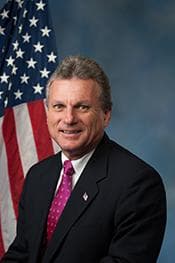
- Earl Carter
- Cosponsors
- - 1 - 0
- Introduced
- In Committee
What this bill would do
The 340B ACCESS Act seeks to reform the 340B drug pricing program by updating definitions and requirements for participating entities. It establishes stricter rules for hospital child sites, contract pharmacies, and nonhospital covered entities to prevent duplicate discounts and drug resale. The bill introduces patient affordability requirements, including sliding fee scales for eligible low-income patients. It also implements new transparency measures, requiring covered entities to report data on drug margins and patient demographics. Additionally, the bill revises eligibility standards for hospitals and introduces civil monetary penalties for noncompliance.
Yes· 3 of 23
Would households on low incomes be better off under this?+9
Directly reduces out-of-pocket costs for drugs to as low as $0 for the poorest patients.
Does this lower the price of prescription medicines?+8
Mandates sliding fee scales and maximum out-of-pocket caps for low-income patients.
Does this make what the government does easier for the public to see?+7
Requires public reporting of drug margins, charity care costs, and patient demographics.
The opposite
Does this make it easier to run a small business?-3
Imposes stricter compliance and reporting requirements on contract pharmacies and covered entities.
Would business owners be better off under this?-2
Increases regulatory burden on pharmacy owners.
Who it would affect, and how
Potential Positive Impacts for People
- Reduced Drug Costs for Low-Income Patients: Hospital covered entities must establish a sliding fee scale to ensure eligible patients pay no more than a maximum out-of-pocket obligation. For those below Federal poverty guidelines, the cost is $0; for those between 100% and 200%, it is the lesser of 20% of the cost or $35 (Section 6(a)(G)(i)-(ii)).
- Affordability Protections at Pharmacies: The bill requires contract pharmacies to provide the same discounts to eligible patients as the covered entities they serve (Section 6(a)(G)(iii)).
- Access for Nonhospital Patients: Certain nonhospital covered entities must provide discounts to ensure eligible patients are not denied access to drugs based on their ability to pay (Section 6(a)(H)(i)).
- Increased Transparency: The Secretary must publish reported data on the public website of the Department of Health and Human Services, showing drug margins and charity care costs for covered entities (Section 10(a)(L)(ii)).
Potential Negative Impacts for People
- Stricter Patient Eligibility: To qualify as a "patient" for discounted pricing, individuals must now meet specific criteria, including having an in-person visit within the past 12 or 24 months depending on the entity type (Section 2(a)(A)(v)).
- Telehealth Restrictions: Prescriptions resulting from telehealth services generally will not qualify for 340B pricing unless a covered entity provider conducted an in-person examination within the preceding 6 months, with limited exceptions (Section 2(a)(B)(i)).
- Limited Pharmacy Access: Certain hospitals, including free-standing cancer hospitals and rural referral centers, are prohibited from using more than 5 contract pharmacies to dispense drugs (Section 5(F)(iii)).
- Stricter Hospital Eligibility: New requirements may lead to the deregistration of hospitals that do not meet revised eligibility standards or rank in the top 40% of certain State lists for urban private nonprofit hospitals (Section 11 and Section 12(A)).
Groups and Interests Ranking
Every group the model scored this bill for, from -10 to +10. Hover a score for the reason it gave.
- Demographic And Interest Groups
- Good For Low Income Households+9Good For Native Americans+4Good For Rural Residents+4Good For African Americans+3Good For Children+3Good For Hispanic Americans+3Good For Immigrants+3Good For Middle Aged+3Good For People With Disabilities+3Good For Retirees+3Good For Seniors+3Good For Young Adults+3Good For Asian Americans+2Good For Middle Class Households+2Good For Urban Residents+2Good For White Americans+2Good For Business Owners-2
- Healthcare
- Reduces Prescription Drug Costs+8Improves Healthcare Access+4
- Governance And Ideology
- Improves Government Transparency+7Increases Federal Power+4
- Social Issues And Justice
- Improves Poverty Reduction+6
- Economy And Finance
- Improves Consumer Protection+5Improves Small Business Support-3
- Environment Energy And Infrastructure
- Improves Rural Development+2
- 9/10/2025
- Referred to the Committee on Energy and Commerce, and in addition to the Committee on Ways and Means, for a period to be subsequently determined by the Speaker, in each case for consideration of such provisions as fall within the jurisdiction of the committee concerned.
- 1 Cosponsor added.
- Introduced in House
 Diana Harshbarger
Republican · Tennessee