Bill · H.R. 5159· House(119-HR-5159)
Nationwide Right to Unionize Act
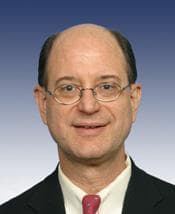
- Introduced
- 9/4/2025
- Last activity
- 9/4/2025 — Referred to the House Committee on Education and Workforce.
- Sponsored by
- Brad Sherman
- Cosponsors
- - 17 - 0
- Introduced
- In Committee
What this bill would do
This bill is called the "Nationwide Right to Unionize Act." It aims to repeal the part of the National Labor Relations Act that allows states to pass laws prohibiting agreements that require labor organization membership as a condition of employment.
Yes· 3 of 5
Would union members be better off under this?+9
Directly enables mandatory membership agreements, increasing union stability and funding.
Does this strengthen the rights of workers to organise?+8
The bill strengthens unions by allowing agreements that require membership as a condition of employment.
Does this give the federal government more power?+7
The bill increases federal authority by preempting state laws that prohibit membership agreements.
The opposite
Does this leave more decisions to the states?-8
The bill specifically repeals the authority of states to enact right-to-work laws.
Would business owners be better off under this?-5
Increases potential labor costs and reduces flexibility in hiring non-union employees.
Does this make it easier to run a small business?-3
Potential for increased labor costs for small businesses due to mandatory union membership agreements.
Who it would affect, and how
Potential Positive Impacts for People
- Removal of state prohibitions on membership agreements: By repealing subsection (b) of section 14 of the National Labor Relations Act, the bill removes the authority for states to ban agreements that require union membership for employment (Section 2).
Potential Negative Impacts for People
- Requirement of labor organization membership: Because the bill removes the authority for states to prohibit agreements requiring membership in a labor organization as a condition of employment, individuals could be required to join a union to be employed (Section 2).
Groups and Interests Ranking
Every group the model scored this bill for, from -10 to +10. Hover a score for the reason it gave.
- Demographic And Interest Groups
- Good For Union Workers+9Good For Low Income Households+3Good For Middle Class Households+2Good For Business Owners-5
- Economy And Finance
- Improves Union Protections+8Improves Small Business Support-3
- Governance And Ideology
- Increases Federal Power+7Increase States Rights-8
- 10/8/2025
- 1 Cosponsor added.
- 10/3/2025
- 1 Cosponsor added.
- 9/4/2025
- Referred to the House Committee on Education and Workforce.
- 15 Cosponsors added.
- Introduced in House
One bill Congress.gov lists as related to this one — companions in the other chamber, earlier versions, and bills this one absorbed or was folded into.
 Julia Brownley
Democrat · California
 Nikki Budzinski
Democrat · Illinois
 Steve Cohen
Democrat · Tennessee
 Sheila Cherfilus-McCormick
Democrat · Florida
 John Garamendi
Democrat · California
 Jimmy Gomez
Democrat · California
 Val Hoyle
Democrat · Oregon
 Stephen Lynch
Democrat · Massachusetts
 James McGovern
Democrat · Massachusetts
 Seth Moulton
Democrat · Massachusetts
 Morgan McGarvey
Democrat · Kentucky
 Seth Magaziner
Democrat · Rhode Island
 Jerrold Nadler
Democrat · New York
 Eleanor Norton
Democrat · District of Columbia
 Scott Peters
Democrat · California
 Jimmy Panetta
Democrat · California
 Paul Tonko
Democrat · New York