Bill · H.R. 5156· House(119-HR-5156)
COUNT Act
- Introduced
- 9/4/2025
- Last activity
- 9/4/2025 — Referred to the Committee on Oversight and Government Reform, and in addition to the Committees on the Judiciary, Homeland Security, Foreign Affairs, Ways and Means, and Energy and Commerce, for a period to be subsequently determined by the Speaker, in each case for consideration of such provisions as fall within the jurisdiction of the committee concerned.
- Sponsored by
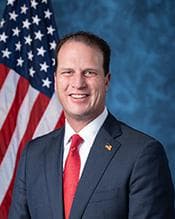
- August Pfluger
- Cosponsors
- - 8 - 0
- Introduced
- In Committee
What this bill would do
The "Citizen Only Updated National Tally Act," or "COUNT Act," directs the Department of Commerce and other federal agencies to collect data on the number of citizens, noncitizens, and illegal aliens in the U.S. Federal agencies must provide the Department of Commerce with administrative records, such as passport and Social Security data, to help determine citizenship status. The bill establishes an interagency working group to aim for citizenship status data for 100 percent of the population. It also requires the Secretary of Commerce to start the process of adding a citizenship question to the 2030 census and other surveys. Additionally, the Department of Commerce will work to get citizenship records from state governments. Finally, the bill ends the use of the differential privacy process by the Bureau of the Census.
Yes
Does this give the federal government more power?+7
The bill mandates that all federal agencies provide records and requires states to comply with data requests.
Does this give the government more power to monitor people inside the country?+6
The bill expands the use of administrative records to track the citizenship status of the entire population.
Does this tighten control of the border?+5
The bill seeks more accurate data to inform policymakers in addressing the crisis of illegal immigration.
The opposite· 3 of 7
Would immigrants be better off under this?-9
The bill specifically targets the identification of noncitizens and illegal aliens for policy evaluation.
Does this protect people from being watched or searched?-8
The bill removes differential privacy and increases interagency data sharing on citizenship status.
Does this give people more control over their personal data?-7
The bill terminates the differential privacy process used by the Census Bureau to protect individual responses.
Who it would affect, and how
Potential Positive Impacts for People
- Informing Policy: Section 2 states that this data is necessary to understand immigration's effects and help policymakers set and evaluate immigration laws and proposals to address illegal immigration.
Potential Negative Impacts for People
- Privacy Changes: Section 4 removes the differential privacy process used by the Bureau of the Census, meaning the Director must find other ways to guarantee that individual responses remain private.
Groups and Interests Ranking
Every group the model scored this bill for, from -10 to +10. Hover a score for the reason it gave.
- Demographic And Interest Groups
- Good For Immigrants-9Good For Hispanic Americans-6Good For Low Income Households-2
- Education And Technology
- Improves Data Privacy-7
- Governance And Ideology
- Increases Federal Power+7Improves Privacy Rights-8Increase States Rights-5
- National Security And Foreign Policy
- Increases Domestic Surveillance+6
- Social Issues And Justice
- Improves Border Security+5Improves Pathway To Citizenship-3
- 10/17/2025
- 1 Cosponsor added.
- 9/15/2025
- 1 Cosponsor added.
- 9/8/2025
- 1 Cosponsor added.
- 9/4/2025
- Referred to the Committee on Oversight and Government Reform, and in addition to the Committees on the Judiciary, Homeland Security, Foreign Affairs, Ways and Means, and Energy and Commerce, for a period to be subsequently determined by the Speaker, in each case for consideration of such provisions as fall within the jurisdiction of the committee concerned.
- 5 Cosponsors added.
- Introduced in House
 James Baird
Republican · Indiana
 Mike Collins
Republican · Georgia
 Neal Dunn
Republican · Florida
 Chuck Edwards
Republican · North Carolina
 Anna Paulina Luna
Republican · Florida
 Barry Moore
Republican · Alabama
 Michael Rulli
Republican · Ohio
 Beth Van Duyne
Republican · Texas