Bill · H.R. 5151· House(119-HR-5151)
Quiet Communities Act of 2025
- Introduced
- 9/4/2025
- Last activity
- 9/4/2025 — Referred to the Committee on Energy and Commerce, and in addition to the Committee on Transportation and Infrastructure, for a period to be subsequently determined by the Speaker, in each case for consideration of such provisions as fall within the jurisdiction of the committee concerned.
- Sponsored by
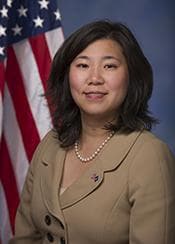
- Grace Meng
- Cosponsors
- - 25 - 1
- Introduced
- In Committee
What this bill would do
The Quiet Communities Act of 2025 aims to reestablish the Office of Noise Abatement and Control within the Environmental Protection Agency. This office will focus on researching noise impacts on health, providing technical assistance and grants to state and local programs, and educating the public. The bill also requires a specific study on aircraft noise and its effects on communities. It amends the Noise Control Act of 1972 regarding grants and authorizes $25 million annually from 2026 through 2030.
Yes· 3 of 26
Does this better protect air, water and wildlife?+6
The bill specifically addresses and aims to reduce noise pollution as an environmental hazard.
Would people in cities be better off under this?+5
Urban areas suffer most from vehicular and aircraft noise; the bill provides tools to mitigate this.
Does this put more money into medical research?+5
The bill explicitly mandates a national noise control research program and aircraft noise study.
The opposite
Does this reduce what the federal government spends?-2
The bill increases government spending by reestablishing a defunct office.
Does this reduce what the federal government owes?-1
The bill authorizes additional government spending of $25 million annually.
Who it would affect, and how
Potential Positive Impacts for People
-
Support for Local Noise Control: The bill provides states with technical assistance and grants to develop noise control programs, including funds for purchasing equipment for local communities (Section 3(b)(1)).
-
Health Research: A national noise control research program will be conducted to assess how noise from various sources affects mental and physical health (Section 3(b)(2)).
-
Public Education: The office will create and share information and educational materials regarding the physical and mental effects of noise through publications, radio, television, and school curricula (Section 3(b)(4)).
-
Aircraft Noise Mitigation: The bill mandates a study on aircraft noise to determine the threshold where health impacts are felt and provide recommendations for new measures to mitigate noise for communities near airports (Section 3(d)).
-
Environmental Assessment: A national program will identify trends in noise exposure and determine if noise abatement actions are working, specifically around airports, railroad facilities, and highways (Section 3(b)(3)).
Potential Negative Impacts for People
- No Negative Impacts Listed: The provided text does not contain provisions that describe negative consequences or burdens for individuals or groups of people.
Groups and Interests Ranking
Every group the model scored this bill for, from -10 to +10. Hover a score for the reason it gave.
- Demographic And Interest Groups
- Good For Urban Residents+5Good For Children+4Good For Low Income Households+4Good For People With Disabilities+4Good For Students+4Good For African Americans+3Good For High Income Households+3Good For Hispanic Americans+3Good For Middle Aged+3Good For Middle Class Households+3Good For Retirees+3Good For Seniors+3Good For Young Adults+3Good For Business Owners+1Good For Rural Residents+1
- Healthcare
- Increases Research Funding+5Improves Mental Health Access+2Improves Healthcare Access+1
- Environment Energy And Infrastructure
- Improves Environmental Protections+6
- Governance And Ideology
- Increases Federal Power+3Increase States Rights+2
- Education And Technology
- Increases Scientific Research Funding+4
- Social Issues And Justice
- Improves Disability Rights+3
- Economy And Finance
- Improves Consumer Protection+2Improves Economic Growth+1Increases Job Creation+1Reduces Government Spending-2Reduces National Debt-1
- 8/24/2026
- 1 Cosponsor added.
- 9/30/2025
- 1 Cosponsor added.
- 9/19/2025
- 1 Cosponsor added.
- 9/16/2025
- 1 Cosponsor added.
- 9/9/2025
- 1 Cosponsor added.
- 9/8/2025
- 4 Cosponsors added.
- 9/4/2025
- Referred to the Committee on Energy and Commerce, and in addition to the Committee on Transportation and Infrastructure, for a period to be subsequently determined by the Speaker, in each case for consideration of such provisions as fall within the jurisdiction of the committee concerned.
- 17 Cosponsors added.
- Introduced in House
 Julia Brownley
Democrat · California
 Donald Beyer
Democrat · Virginia
 Ed Case
Democrat · Hawaii
 Steve Cohen
Democrat · Tennessee
 Judy Chu
Democrat · California
 Salud Carbajal
Democrat · California
 Sean Casten
Democrat · Illinois
 Brian Fitzpatrick
Republican · Pennsylvania
 Daniel Goldman
Democrat · New York
 Laura Gillen
Democrat · New York
 Stephen Lynch
Democrat · Massachusetts
 Mike Levin
Democrat · California
 George Latimer
Democrat · New York
 Kevin Mullin
Democrat · California
 Dave Min
Democrat · California
 Jerrold Nadler
Democrat · New York
 Eleanor Norton
Democrat · District of Columbia
 Joe Neguse
Democrat · Colorado
 Alexandria Ocasio-Cortez
Democrat · New York
 Scott Peters
Democrat · California
 Brittany Pettersen
Democrat · Colorado
 Brad Sherman
Democrat · California
 Thomas Suozzi
Democrat · New York
 Suhas Subramanyam
Democrat · Virginia
 Shri Thanedar
Democrat · Michigan
 Juan Vargas
Democrat · California