Bill · H.R. 5112· House(119-HR-5112)
Tipped Worker Protection Act
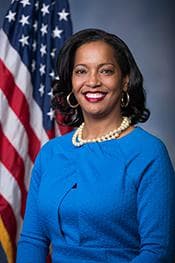
- Introduced
- 9/3/2025
- Last activity
- 9/3/2025 — Referred to the Committee on Education and Workforce, and in addition to the Committee on Ways and Means, for a period to be subsequently determined by the Speaker, in each case for consideration of such provisions as fall within the jurisdiction of the committee concerned.
- Sponsored by
- Jahana Hayes
- Cosponsors
- - 13 - 0
- Introduced
- In Committee
What this bill would do
The Tipped Worker Protection Act aims to eliminate the separate, lower minimum wage for tipped employees. It establishes a transition period where the cash wage increases annually by $1.50 until it reaches the standard minimum wage. The bill also expands the definition of tips to include certain mandatory customer charges. Additionally, it sets rules for tip pooling, prohibits employers from keeping tips or using them for transaction fees, and requires transparency regarding service charges.
Yes· 3 of 7
Does this raise the lowest wage an employer may pay?+8
Eliminates the lower tipped minimum wage and gradually increases the cash wage to the standard minimum wage.
Would households on low incomes be better off under this?+7
Directly increases the guaranteed earnings for low-wage tipped workers.
Is this likely to lift people out of poverty?+6
Increases base income for tipped workers, who are often in lower-income brackets.
The opposite
Would business owners be better off under this?-6
Increases operational costs for hospitality and service industry owners.
Does this make it easier to run a small business?-5
Increases labor costs for businesses that rely on tipped employees during the transition period.
Does this leave more decisions to the states?-2
Reduces state flexibility by setting a higher federal floor for tipped wages.
Who it would affect, and how
Potential Positive Impacts for People
-
Higher Base Wages: Tipped employees will eventually be paid the full minimum wage set in section 6(a)(1) rather than a lower tipped rate (Section 2(a)(1)).
-
Protection of Tips: Employers are prohibited from keeping employee tips for any purpose, including using them to cover credit card transaction fees (Section 3(c)).
-
Democratic Tip Pooling: Non-supervisory employees can vote to establish or modify a tip pooling system if 30 percent request a vote and 51 percent approve (Section 3(d)(i)).
-
Transparency in Service Charges: Employers must disclose the reason for mandatory charges and exactly how much of that charge will be paid to employees (Section 3(e)(i)).
-
Expanded Tip Definition: Mandatory charges that lead a customer to believe the amount will be paid to the employee are now legally considered tips (Section 3(a)).
Potential Negative Impacts for People
-
Increased Employer Costs: Employers will be required to pay a higher cash wage during the transition period, starting at $3.60 an hour and increasing annually (Section 2(b)(1)).
-
Stricter Tipped Employee Criteria: An employee will no longer be considered a "tipped employee" if they spend more than 20 percent of their hours performing non-tipped duties (Section 2(b)(2)).
Groups and Interests Ranking
Every group the model scored this bill for, from -10 to +10. Hover a score for the reason it gave.
- Demographic And Interest Groups
- Good For Low Income Households+7Good For Students+5Good For Young Adults+5Good For Business Owners-6
- Economy And Finance
- Increases Minimum Wage+8Improves Consumer Protection+3Improves Small Business Support-5
- Social Issues And Justice
- Improves Poverty Reduction+6
- Governance And Ideology
- Increases Federal Power+2Increase States Rights-2
- 8/20/2026
- 1 Cosponsor added.
- 8/10/2026
- 1 Cosponsor added.
- 9/8/2025
- 1 Cosponsor added.
- 9/3/2025
- Referred to the Committee on Education and Workforce, and in addition to the Committee on Ways and Means, for a period to be subsequently determined by the Speaker, in each case for consideration of such provisions as fall within the jurisdiction of the committee concerned.
- 10 Cosponsors added.
- Introduced in House
 Alma Adams
Democrat · North Carolina
 Yassamin Ansari
Democrat · Arizona
 Suzanne Bonamici
Democrat · Oregon
 André Carson
Democrat · Indiana
 Troy Carter
Democrat · Louisiana
 Jonathan Jackson
Democrat · Illinois
 Ted Lieu
Democrat · California
 Summer Lee
Democrat · Pennsylvania
 Emily Randall
Democrat · Washington
 Andrea Salinas
Democrat · Oregon
 Dina Titus
Democrat · Nevada
 Mark Takano
Democrat · California
 Shri Thanedar
Democrat · Michigan