
A Democratic bill with 4 Democratic cosponsors · See all 4 cosponsors
Last activity — Referred to the House Committee on the Judiciary.
In committee
Introduced and handed to a committee in the chamber it started in.
The committee holds it, and most bills are never heard from again. A hearing or a committee vote would be news; silence is the usual outcome, and it kills the bill without anyone voting against it.
Its path through Congress
- Introduced
- In Committee
What this bill would do
The Strengthening Our Workforce Act of 2025 allows the Secretary of Homeland Security to grant conditional lawful permanent residency to certain aliens. Eligible individuals must have been present in the U.S. as of January 1, 2024, and have worked at least 100 days in a covered profession. This conditional status lasts for two years and includes employment authorization. After this period, the status can be adjusted to lawful permanent residency provided the person pays a fee and passes a background check. This process is not subject to worldwide numerical limits.
Yes· 3 of 29
- Scored +10
Would immigrants be better off under this?
Provides a critical pathway to legal residency and employment authorization.
- Scored +9
Would Hispanic Americans be better off under this?
Extremely positive as a large portion of the target population for this bill is Hispanic/Latino.
- Scored +9
Does this make it easier for immigrants already here to become citizens?
Creates a direct conditional and then permanent residency pathway for eligible aliens.
The opposite
No question was scored the opposite.
Who it would affect, and how
Potential Positive Impacts for People
- Pathway to Residency: Certain aliens can adjust their status to conditional lawful permanent residents and eventually to lawful permanent residents (Section 2(a) and 2(e)).
- Work Authorization: People granted this status receive employment authorization concurrently (Section 2(b)).
- Broad Eligibility: The bill includes people without lawful status, those with DACA, or nonimmigrants with employment authorization who were present on January 1, 2024 (Section 2(c)(3)).
- Exemption from Caps: Those adjusting status under this act are not subject to worldwide numerical limitations (Section 2(f)).
- Humanitarian Waivers: The Secretary can waive certain grounds of inadmissibility for family unity, humanitarian purposes, or the public interest (Section 2(c)(6) and 2(g)(2)).
- Flexible Criminal Bars: The bill excludes minor traffic offenses and certain cannabis-related offenses from the criminal bars to eligibility (Section 2(g)(1)(B)).
Potential Negative Impacts for People
- Financial Burden: Eligible individuals are required to pay fees established by the Secretary both for the initial application and for the final adjustment of status (Section 2(c)(2) and 2(e)(2)).
- Strict Residency and Work Requirements: Recipients must remain continuously physically present in the U.S. and maintain at least 100 days of annual employment in a covered profession for two consecutive years (Section 2(d)(1) and 2(d)(2)).
- Legal Vulnerability: Individuals with this status remain subject to all grounds of deportability under section 237 (Section 2(d)(3)).
- Criminal Disqualifications: People convicted of any felony or certain combinations of misdemeanors are generally ineligible for this status (Section 2(g)(1)(B)).
Groups and Interests Ranking
Every group the model scored this bill for, from -10 to +10. Tap or hover a score for the reason it gave.
- Demographic And Interest Groups
- Would immigrants be better off under this? — Provides a critical pathway to legal residency and employment authorization. Would Hispanic Americans be better off under this? — Extremely positive as a large portion of the target population for this bill is Hispanic/Latino. Would households on low incomes be better off under this? — Provides legal status and work authorization to low-wage workers in essential sectors. Would people in their twenties and thirties be better off under this? — Directly benefits young adults under DACA with a path to permanent residency. Would people in middle age be better off under this? — Benefits working-age adults in covered professions. Would children be better off under this? — Beneficial for children of eligible adults, specifically those under DACA. Would farmers be better off under this? — Stabilizes the agricultural labor force by legalizing workers. Would students be better off under this? — Beneficial for students under DACA. Would business owners be better off under this? — Ensures a more stable and legally compliant labor pool for business owners in covered sectors. Would men be better off under this? — Positive impact for men working in covered professions, especially construction and agriculture. Would people in rural areas be better off under this? — Positive impact for rural agricultural and processing workers. Would people in cities be better off under this? — Positive impact for urban service and hospitality workers. Would women be better off under this? — Positive impact for women working in covered professions, especially domestic and healthcare work. Would Black Americans be better off under this? — Positive impact for eligible individuals within this demographic. Would Asian Americans be better off under this? — Positive impact for eligible individuals within this demographic.
- Social Issues And Justice
- Does this make it easier for immigrants already here to become citizens? — Creates a direct conditional and then permanent residency pathway for eligible aliens. Is this likely to lift people out of poverty? — Work authorization and legal status typically lead to higher earning potential and economic stability. Does this narrow racial gaps in how people are treated? — Provides legal status to many marginalized immigrant populations. Does this make child care cost less? — Stabilizes the childcare workforce by providing residency paths for domestic and family care workers. Does this make housing cost less? — Provides legal status to construction and housing workers, potentially stabilizing the labor supply. Is this likely to reduce homelessness? — Legal status and employment authorization reduce the risk of homelessness for eligible aliens.
- Economy And Finance
- Is this likely to grow the economy? — Legalizes and stabilizes a significant portion of the essential workforce, supporting economic productivity. Does this make it easier to run a small business? — Helps small businesses in covered professions maintain a legal and stable workforce. Is this likely to create jobs? — Provides legal work authorization to a segment of the workforce, potentially increasing formal employment.
- Environment Energy And Infrastructure
- Does this invest in rural communities? — Supports agricultural and rural labor forces by providing a path to legal status. Does this improve help for people hit by a disaster? — Includes disaster recovery and reconstruction workers in the eligibility for residency.
- Governance And Ideology
- Does this protect the right to fair treatment by the courts? — Provides a structured legal process for status adjustment rather than leaving individuals in legal limbo. Does this give the federal government more power? — Grants the Secretary of Homeland Security broad authority to adjust alien status.
- Healthcare
- Does this make health care easier to get in general? — Supports the healthcare workforce by providing a pathway to residency for healthcare workers.
- 9/2/2025
- Referred to the House Committee on the Judiciary.
- 4 Cosponsors added.
- Introduced in House
 Angie Craig
Democrat · Minnesota
 Delia Ramirez
Democrat · Illinois
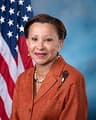 Nydia Velázquez
Democrat · New York
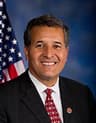 Juan Vargas
Democrat · California