Bill · H.R. 5086· House(119-HR-5086)
SkyFoundry Act of 2025
- Introduced
- 9/2/2025
- Last activity
- 9/2/2025 — Referred to the Committee on Armed Services, and in addition to the Committee on Financial Services, for a period to be subsequently determined by the Speaker, in each case for consideration of such provisions as fall within the jurisdiction of the committee concerned.
- Sponsored by
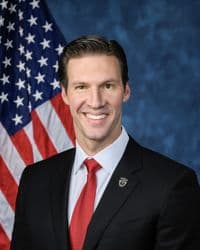
- Pat Harrigan
- Cosponsors
- - 0 - 1
- Introduced
- In Committee
What this bill would do
The SkyFoundry Act of 2025 requires the Secretary of Defense to create the SkyFoundry Program for the rapid development, testing, and scalable manufacture of small unmanned aircraft systems. The program will be managed by the Secretary of the Army as part of the Defense Industrial Resilience Consortium. It consists of a government-owned innovation facility and a production facility capable of producing 1,000,000 units annually. The bill allows for public-private partnerships and the use of alternative acquisition mechanisms to speed up production. Additionally, it mandates that the United States retains intellectual property rights for developed technologies. The President or Secretary of Defense will also use the Defense Production Act to support the domestic industrial base for these systems.
Yes· 3 of 18
Would people in rural areas be better off under this?+5
The requirement for facilities to be at Army Depots likely places them in rural or outlying areas, bringing jobs and infrastructure.
Is this likely to create jobs?+5
The establishment of an innovation and a massive production facility for 1 million units annually will create manufacturing and technical jobs.
Does this put more money into scientific research?+5
The creation of a government-owned innovation facility specifically for R&D of autonomous systems increases research funding.
The opposite· 3 of 7
Does this reduce what is spent on the military?-5
The bill mandates the establishment of expensive new facilities and the mass production of drones.
Does this reduce what the federal government spends?-3
The bill mandates the creation of new facilities and the scale-up of industrial capacity, requiring significant federal investment.
Does this make what the government does easier for the public to see?-3
The authority to waive regulatory requirements and internal procedures potentially reduces transparency and oversight.
Who it would affect, and how
Potential Positive Impacts for People
-
Support for Domestic Industry: By using the Defense Production Act to prioritize domestic industrial base capacity, the bill supports U.S.-based production of unmanned aircraft systems and autonomous systems (Section 2(g)).
-
Collaboration Opportunities: The bill allows the Secretary to enter into public-private partnership agreements with nonprofit entities, academic institutions, and private industry (Section 2(d)(2)).
-
Government Control of Technology: The requirement for the U.S. to retain intellectual property and technical data rights ensures the government can continue production and competitive procurement of the systems (Section 2(f)).
Potential Negative Impacts for People
-
Bypassing Standard Procedures: The Secretary or Secretary of the Army is given the power to waive or modify Department of Defense regulatory requirements and internal procedures, which could remove standard oversight to speed up the program (Section 2(h)).
-
Specific Site Requirements: The strict requirements for the production facility site—such as needing 15,000 acres and being within 50 miles of four States—significantly limit where these facilities can be located (Section 2(e)(3)).
Groups and Interests Ranking
Every group the model scored this bill for, from -10 to +10. Hover a score for the reason it gave.
- Demographic And Interest Groups
- Good For Rural Residents+5Good For Business Owners+4Good For Students+4Good For Middle Class Households+3Good For Union Workers+3Good For Young Adults+3Good For Low Income Households+2Good For Middle Aged+2Good For Veterans+2
- Economy And Finance
- Increases Job Creation+5Improves Economic Growth+4Improves Small Business Support+3Reduces Government Spending-3Improves Fiscal Responsibility-2Reduces National Debt-2
- Education And Technology
- Increases Scientific Research Funding+5
- Social Issues And Justice
- Improves Border Security+2
- Environment Energy And Infrastructure
- Improves Rural Development+3Improves Environmental Protections-2
- Governance And Ideology
- Increases Federal Power+4Improves Government Transparency-3Improves Privacy Rights-2
- National Security And Foreign Policy
- Increases Counter Terrorism Funding+3Increases Domestic Surveillance+2Reduces Military Spending-5
- 10/10/2025
- 1 Cosponsor added.
- 9/2/2025
- Referred to the Committee on Armed Services, and in addition to the Committee on Financial Services, for a period to be subsequently determined by the Speaker, in each case for consideration of such provisions as fall within the jurisdiction of the committee concerned.
- Introduced in House
One bill Congress.gov lists as related to this one — companions in the other chamber, earlier versions, and bills this one absorbed or was folded into.
 Eugene Vindman
Democrat · Virginia