Bill · H.R. 4980· House(119-HR-4980)
BITE Act
- Introduced
- 8/15/2025
- Last activity
- 8/15/2025 — Referred to the House Committee on Energy and Commerce.
- Sponsored by
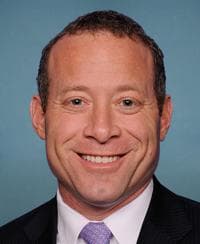
- Josh Gottheimer
- Cosponsors
- - 4 - 6
- Introduced
- In Committee
What this bill would do
This bill, known as the "BITE Act," aims to create a comprehensive national system to prevent diseases spread by vectors. The Secretary of Health and Human Services would be responsible for establishing and maintaining this system. Key features include a professional identification service for ticks, mosquitoes, and fleas. It also incorporates an artificial intelligence-enhanced early warning system to predict disease activity and provide real-time alerts. Additionally, the system utilizes insurance claims and emergency room surveillance to detect outbreaks. Finally, the act focuses on public education and a specific goal to reduce Lyme disease by 25 percent by 2035.
Yes· 3 of 7
Does this make the country readier for the next outbreak?+5
The bill creates a comprehensive national system for tracking and predicting disease activity through AI and surveillance.
Does this make health care easier to get in general?+3
The establishment of an early warning system and identification service provides better public health information and risk alerts.
Does this put more money into scientific research?+3
The bill utilizes artificial intelligence and data integration to predict disease activity and habitat changes.
The opposite
No question was scored the opposite.
Who it would affect, and how
Potential Positive Impacts for People
-
Access to Vector Information: The creation of a professional identification service will provide relevant information on ticks, mosquitoes, and fleas to both civilians and the Department of Defense (Section 2(b)(1)).
-
Early Warning System: An artificial intelligence-enhanced system will predict disease activity using weather, habitat, and wildlife data to deliver real-time, location-based risk alerts (Section 2(b)(2)).
-
Outbreak Detection: Using insurance claims surveillance and monitoring emergency room visits can help detect disease outbreaks earlier than traditional methods (Section 2(b)(3) and Section 2(b)(4)).
-
Public Education: The system will provide targeted prevention messaging through schools, workplaces, media, and community organizations (Section 2(b)(5)).
-
Lyme Disease Reduction: The act sets a specific target to reduce Lyme disease by 25 percent by the year 2035 (Section 2(b)(6)(A)).
-
Military Readiness: The system aims to enhance military readiness through early detection and ecosystem health (Section 2(b)(6)(B)).
Potential Negative Impacts for People
- No negative impacts or burdens are explicitly mentioned in the provided text.
Groups and Interests Ranking
Every group the model scored this bill for, from -10 to +10. Hover a score for the reason it gave.
- Healthcare
- Improves Pandemic Preparedness+5Improves Healthcare Access+3Increases Medicaid Funding+2
- Education And Technology
- Increases Scientific Research Funding+3
- Environment Energy And Infrastructure
- Improves Environmental Protections+3
- Demographic And Interest Groups
- Good For Veterans+2
- National Security And Foreign Policy
- Improves Veterans Benefits+2
- 8/24/2026
- 1 Cosponsor added.
- 5/12/2026
- 1 Cosponsor added.
- 1/8/2026
- 1 Cosponsor added.
- 12/18/2025
- 1 Cosponsor added.
- 10/8/2025
- 1 Cosponsor added.
- 9/30/2025
- 1 Cosponsor added.
- 9/16/2025
- 1 Cosponsor added.
- 8/19/2025
- 2 Cosponsors added.
- 8/15/2025
- Referred to the House Committee on Energy and Commerce.
- 1 Cosponsor added.
- Introduced in House
 Don Bacon
Republican · Nebraska
 Robert Bresnahan
Republican · Pennsylvania
 André Carson
Democrat · Indiana
 Brian Fitzpatrick
Republican · Pennsylvania
 William Keating
Democrat · Massachusetts
 Thomas Kean
Republican · New Jersey
 Michael Lawler
Republican · New York
 Seth Magaziner
Democrat · Rhode Island
 Ryan Mackenzie
Republican · Pennsylvania
 John Mannion
Democrat · New York