Bill · H.R. 4977· House(119-HR-4977)
Connected MOM Act
- Introduced
- 8/15/2025
- Last activity
- 8/15/2025 — Referred to the House Committee on Energy and Commerce.
- Sponsored by
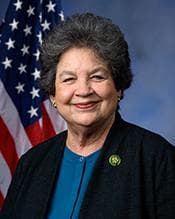
- Lois Frankel
- Cosponsors
- - 7 - 5
- Introduced
- In Committee
What this bill would do
This bill, known as the "Connected MOM Act," aims to improve health outcomes for pregnant and postpartum women in State Medicaid programs. It directs the Secretary of Health and Human Services to research how remote physiologic devices are covered by various states. The report must identify existing barriers and limitations regarding the coverage of these devices. It also includes specific examples like pulse oximeters, blood pressure cuffs, scales, and blood glucose monitors. Finally, the Secretary is required to update State Medicaid resources, such as telehealth toolkits, based on the report's recommendations.
Yes· 3 of 6
Would women be better off under this?+5
The bill specifically targets improved health outcomes for pregnant and postpartum women via improved medical device coverage.
Does this make health care easier to get in general?+5
The bill aims to improve maternal and child health outcomes by identifying barriers to essential remote monitoring medical devices.
Would households on low incomes be better off under this?+4
The bill focuses on improving healthcare access for those enrolled in State Medicaid programs.
The opposite
No question was scored the opposite.
Who it would affect, and how
Potential Positive Impacts for People
-
Improved Maternal and Child Health Outcomes: The bill seeks to improve health outcomes for pregnant and postpartum women enrolled in State Medicaid programs by addressing coverage barriers for remote physiologic devices (Section 2(a)).
-
Increased Access to Monitoring Tools: By identifying and addressing barriers, the bill looks to improve coverage for essential devices such as pulse oximeters, blood pressure cuffs, scales, and blood glucose monitors (Section 2(a)).
-
Better State Resources: The Secretary will update resources like State Medicaid telehealth toolkits to align with new recommendations, which can help State Medicaid programs better serve patients (Section 2(b)).
Potential Negative Impacts for People
- No negative impacts or burdens are explicitly stated in the provided text.
Groups and Interests Ranking
Every group the model scored this bill for, from -10 to +10. Hover a score for the reason it gave.
- Demographic And Interest Groups
- Good For Women+5Good For Low Income Households+4Good For Children+3
- Healthcare
- Improves Healthcare Access+5Increases Medicaid Funding+3
- Social Issues And Justice
- Improves Poverty Reduction+1
- 4/6/2026
- 1 Cosponsor added.
- 2/9/2026
- 1 Cosponsor added.
- 10/28/2025
- 1 Cosponsor added.
- 10/24/2025
- 1 Cosponsor added.
- 10/14/2025
- 1 Cosponsor added.
- 10/8/2025
- 1 Cosponsor added.
- 9/18/2025
- 1 Cosponsor added.
- 9/15/2025
- 1 Cosponsor added.
- 9/11/2025
- 1 Cosponsor added.
- 8/15/2025
- Referred to the House Committee on Energy and Commerce.
- 3 Cosponsors added.
- Introduced in House
One bill Congress.gov lists as related to this one — companions in the other chamber, earlier versions, and bills this one absorbed or was folded into.
 Kathy Castor
Democrat · Florida
 Brian Fitzpatrick
Republican · Pennsylvania
 Shomari Figures
Democrat · Alabama
 Stephen Lynch
Democrat · Massachusetts
 Julia Letlow
Republican · Louisiana
 Michael Lawler
Republican · New York
 Lucy McBath
Democrat · Georgia
 Sarah McBride
Democrat · Delaware
 Zachary Nunn
Republican · Iowa
 Emily Randall
Democrat · Washington
 Maria Salazar
Republican · Florida
 James Walkinshaw
Democrat · Virginia