Bill · H.R. 4915· House(119-HR-4915)
Election Mail Act
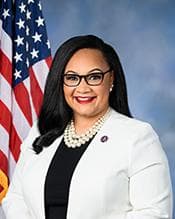
- Introduced
- 8/5/2025
- Last activity
- 8/5/2025 — Referred to the Committee on House Administration, and in addition to the Committee on Oversight and Government Reform, for a period to be subsequently determined by the Speaker, in each case for consideration of such provisions as fall within the jurisdiction of the committee concerned.
- Sponsored by
- Nikema Williams
- Cosponsors
- - 54 - 0
- Introduced
- In Committee
What this bill would do
The bill is called the Election Mail Act and focuses on improving procedures and requirements related to election mail for federal elections. It requires the Postal Service to process and clear ballots from postal facilities on the same day they are received. States and jurisdictions must provide return envelopes with intelligent mail barcodes for mailed ballots unless they use an alternative tracking system. The Postal Service is required to postmark ballot envelopes with the mailing date and ensure specific visibility standards like the Official Election Mail logo are used. Election mail will be treated as first-class mail, completed ballots will be carried free of postage, and operational changes that restrict mail delivery are banned 120 days before an election. Additionally, the Postmaster General must consult annually with Indian Tribes on voting barriers, and states must accept mailed ballots postmarked by election day if received within seven days after the election.
Yes· 3 of 4
Does this make elections run better?+7
The bill significantly improves election integrity and reliability through better mail handling and tracking.
Does this make casting a ballot easier in practice?+6
Mandating same-day processing and prohibiting operational changes near elections increases the reliability of voting access.
Would Native Americans be better off under this?+6
The bill specifically addresses voting barriers through required annual consultation with Indian Tribes.
The opposite
No question was scored the opposite.
Who it would affect, and how
Potential Positive Impacts for People
-
Section 2 ensures that the Postal Service processes and clears any ballot from a post office or postal facility on the same day it is received, which helps speed up the delivery of votes.
-
Section 3 requires states and jurisdictions to provide return envelopes with intelligent mail barcodes for federal election ballots, making it easier for voters to track their ballots through the mail.
-
Section 4 requires the Postal Service to postmark ballot envelopes with the mailing date, giving clear proof of when the ballot was mailed.
-
Section 5 states that completed absentee and mail-in ballots will be carried free of postage, saving voters money on mailing costs.
-
Section 6 requires the Postmaster General to consult annually with Indian Tribes regarding postal issues that present barriers to voting for eligible voters living on Indian lands, helping to address specific community needs.
-
Section 7 ensures that states and local election officials cannot refuse to accept a mailed ballot if it is postmarked on or before election day and received within seven days after the election, giving voters a fairer chance for their votes to count.
Potential Negative Impacts for People
- There are no explicit negative impacts, burdens, or consequences for individuals or groups of people mentioned in the provided text of the bill.
Groups and Interests Ranking
Every group the model scored this bill for, from -10 to +10. Hover a score for the reason it gave.
- Social Issues And Justice
- Improves Voting Access+6Improves Voting Rights+5
- Governance And Ideology
- Improves Electoral Process+7
- Demographic And Interest Groups
- Good For Native Americans+6
- 9/21/2026
- 1 Cosponsor added.
- 9/15/2026
- 1 Cosponsor added.
- 3/25/2026
- 1 Cosponsor added.
- 10/3/2025
- 2 Cosponsors added.
- 9/19/2025
- 1 Cosponsor added.
- 8/5/2025
- Referred to the Committee on House Administration, and in addition to the Committee on Oversight and Government Reform, for a period to be subsequently determined by the Speaker, in each case for consideration of such provisions as fall within the jurisdiction of the committee concerned.
- 48 Cosponsors added.
- Introduced in House
One bill Congress.gov lists as related to this one — companions in the other chamber, earlier versions, and bills this one absorbed or was folded into.
 Yassamin Ansari
Democrat · Arizona
 Shontel Brown
Democrat · Ohio
 Becca Balint
Democrat · Vermont
 Wesley Bell
Democrat · Missouri
 Ed Case
Democrat · Hawaii
 Emanuel Cleaver
Democrat · Missouri
 Yvette Clarke
Democrat · New York
 André Carson
Democrat · Indiana
 Sean Casten
Democrat · Illinois
 Angie Craig
Democrat · Minnesota
 Sheila Cherfilus-McCormick
Democrat · Florida
 Jasmine Crockett
Democrat · Texas
 Lloyd Doggett
Democrat · Texas
 Christopher Deluzio
Democrat · Pennsylvania
 Suzan DelBene
Democrat · Washington
 Dwight Evans
Democrat · Pennsylvania
 Sarah Elfreth
Democrat · Maryland
 Cleo Fields
Democrat · Louisiana
 Shomari Figures
Democrat · Alabama
 Al Green
Democrat · Texas
 Jesús García
Democrat · Illinois
 Jahana Hayes
Democrat · Connecticut
 Henry Johnson
Democrat · Georgia
 Jonathan Jackson
Democrat · Illinois
 Robin Kelly
Democrat · Illinois
 Raja Krishnamoorthi
Democrat · Illinois
 Sydney Kamlager-Dove
Democrat · California
 Stephen Lynch
Democrat · Massachusetts
 Summer Lee
Democrat · Pennsylvania
 George Latimer
Democrat · New York
 Kweisi Mfume
Democrat · Maryland
 Gregory Meeks
Democrat · New York
 Seth Moulton
Democrat · Massachusetts
 Seth Magaziner
Democrat · Rhode Island
 Kevin Mullin
Democrat · California
 Jennifer McClellan
Democrat · Virginia
 LaMonica McIver
Democrat · New Jersey
 April McClain Delaney
Democrat · Maryland
 Dave Min
Democrat · California
 Eleanor Norton
Democrat · District of Columbia
 Ayanna Pressley
Democrat · Massachusetts
 Delia Ramirez
Democrat · Illinois
 Robert Scott
Democrat · Virginia
 Janice Schakowsky
Democrat · Illinois
 Marilyn Strickland
Democrat · Washington
 Terri Sewell
Democrat · Alabama
 Emilia Sykes
Democrat · Ohio
 Andrea Salinas
Democrat · Oregon
 Lateefah Simon
Democrat · California
 Bennie Thompson
Democrat · Mississippi
 Paul Tonko
Democrat · New York
 Rashida Tlaib
Democrat · Michigan
 Ritchie Torres
Democrat · New York
 Shri Thanedar
Democrat · Michigan