Bill · H.R. 4914· House(119-HR-4914)
Unhoused Voter Opportunity Through Elections Act
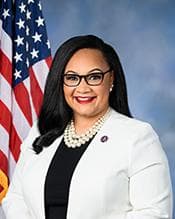
- Introduced
- 8/5/2025
- Last activity
- 8/5/2025 — Referred to the Committee on House Administration, and in addition to the Committees on Financial Services, and the Judiciary, for a period to be subsequently determined by the Speaker, in each case for consideration of such provisions as fall within the jurisdiction of the committee concerned.
- Sponsored by
- Nikema Williams
- Cosponsors
- - 51 - 0
- Introduced
- In Committee
What this bill would do
The "Unhoused VOTE Act" aims to remove barriers that prevent unhoused individuals from registering to vote and participating in Federal elections. It prohibits States from using nontraditional abodes, such as shelters or street locations, to deny voting rights. The bill establishes protections regarding ballot drop boxes, residence documentation, and identification requirements. It also mandates outreach efforts via official websites and notifications to shelters and social services. Additionally, the Act creates a grant program through the Election Assistance Commission to support voting access activities. These provisions are intended to take effect six months after the bill's enactment.
Yes· 3 of 6
Does this make casting a ballot easier in practice?+9
The bill enhances access through requirements for accessible drop boxes, targeted outreach to shelters, and mobile voting center grants.
Does this protect the right to vote?+8
The bill removes barriers to voter registration and voting for unhoused individuals by allowing nontraditional residences and flexible identification.
Would households on low incomes be better off under this?+7
The bill specifically facilitates the political participation of unhoused and low-income individuals.
The opposite
No question was scored the opposite.
Who it would affect, and how
Potential Positive Impacts for People
-
Improved Voting Access via Documentation Flexibility: The bill allows individuals to meet residence requirements through a written attestation signed under penalty of perjury, and permits the use of identification issued by entities of the criminal justice system. (Sec. 322)
-
Expanded Residence Options: Unhoused individuals can use a shelter as their residence for voting purposes or use an unsheltered street location as their place of residence on applications. (Sec. 322)
-
Enhanced Voter Information: Election officials are required to provide clear, accessible information on official websites, including in languages other than English, regarding how to register and vote. (Sec. 323)
-
Improved Ballot Accessibility: Jurisdictions that use drop boxes must ensure they are available for in-person use, accessible, and clearly labeled, with locations determined by considering the needs of unhoused individuals. (Sec. 321)
-
Targeted Outreach and Notification: Chief State election officials must notify homeless shelters and social service agencies of voter registration deadlines and election dates. (Sec. 323)
-
Financial Support for Voting Programs: A grant program is established to fund activities such as operating mobile voting centers and providing direct outreach to unhoused individuals. (Sec. 301)
Potential Negative Impacts for People
- No negative impacts or burdens are explicitly detailed in the provided text.
Groups and Interests Ranking
Every group the model scored this bill for, from -10 to +10. Hover a score for the reason it gave.
- Social Issues And Justice
- Improves Voting Access+9Improves Voting Rights+8Improves Poverty Reduction+2
- Demographic And Interest Groups
- Good For Low Income Households+7Good For Urban Residents+2
- Governance And Ideology
- Improves Government Transparency+3
- 10/1/2026
- 1 Cosponsor added.
- 3/25/2026
- 1 Cosponsor added.
- 10/3/2025
- 2 Cosponsors added.
- 8/5/2025
- Referred to the Committee on House Administration, and in addition to the Committees on Financial Services, and the Judiciary, for a period to be subsequently determined by the Speaker, in each case for consideration of such provisions as fall within the jurisdiction of the committee concerned.
- 47 Cosponsors added.
- Introduced in House
 Yassamin Ansari
Democrat · Arizona
 Shontel Brown
Democrat · Ohio
 Becca Balint
Democrat · Vermont
 Wesley Bell
Democrat · Missouri
 Emanuel Cleaver
Democrat · Missouri
 Yvette Clarke
Democrat · New York
 André Carson
Democrat · Indiana
 Sean Casten
Democrat · Illinois
 Troy Carter
Democrat · Louisiana
 Sheila Cherfilus-McCormick
Democrat · Florida
 Jasmine Crockett
Democrat · Texas
 Lloyd Doggett
Democrat · Texas
 Christopher Deluzio
Democrat · Pennsylvania
 Suzan DelBene
Democrat · Washington
 Dwight Evans
Democrat · Pennsylvania
 Sarah Elfreth
Democrat · Maryland
 Cleo Fields
Democrat · Louisiana
 Shomari Figures
Democrat · Alabama
 Al Green
Democrat · Texas
 Jesús García
Democrat · Illinois
 Henry Johnson
Democrat · Georgia
 Jonathan Jackson
Democrat · Illinois
 Julie Johnson
Democrat · Texas
 Robin Kelly
Democrat · Illinois
 Raja Krishnamoorthi
Democrat · Illinois
 Sydney Kamlager-Dove
Democrat · California
 John Larson
Democrat · Connecticut
 Stephen Lynch
Democrat · Massachusetts
 Summer Lee
Democrat · Pennsylvania
 Kweisi Mfume
Democrat · Maryland
 Gregory Meeks
Democrat · New York
 Gwen Moore
Democrat · Wisconsin
 Seth Magaziner
Democrat · Rhode Island
 Kevin Mullin
Democrat · California
 Jennifer McClellan
Democrat · Virginia
 LaMonica McIver
Democrat · New Jersey
 Eleanor Norton
Democrat · District of Columbia
 Ayanna Pressley
Democrat · Massachusetts
 Delia Ramirez
Democrat · Illinois
 Robert Scott
Democrat · Virginia
 Janice Schakowsky
Democrat · Illinois
 Marilyn Strickland
Democrat · Washington
 Terri Sewell
Democrat · Alabama
 Emilia Sykes
Democrat · Ohio
 Andrea Salinas
Democrat · Oregon
 Lateefah Simon
Democrat · California
 Bennie Thompson
Democrat · Mississippi
 Paul Tonko
Democrat · New York
 Rashida Tlaib
Democrat · Michigan
 Shri Thanedar
Democrat · Michigan
 Marc Veasey
Democrat · Texas