Bill · H.R. 4911· House(119-HR-4911)
POLL Act
- Introduced
- 8/5/2025
- Last activity
- 8/5/2025 — Referred to the House Committee on House Administration.
- Sponsored by
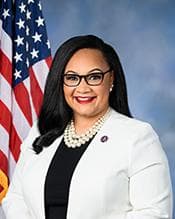
- Nikema Williams
- Cosponsors
- - 39 - 0
- Introduced
- In Committee
What this bill would do
The "People Over Long Lines Act" (or "POLL Act") aims to amend the Help America Vote Act of 2002 to prevent long wait times for voters in Federal elections. It requires States to implement and submit plans to ensure waiting times at polling places stay under 30 minutes. The bill establishes a process for the Attorney General to implement remedial plans in jurisdictions with excessive wait times. It also mandates minimum requirements for voting systems, poll workers, and election resources. Furthermore, it prohibits high-ranking State election officials from participating in political campaigns. Finally, it provides federal payments to States to help meet these new requirements.
Yes· 3 of 11
Would people with disabilities be better off under this?+8
The bill explicitly requires state plans to include measures that ensure equitable waiting times for voters with disabilities.
Does this protect the right to vote?+8
The act aims to protect the fundamental right to vote by preventing unreasonable waiting times at polling places.
Would Black Americans be better off under this?+7
The bill addresses historical disparities in wait times that disproportionately affect Black neighborhoods.
The opposite
No question was scored the opposite.
Who it would affect, and how
Potential Positive Impacts for People
-
Reduced Waiting Times: The bill requires States to implement measures to ensure a waiting time of less than 30 minutes at any polling place (Section 3(a)(1)). This aims to protect voters from the economic costs and discouragement caused by long lines (Section 2(6)).
-
Protection for Vulnerable Groups: The plan must include measures to ensure equitable waiting times for all voters, specifically including voters with disabilities (Section 3(a)(1)).
-
Emergency Voting Options: In the event of equipment failure or other circumstances causing unreasonable delays, individuals can request an emergency paper ballot to ensure they can cast their vote (Section 3(a)(4)(1)).
-
Accountability Through Legal Action: The bill creates a private right of action, allowing aggrieved individuals to sue for civil penalties if they are forced to wait more than 30 minutes (Section 3(b)).
-
Standardized Resource Distribution: The Attorney General will issue standards to ensure a uniform and nondiscriminatory distribution of voting systems and poll workers, taking into account factors like the needs of disabled voters and those with limited English proficiency (Section 4(b)(1)).
-
Increased Election Integrity: The act prohibits chief State election administration officials from taking an active part in political management or campaigns for Federal offices, which helps prevent the use of official authority to interfere with elections (Section 5(a)).
Potential Negative Impacts for People
-
Requirement for State Remedial Plans: Jurisdictions that experience substantial numbers of voters waiting more than 60 minutes may be forced to comply with a remedial plan established by the Attorney General (Section 3(a)(2)(A)).
-
Mandatory Resource Allocation: States are required to provide a minimum number of voting systems, poll workers, and other election resources, which must be implemented by January 1, 2027 (Section 4(a)(1)).
-
Constraints on Election Officials: Chief State election administration officials are prohibited from participating in political management or campaigns, which includes serving on an authorized committee of a candidate (Section 5(a)).
Groups and Interests Ranking
Every group the model scored this bill for, from -10 to +10. Hover a score for the reason it gave.
- Demographic And Interest Groups
- Good For People With Disabilities+8Good For African Americans+7Good For Hispanic Americans+7Good For Low Income Households+6Good For Seniors+5Good For Urban Residents+4Good For Young Adults+4
- Social Issues And Justice
- Improves Voting Rights+8Improves Disability Rights+7
- Governance And Ideology
- Improves Government Transparency+5
- Economy And Finance
- Increases Job Creation+1
- 10/3/2025
- 1 Cosponsor added.
- 8/5/2025
- Referred to the House Committee on House Administration.
- 38 Cosponsors added.
- Introduced in House
 Yassamin Ansari
Democrat · Arizona
 Shontel Brown
Democrat · Ohio
 Wesley Bell
Democrat · Missouri
 Yvette Clarke
Democrat · New York
 André Carson
Democrat · Indiana
 Sheila Cherfilus-McCormick
Democrat · Florida
 Jasmine Crockett
Democrat · Texas
 Lloyd Doggett
Democrat · Texas
 Christopher Deluzio
Democrat · Pennsylvania
 Suzan DelBene
Democrat · Washington
 Dwight Evans
Democrat · Pennsylvania
 Cleo Fields
Democrat · Louisiana
 Shomari Figures
Democrat · Alabama
 Al Green
Democrat · Texas
 Jesús García
Democrat · Illinois
 Henry Johnson
Democrat · Georgia
 Jonathan Jackson
Democrat · Illinois
 Raja Krishnamoorthi
Democrat · Illinois
 Sydney Kamlager-Dove
Democrat · California
 Stephen Lynch
Democrat · Massachusetts
 Summer Lee
Democrat · Pennsylvania
 Kweisi Mfume
Democrat · Maryland
 Gregory Meeks
Democrat · New York
 Kevin Mullin
Democrat · California
 Jennifer McClellan
Democrat · Virginia
 LaMonica McIver
Democrat · New Jersey
 Eleanor Norton
Democrat · District of Columbia
 Delia Ramirez
Democrat · Illinois
 Robert Scott
Democrat · Virginia
 Janice Schakowsky
Democrat · Illinois
 Marilyn Strickland
Democrat · Washington
 Terri Sewell
Democrat · Alabama
 Emilia Sykes
Democrat · Ohio
 Andrea Salinas
Democrat · Oregon
 Lateefah Simon
Democrat · California
 Bennie Thompson
Democrat · Mississippi
 Paul Tonko
Democrat · New York
 Rashida Tlaib
Democrat · Michigan
 Shri Thanedar
Democrat · Michigan