Bill · H.R. 4890· House(119-HR-4890)
Ending Trading and Holdings in Congressional Stocks (ETHICS) Act
- Introduced
- 8/5/2025
- Last activity
- 8/5/2025 — Referred to the Committee on House Administration, and in addition to the Committees on Oversight and Government Reform, and the Judiciary, for a period to be subsequently determined by the Speaker, in each case for consideration of such provisions as fall within the jurisdiction of the committee concerned.
- Sponsored by
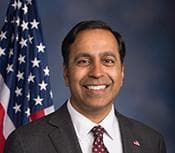
- Raja Krishnamoorthi
- Cosponsors
- - 10 - 6
- Introduced
- In Committee
What this bill would do
The ETHICS Act aims to prevent Members of Congress, their spouses, and dependent children from trading or owning certain stocks and investments. Under this bill, covered individuals must divest these assets or place them into qualified blind trusts. The legislation establishes strict rules for managing these assets and requires mandatory reporting to supervising ethics offices. It also implements civil penalties for non-compliance with these new regulations. Finally, the bill mandates that financial disclosure data be made available to the public through searchable online databases.
Yes· 3 of 6
Does this make what the government does easier for the public to see?+10
The bill requires financial disclosure data to be made available in a searchable, downloadable, and public online database.
Does this make the government pay for what it commits to?+1
The bill establishes strict financial reporting and civil penalties for Members of Congress to ensure compliance with ethical standards.
Does this make it easier to run a small business?+1
The bill specifically allows for the continued holding of interests in small business concerns, including family farms or ranches, subject to ethics approval.
The opposite
Does this protect people from being watched or searched?-3
The bill increases public access to the detailed financial and transaction data of Members of Congress and their families.
Would high-income households be better off under this?-2
The bill imposes significant divestiture requirements and civil penalties on high-earning public officials.
Who it would affect, and how
Potential Positive Impacts for People
-
Increased Transparency: The bill requires supervising ethics offices to publish certifications, qualified blind trust agreements, and notices of extensions or amendments on their public websites (Section 2, Sec. 13163(f)(1)).
-
Enhanced Public Access to Data: Financial disclosure reports and transaction data must be made available via official House and Senate databases in a manner that allows the public to search, sort, and download the information (Section 4).
-
Protection of Diversified Investments: Individuals are still permitted to own and trade diversified mutual funds and publicly traded, diversified exchange-traded funds (Section 2, Sec. 13161(a)(2) and Section 2, Sec. 13163(i)).
-
Small Business and Farming Protections: The bill allows for the holding of interests in small business concerns, including family farms or ranches, provided an ethics office determines there is no conflict of interest (Section 2, Sec. 13161(b)(2)(ix)).
Potential Negative Impacts for People
-
Restrictions on Investment Activity: Members of Congress, their spouses, and dependent children are prohibited from purchasing covered investments, such as securities, commodities, or futures, once the act is enacted (Section 2, Sec. 13162(a)).
-
Significant Financial Penalties: Members of Congress may face civil penalties equal to the greater of their monthly pay or 10 percent of the value of the un-divested investment if they fail to comply with divestiture or trust requirements (Section 2, Sec. 13163(g)(1)(B)).
-
Strict Divestiture Requirements: Covered persons are required to divest or place assets into qualified blind trusts within specific, limited timeframes (Section 2, Sec. 13163(a)(2)).
-
Mandatory Reporting of Federal Payments: Covered persons must report any "covered payment" from the Federal Government, such as loans, contracts, or grants, within 30 to 45 days (Section 2, Sec. 13163(f)(4)).
Groups and Interests Ranking
Every group the model scored this bill for, from -10 to +10. Hover a score for the reason it gave.
- Governance And Ideology
- Improves Government Transparency+10Improves Privacy Rights-3
- Economy And Finance
- Improves Fiscal Responsibility+1Improves Small Business Support+1
- Demographic And Interest Groups
- Good For Farmers+1Good For High Income Households-2
- Education And Technology
- Improves Internet Access+1
- Social Issues And Justice
- Improves Poverty Reduction+1
- 12/9/2025
- 1 Cosponsor added.
- 9/11/2025
- 1 Cosponsor added.
- 9/4/2025
- 1 Cosponsor added.
- 9/2/2025
- 1 Cosponsor added.
- 8/22/2025
- 4 Cosponsors added.
- 8/15/2025
- 1 Cosponsor added.
- 8/8/2025
- 2 Cosponsors added.
- 8/5/2025
- Referred to the Committee on House Administration, and in addition to the Committees on Oversight and Government Reform, and the Judiciary, for a period to be subsequently determined by the Speaker, in each case for consideration of such provisions as fall within the jurisdiction of the committee concerned.
- 5 Cosponsors added.
- Introduced in House
 Michael Cloud
Republican · Texas
 Christopher Deluzio
Democrat · Pennsylvania
 Brian Fitzpatrick
Republican · Pennsylvania
 John Joyce
Republican · Pennsylvania
 Ro Khanna
Democrat · California
 Jennifer Kiggans
Republican · Virginia
 Mike Levin
Democrat · California
 Michael Lawler
Republican · New York
 Seth Moulton
Democrat · Massachusetts
 Seth Magaziner
Democrat · Rhode Island
 Joe Neguse
Democrat · Colorado
 Alexandria Ocasio-Cortez
Democrat · New York
 Josh Riley
Democrat · New York
 Mary Gay Scanlon
Democrat · Pennsylvania
 Keith Self
Republican · Texas
 Paul Tonko
Democrat · New York