Bill · H.R. 4872· House(119-HR-4872)
Ending Homelessness Act of 2025
- Introduced
- 8/5/2025
- Last activity
- 8/5/2025 — Referred to the Committee on Financial Services, and in addition to the Committee on the Judiciary, for a period to be subsequently determined by the Speaker, in each case for consideration of such provisions as fall within the jurisdiction of the committee concerned.
- Sponsored by
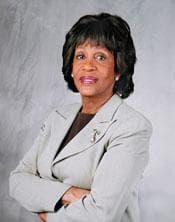
- Maxine Waters
- Cosponsors
- - 26 - 0
- Introduced
- In Committee
What this bill would do
The Ending Homelessness Act of 2025 aims to establish a path to end homelessness in the United States. It focuses on expanding the housing choice voucher program and creating an entitlement program for such vouchers. The bill also implements protections against housing discrimination based on source of income. Additionally, it provides significant funding for emergency relief to address unmet needs and supports the Housing Trust Fund. Various provisions are included to align health and housing systems and provide outreach services.
Yes· 3 of 17
Would households on low incomes be better off under this?+10
The bill directly expands rental assistance and protections for extremely low-income families.
Does this make housing cost less?+10
The bill significantly expands voucher programs, creates an entitlement for rental assistance, and provides massive funding for permanent supportive housing.
Is this likely to reduce homelessness?+10
The entire purpose of the act is to provide a path to end homelessness through increased funding and voucher expansion.
The opposite
No question was scored the opposite.
Who it would affect, and how
Potential Positive Impacts for People
-
Expansion of Housing Assistance: The bill allocates funds to provide incremental vouchers for families with incomes not exceeding 50 percent of the maximum income limitation for extremely low-income families, or extremely low-income families receiving supplemental security income (Section 2).
-
Entitlement to Rental Assistance: Starting in fiscal year 2029, the bill establishes an entitlement for qualified families to receive tenant-based rental assistance (Section 3).
-
Protection Against Discrimination: The bill amends the Fair Housing Act to prohibit housing discrimination based on "source of income," which includes rental vouchers, Social Security benefits, and other forms of financial assistance (Section 5).
-
Emergency Relief for High-Need Areas: $1,000,000,000 is appropriated annually from 2025 through 2029 for emergency relief grants to address unmet needs in jurisdictions with the highest need (Section 6).
-
Support for Permanent Housing: Grant recipients are required to use at least 75 percent of their funds for permanent supportive housing, including capital costs, rental subsidies, and services (Section 6).
-
Outreach and Coordination: $100,000,000 is appropriated annually from 2025 through 2029 to provide outreach and coordinate services for people who are or were homeless (Section 6).
-
Affordability Commitments: The bill requires that rental housing units receive legally binding commitments ensuring that a family's rent contribution does not exceed 30 percent of their adjusted income (Section 7).
Potential Negative Impacts for People
-
Security Deposit Requirements: While agencies may use assistance for security deposits, the Secretary may establish limitations on the amount used for these purposes (Section 3).
-
Requirement to Return Funds: The Secretary requires the return of any amounts used for a security deposit upon the termination of a family's residence in a dwelling unit (Section 3).
-
Restrictions on Grant Use: Collaborative applicants receiving emergency funds are limited to using no more than 5 percent of the grant for administrative expenses (Section 6).
-
Restrictions on Outreach Staff: Funds provided for outreach and coordination services cannot be used for any law enforcement purposes (Section 6).
Groups and Interests Ranking
Every group the model scored this bill for, from -10 to +10. Hover a score for the reason it gave.
- Demographic And Interest Groups
- Good For Low Income Households+10Good For Urban Residents+5Good For People With Disabilities+4Good For Veterans+4Good For Children+3Good For Native Americans+3Good For Rural Residents+3Good For Seniors+3
- Social Issues And Justice
- Improves Affordable Housing+10Reduces Homelessness+10Improves Poverty Reduction+6Improves Disability Rights+3Improves Policing Reform+2
- Governance And Ideology
- Increases Federal Power+4Improves Government Transparency+2
- Healthcare
- Improves Mental Health Access+3Improves Healthcare Access+2
- 10/5/2026
- 2 Cosponsors added.
- 9/14/2026
- 1 Cosponsor added.
- 6/2/2026
- 1 Cosponsor added.
- 3/26/2026
- 1 Cosponsor added.
- 3/18/2026
- 4 Cosponsors added.
- 11/28/2025
- 1 Cosponsor added.
- 11/25/2025
- 2 Cosponsors added.
- 8/12/2025
- 14 Cosponsors added.
- 8/5/2025
- Referred to the Committee on Financial Services, and in addition to the Committee on the Judiciary, for a period to be subsequently determined by the Speaker, in each case for consideration of such provisions as fall within the jurisdiction of the committee concerned.
- Introduced in House
 Yassamin Ansari
Democrat · Arizona
 Joyce Beatty
Democrat · Ohio
 Wesley Bell
Democrat · Missouri
 Everton Blair
Democrat · Georgia
 Emanuel Cleaver
Democrat · Missouri
 Judy Chu
Democrat · California
 Salud Carbajal
Democrat · California
 Greg Casar
Democrat · Texas
 Dwight Evans
Democrat · Pennsylvania
 Al Green
Democrat · Texas
 Sylvia Garcia
Democrat · Texas
 Adelita Grijalva
Democrat · Arizona
 Ted Lieu
Democrat · California
 James McGovern
Democrat · Massachusetts
 Gregory Meeks
Democrat · New York
 Morgan McGarvey
Democrat · Kentucky
 Chellie Pingree
Democrat · Maine
 Brittany Pettersen
Democrat · Colorado
 Delia Ramirez
Democrat · Illinois
 Lateefah Simon
Democrat · California
 Rashida Tlaib
Democrat · Michigan
 Ritchie Torres
Democrat · New York
 Shri Thanedar
Democrat · Michigan
 Nydia Velázquez
Democrat · New York
 Nikema Williams
Democrat · Georgia
 Frederica Wilson
Democrat · Florida