Bill · H.R. 4862· House(119-HR-4862)
LOAN Act
- Introduced
- 8/1/2025
- Last activity
- 8/1/2025 — Referred to the Committee on Education and Workforce, and in addition to the Committee on the Budget, for a period to be subsequently determined by the Speaker, in each case for consideration of such provisions as fall within the jurisdiction of the committee concerned.
- Sponsored by
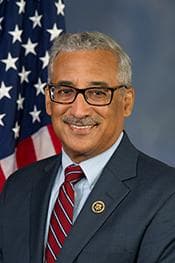
- Robert Scott
- Cosponsors
- - 27 - 0
- Introduced
- In Committee
What this bill would do
The "Lowering Obstacles to Achievement Now Act," or the "LOAN Act," seeks to amend the Higher Education Act of 1965 to reform student loan interest and repayment structures. This bill proposes doubling the maximum Federal Pell Grant award through mandatory funding and expanding access to graduate and postbaccalaureate students. It aims to improve the Public Service Loan Forgiveness program and introduces new income-driven and fixed repayment plans. The legislation also focuses on eliminating interest capitalization on various loan types to prevent debt from ballooning. Additionally, it establishes new interest rate caps and provides refinancing opportunities for federal and certain private loans.
Yes· 3 of 14
Would students be better off under this?+8
The bill greatly improves the financial landscape for students through increased grants, lower interest rates, and more flexible repayment options.
Does this make college cost less?+8
The bill increases affordability by significantly raising Pell Grant maximums, capping interest rates at 5 percent, and allowing for the refinancing of both federal and private loans.
Does this reduce what student borrowers owe or repay?+8
The bill provides significant relief through loan forgiveness for teachers, elimination of interest capitalization, and debt rehabilitation programs.
The opposite
No question was scored the opposite.
Who it would affect, and how
Potential Positive Impacts for People
-
Increased Pell Grant Amounts: The bill increases the maximum Federal Pell Grant award starting at $10,000 for the 2026-2027 award year and scaling up to $14,000 in subsequent years (Section 101).
-
Support for Low-Income Students: Students with a student aid index of less than zero would be eligible for a Federal Pell Grant that exceeds the total maximum award by the amount their index is below zero (Section 102).
-
Expanded Eligibility for Dreamer Students: The bill defines "Dreamer student" to include individuals who are not citizens or nationals but meet specific criteria, such as earning a high school diploma or serving in the uniformed services, making them eligible for federal aid (Section s 103).
-
Increased Grant Duration: The total number of semesters of Federal Pell Grant eligibility is increased from 12 to 18 (Section 104).
-
Expanded Grant Access for Graduate Students: Graduate and postbaccalaureate students may become eligible to receive Federal Pell Grants under specific conditions (Section 106).
-
Subsidized Loans for Graduate Students: Beginning July 1, 2026, graduate and professional students may be eligible for subsidized Federal Direct Stafford loans at covered institutions (Section 201).
-
Loan Repayment Flexibility: The bill creates new repayment options, including an Income-Driven Repayment Plan and a fixed repayment plan (Section 212).
-
Debt Relief through Public Service: The bill aims to streamline Public Service Loan Forgiveness, including a "buyback" process that allows borrowers to pay to gain qualifying monthly payments (Section 231).
-
Credit Score Recovery: For borrowers who repay defaulted loans in full or consolidate them, the Secretary is required to request that consumer reporting agencies remove the default from their credit history (Section s 241 and 242).
-
Affordable Loan Rehabilitation: A "Default Reduction Program" allows borrowers to rehabilitate defaulted loans through nine reasonable and affordable monthly payments (Section 243).
-
Elimination of Interest Capitalization: By preventing interest from being added to the principal balance, borrowers will not see their debt grow through capitalization on Federal PLUS loans (Section 301(a)), Unsubsidized Stafford Loans (Section 301(e)), or during periods of deferment and forbearance (Section 301(g)).
-
Lower Interest Rate Caps: For new loans issued on or after July 1, 2026, interest rates for Stafford, Unsubsidized, and PLUS loans are capped at the lesser of 5.0 percent or the 10-year Treasury note high yield (Section 401(a)).
-
Debt Refinancing Opportunities: The bill establishes a program allowing qualified borrowers to refinance existing federal loans into new loans with fixed interest rates (Section 402(a)).
-
Private Loan Refinancing: Certain qualified borrowers with eligible private education loans can refinance those loans into Federal Direct Refinanced Private Loans (Section 403(b)).
-
Protection for Consolidation Loans: Interest on reissued consolidation loans will only accrue on the percentage of the loan equal to the original unpaid principal divided by the total loan amount (Section 301(i)).
Potential Negative Impacts for People
-
Ineligibility due to Fraud: Borrowers may be found ineligible for loans, and required to repay principal and interest if they provided false or erroneous information or were convicted of crimes involving fraud to obtain funds (Section 214).
-
Default Consequences: If a borrower defaults, the entire unpaid balance and accrued interest become immediately due and payable, and the Secretary may take actions such as wage garnishment or lawsuit (Section 204).
-
Repayment Plan Limitations: Under the new rules, if a borrower fails to provide the necessary annual income information, they may be removed from the Income-Driven Repayment Plan and placed on a fixed repayment plan (Section 212).
-
Loan Cancellation Denial: Borrowers seeking loan cancellation through public service may be denied if they do not meet specific requirements, which may result in the resumption of loan collection (Section 231).
-
Exclusion from Forgiveness Programs: Borrowers who choose to refinance their private loans into the Federal Direct Refinanced Private Loan program will be ineligible for service-related loan forgiveness or public service loan cancellation plans (Section 403(e)).
-
Refinancing Limits: The ability to refinance federal loans is limited to "qualified borrowers," defined as those holding loans with an interest rate exceeding 5 percent (Section s402(e)).
-
Specific Requirements for Private Loan Refinancing: To qualify for private loan refinancing, borrowers must have been current on payments for the six months prior to their application and must be in good standing (Section 403(b)).
Groups and Interests Ranking
Every group the model scored this bill for, from -10 to +10. Hover a score for the reason it gave.
- Demographic And Interest Groups
- Good For Students+8Good For Low Income Households+7Good For Young Adults+7Good For Hispanic Americans+6Good For Middle Class Households+5Good For Veterans+5
- Education And Technology
- Improves College Affordability+8Improves Student Loan Relief+8
- Social Issues And Justice
- Improves Pathway To Citizenship+5Improves Poverty Reduction+5Improves Racial Equity+4
- Economy And Finance
- Improves Consumer Protection+6Improves Economic Growth+3
- Governance And Ideology
- Improves Government Transparency+4
- 7/20/2026
- 1 Cosponsor added.
- 6/29/2026
- 1 Cosponsor added.
- 6/3/2026
- 1 Cosponsor added.
- 4/28/2026
- 1 Cosponsor added.
- 2/24/2026
- 1 Cosponsor added.
- 12/3/2025
- 1 Cosponsor added.
- 11/20/2025
- 2 Cosponsors added.
- 11/18/2025
- 1 Cosponsor added.
- 9/11/2025
- 1 Cosponsor added.
- 9/9/2025
- 1 Cosponsor added.
- 9/8/2025
- 10 Cosponsors added.
- 8/26/2025
- 2 Cosponsors added.
- 8/1/2025
- Referred to the Committee on Education and Workforce, and in addition to the Committee on the Budget, for a period to be subsequently determined by the Speaker, in each case for consideration of such provisions as fall within the jurisdiction of the committee concerned.
- 4 Cosponsors added.
- Introduced in House
One bill Congress.gov lists as related to this one — companions in the other chamber, earlier versions, and bills this one absorbed or was folded into.
 Alma Adams
Democrat · North Carolina
 Yassamin Ansari
Democrat · Arizona
 Suzanne Bonamici
Democrat · Oregon
 André Carson
Democrat · Indiana
 Judy Chu
Democrat · California
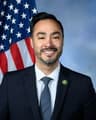 Joaquin Castro
Democrat · Texas
 Danny Davis
Democrat · Illinois
 Mark DeSaulnier
Democrat · California
 Dwight Evans
Democrat · Pennsylvania
 Cleo Fields
Democrat · Louisiana
 Shomari Figures
Democrat · Alabama
 Al Green
Democrat · Texas
 John Garamendi
Democrat · California
 Adelita Grijalva
Democrat · Arizona
 Timothy Kennedy
Democrat · New York
 Stephen Lynch
Democrat · Massachusetts
 Gwen Moore
Democrat · Wisconsin
 Jennifer McClellan
Democrat · Virginia
 Eleanor Norton
Democrat · District of Columbia
 Suhas Subramanyam
Democrat · Virginia
 Lateefah Simon
Democrat · California
 Paul Tonko
Democrat · New York
 Shri Thanedar
Democrat · Michigan
 Lauren Underwood
Democrat · Illinois
 Nikema Williams
Democrat · Georgia
 Frederica Wilson
Democrat · Florida
 James Walkinshaw
Democrat · Virginia