Bill · H.R. 4712· House(119-HR-4712)
Parity for Tribal Law Enforcement Act
- Introduced
- 7/23/2025
- Last activity
- 7/23/2025 — Referred to the Committee on the Judiciary, and in addition to the Committee on Natural Resources, for a period to be subsequently determined by the Speaker, in each case for consideration of such provisions as fall within the jurisdiction of the committee concerned.
- Sponsored by
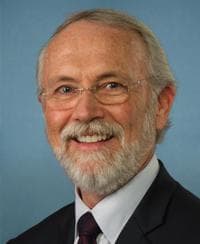
- Dan Newhouse
- Cosponsors
- - 11 - 11
- Introduced
- In Committee
What this bill would do
The Parity for Tribal Law Enforcement Act seeks to amend the Indian Law Enforcement Reform Act. It aims to advance public safety services within Indian communities by expanding the authority of Tribal law enforcement officers. Under this bill, qualified Tribal officers could have the authority to enforce Federal law within their tribe's jurisdiction. To qualify, officers must meet specific training, background investigation, and certification standards. Additionally, the bill establishes certain legal recognitions for these officers and mandates oversight by the Attorney General to improve public safety and accountability.
Yes
Would Native Americans be better off under this?+7
The bill advances public safety services and expands the enforcement authority of Tribal law enforcement within Indian communities.
Does this change how police departments operate?+6
The bill expands the authority of Tribal officers to enforce Federal law and mandates coordinated oversight by the Attorney General.
Would union members be better off under this?+4
The bill allows Tribal officers to purchase service credit for prior years of service towards their retirement.
The opposite
No question was scored the opposite.
Who it would affect, and how
Potential Positive Impacts for People
-
Expanded Authority for Tribal Officers: Tribal officers who meet specific training and background requirements can have the authority to enforce Federal law within their tribe's jurisdiction (Section 2, subsection a).
-
Legal Protections and Status: Tribal officers acting under specific contracts or compacts would be deemed Federal law enforcement officers for specific purposes, including the Federal Tort Claims Act (Section 2, subsection b).
-
Retirement and Service Benefits: The bill allows for Tribal officers to purchase service credit for prior years of service and provides for voluntary participation in certain programs (Section 2, subsection c, paragraph 1).
-
Coordinated Public Safety: The Attorney General is tasked with coordinating oversight to ensure a coordinated approach to public safety in Indian communities, which includes robust training and data analysis (Section 3).
Potential Negative Impacts for People
-
Stringent Training and Certification Requirements: To exercise Federal law enforcement authority, Tribal officers must complete training comparable to Bureau employees, pass adjudicated background investigations, and receive specific certification (Section 2, subsection a).
-
Mandatory Bridge Programs: Tribal officers who choose to attend State or equivalent training programs instead of the Indian Police Academy must attend a Bridge Program of the Indian Police Academy or an equivalent program before receiving certification (Section 2, subsection c, paragraph 2).
-
Policy Mandates for Tribes: For officers to have authority, the Indian tribe must adopt policies and procedures that meet or exceed those of the Office of Justice Services of the Bureau (Section 2, subsection a, paragraph 2).
Groups and Interests Ranking
Every group the model scored this bill for, from -10 to +10. Hover a score for the reason it gave.
- Demographic And Interest Groups
- Good For Native Americans+7Good For Union Workers+4
- Social Issues And Justice
- Improves Policing Reform+6
- 6/9/2026
- 1 Cosponsor added.
- 3/5/2026
- 1 Cosponsor added.
- 2/13/2026
- 3 Cosponsors added.
- 2/4/2026
- 1 Cosponsor added.
- 11/20/2025
- 1 Cosponsor added.
- 9/30/2025
- 1 Cosponsor added.
- 9/15/2025
- 2 Cosponsors added.
- 9/3/2025
- 2 Cosponsors added.
- 8/5/2025
- 1 Cosponsor added.
- 7/23/2025
- Referred to the Committee on the Judiciary, and in addition to the Committee on Natural Resources, for a period to be subsequently determined by the Speaker, in each case for consideration of such provisions as fall within the jurisdiction of the committee concerned.
- 9 Cosponsors added.
- Introduced in House
One bill Congress.gov lists as related to this one — companions in the other chamber, earlier versions, and bills this one absorbed or was folded into.
 Jack Bergman
Republican · Michigan
 Michael Baumgartner
Republican · Washington
 Tom Cole
Republican · Oklahoma
 Angie Craig
Democrat · Minnesota
 Suzan DelBene
Democrat · Washington
 Sharice Davids
Democrat · Kansas
 Jake Ellzey
Republican · Texas
 Julie Fedorchak
Republican · North Dakota
 Marie Perez
Democrat · Washington
 Jeff Hurd
Republican · Colorado
 David Joyce
Republican · Ohio
 Teresa Leger Fernandez
Democrat · New Mexico
 Rick Larsen
Democrat · Washington
 John Moolenaar
Republican · Michigan
 Mike Quigley
Democrat · Illinois
 Emily Randall
Democrat · Washington
 Michael Simpson
Republican · Idaho
 Marilyn Strickland
Democrat · Washington
 Gabe Vasquez
Democrat · New Mexico
 Eugene Vindman
Democrat · Virginia
 Tim Walberg
Republican · Michigan
 Ryan Zinke
Republican · Montana