Bill · H.R. 4694· House(119-HR-4694)
Fighting Fibers Act of 2025
- Introduced
- 7/23/2025
- Last activity
- 7/23/2025 — Referred to the House Committee on Energy and Commerce.
- Sponsored by
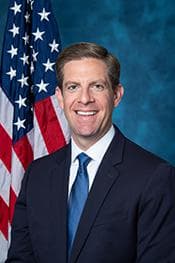
- Mike Levin
- Cosponsors
- - 3 - 0
- Introduced
- In Committee
What this bill would do
The "Fighting Fibers Act of 2025" requires all new residential and commercial washing machines sold in the United States to include a microfiber filtration system. Starting January 1, 2030, these machines must have a filter with a mesh size of no more than 100 micrometers or meet an equivalent standard. The law also mandates that machines display a conspicuous label instructing consumers to check the filter and dispose of lint in a waste bin. The EPA Administrator and the Secretary of Energy are tasked with overseeing these requirements and conducting rulemaking. Additionally, the Act directs a nationwide study regarding the presence, toxicity, and environmental justice impacts of microfibers.
Yes· 3 of 5
Does this better protect air, water and wildlife?+7
The bill mandates microfiber filtration in all new washing machines to reduce pollution.
Does this put more money into medical research?+5
The bill mandates a nationwide study on the toxic effects of microfibers on human health.
Does this narrow racial gaps in how people are treated?+4
The bill directs a study to determine if microfibers have an inequitable impact on environmental justice communities.
The opposite
No question was scored the opposite.
Who it would affect, and how
Potential Positive Impacts for People
-
Mandatory Microfiber Filtration: Beginning January 1, 2030, all new washing machines sold or offered for sale must contain a microfiber filtration system, which must be active across all washing cycles (Section 3(a) and 3(b)).
-
Consumer Information: New washing machines must bear a conspicuous label that notifies the consumer that the machine contains a filter to capture microfibers and instructs them to check it regularly (Section 3(b)(2)).
-
Scientific Research and Awareness: The Administrator is required to conduct a nationwide study to determine the presence, sources, and pathways of microfibers in the human body and the environment, as well as their potential toxic effects and inequitable impacts on environmental justice communities (Section 4(a) and 4(b)(1)).
-
Public Transparency: The results of the nationwide study on microfibers must be submitted to Congress and made available to the public within one year of the Act's enactment (Section 4(b)(2)).
Potential Negative Impacts for People
-
Civil Penalties for Non-compliance: Any person who violates the requirements of the Act may be assessed a civil penalty of up to $10,000 for a first violation and up to $30,000 for subsequent violations (Section 3(d)(1)).
-
Consumer Maintenance Burden: The required labeling instructs consumers that they must "Check filter regularly and dispose of captured lint in a waste bin" (Section 3(b)(2)).
Groups and Interests Ranking
Every group the model scored this bill for, from -10 to +10. Hover a score for the reason it gave.
- Environment Energy And Infrastructure
- Improves Environmental Protections+7
- Healthcare
- Increases Research Funding+5
- Social Issues And Justice
- Improves Racial Equity+4
- Economy And Finance
- Improves Consumer Protection+3
- Demographic And Interest Groups
- Good For Native Americans+2
- 7/22/2026
- 1 Cosponsor added.
- 7/15/2026
- 1 Cosponsor added.
- 7/13/2026
- 1 Cosponsor added.
- 7/23/2025
- Referred to the House Committee on Energy and Commerce.
- Introduced in House
One bill Congress.gov lists as related to this one — companions in the other chamber, earlier versions, and bills this one absorbed or was folded into.
 Raja Krishnamoorthi
Democrat · Illinois
 Eleanor Norton
Democrat · District of Columbia
 Mary Gay Scanlon
Democrat · Pennsylvania