Bill · H.R. 469· House(119-HR-469)
Semiquincentennial Congressional Time Capsule Act
- Introduced
- 1/15/2025
- Last activity
- 2/27/2025 — Received in the Senate and Read twice and referred to the Committee on Rules and Administration.
- Sponsored by
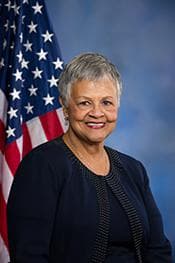
- Bonnie Watson Coleman
- Cosponsors
- - 12 - 14
- Introduced
- Passed House
- In Senate committee
What this bill would do
This bill, known as the "Semiquincentennial Congressional Time Capsule Act," directs the Architect of the Capitol to create a Congressional time capsule. The capsule is intended to commemorate the semiquincentennial of the United States. Congressional leadership will jointly decide what items go into the capsule, including legislative milestones and a message to future members of Congress. The Architect of the Capitol is responsible for preparing and burying the capsule on the West Lawn of the Capitol by July 4th, 2026. The capsule is to remain sealed until July 4th, 2276. At that time, the Speaker of the House will present the contents to the 244th Congress for preservation or use.
Yes
Does this make what the government does easier for the public to see?+2
The bill preserves legislative and institutional milestones for future generations through a time capsule.
Would children be better off under this?+1
The bill creates a historical record that will be preserved for many future generations.
Would students be better off under this?+1
The preservation of historical documents and legislative milestones provides future educational value.
The opposite
No question was scored the opposite.
Who it would affect, and how
Potential Positive Impacts for People
-
Commemoration of National History: The creation of a time capsule serves to commemorate the United States Semiqucentennial through the inclusion of books, manuscripts, memorabilia, and relics (Section 2(b)(2)(A)).
-
Preservation of Legislative Milestones: The capsule will include copies or representations of important legislative and institutional milestones of Congress, preserving history for future generations (Section 2(b)(2)(B)).
-
Intergenerational Communication: The bill allows for a message to be sent from the current Congress to the future Congress that will eventually open the capsule (Section 2(b)(2)(C)).
Potential Negative Impacts for People
- No negative impacts or burdens are explicitly stated in the provided text.
Groups and Interests Ranking
Every group the model scored this bill for, from -10 to +10. Hover a score for the reason it gave.
- Demographic And Interest Groups
- Good For Children+1Good For Students+1
- Governance And Ideology
- Improves Government Transparency+2
- 2/27/2025
- Received in the Senate and Read twice and referred to the Committee on Rules and Administration.
- 2/26/2025
- Motion to reconsider laid on the table Agreed to without objection.
- Passed/agreed to in House: On motion to suspend the rules and pass the bill Agreed to by voice vote. (text: CR H855-856)
- On motion to suspend the rules and pass the bill Agreed to by voice vote. (text: CR H855-856)
- DEBATE - The House proceeded with forty minutes of debate on H.R. 469.
- Considered under suspension of the rules. (consideration: CR H855-857)
- Mr. Steil moved to suspend the rules and pass the bill.
- 2/21/2025
- 3 Cosponsors added.
- 1/31/2025
- 1 Cosponsor added.
- 1/28/2025
- 1 Cosponsor added.
- 1/24/2025
- 1 Cosponsor added.
- 1/23/2025
- 5 Cosponsors added.
- 1/21/2025
- 7 Cosponsors added.
- 1/16/2025
- Referred to the Subcommittee on Economic Development, Public Buildings, and Emergency Management.
- 5 Cosponsors added.
- 1/15/2025
- Referred to the Committee on House Administration, and in addition to the Committee on Transportation and Infrastructure, for a period to be subsequently determined by the Speaker, in each case for consideration of such provisions as fall within the jurisdiction of the committee concerned.
- 3 Cosponsors added.
- Introduced in House
One bill Congress.gov lists as related to this one — companions in the other chamber, earlier versions, and bills this one absorbed or was folded into.
 Robert Aderholt
Republican · Alabama
 Brendan Boyle
Democrat · Pennsylvania
 Jim Costa
Democrat · California
 Emanuel Cleaver
Democrat · Missouri
 Eric Crawford
Republican · Arkansas
 Juan Ciscomani
Republican · Arizona
 Donald Davis
Democrat · North Carolina
 Dwight Evans
Democrat · Pennsylvania
 Charles Fleischmann
Republican · Tennessee
 Lizzie Fletcher
Democrat · Texas
 Chrissy Houlahan
Democrat · Pennsylvania
 Thomas Kean
Republican · New Jersey
 Michael Lawler
Republican · New York
 James McGovern
Democrat · Massachusetts
 Nicole Malliotakis
Republican · New York
 Lisa McClain
Republican · Michigan
 LaMonica McIver
Democrat · New Jersey
 Burgess Owens
Republican · Utah
 Maria Salazar
Republican · Florida
 Glenn Thompson
Republican · Pennsylvania
 Dina Titus
Democrat · Nevada
 Paul Tonko
Democrat · New York
 Ritchie Torres
Democrat · New York
 Jefferson Van Drew
Republican · New Jersey
 Joe Wilson
Republican · South Carolina
 Robert Wittman
Republican · Virginia