Bill · H.R. 4682· House(119-HR-4682)
End Solitary Confinement Act
- Introduced
- 7/23/2025
- Last activity
- 7/23/2025 — Referred to the Committee on the Judiciary, and in addition to the Committee on Oversight and Government Reform, for a period to be subsequently determined by the Speaker, in each case for consideration of such provisions as fall within the jurisdiction of the committee concerned.
- Sponsored by
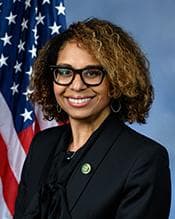
- Sydney Kamlager-Dove
- Cosponsors
- - 25 - 0
- Introduced
- In Committee
What this bill would do
The "End Solitary Confinement Act" aims to prohibit the use of solitary confinement and restrictive housing across all Federal agencies and their contractors. It establishes strict minimum standards for out-of-cell time, requiring at least 14 hours of daily congregate interaction and meaningful human engagement. The bill creates a multidisciplinary community monitoring body and an advisory body to oversee the implementation of these new standards. To encourage compliance at the local level, it implements financial penalties for states that do not align their policies with these federal standards. Additionally, the Act expands the ability of incarcerated individuals to seek civil damages for mental or emotional injuries.
Yes· 3 of 15
Would Black Americans be better off under this?+8
The bill addresses practices that the text notes are disproportionately inflicted on people of color.
Would Hispanic Americans be better off under this?+8
The bill addresses practices that the text notes are disproportionately inflicted on people of color.
Would Native Americans be better off under this?+8
The bill addresses practices that the text notes are disproportionately inflicted on people of color.
The opposite
No question was scored the opposite.
Who it would affect, and how
Potential Positive Impacts for People
-
Protection from Physical and Mental Harm: The bill seeks to prevent the "devastating harm" associated with solitary confinement, such as self-mutilation, suicide, heart disease, anxiety, depression, and psychosis (Section 2).
-
Increased Human Engagement: It mandates that incarcerated individuals have access to at least 14 hours of out-of-cell time daily, including structured programming and recreation (Section 3(a)(2)(A)).
-
Protections for Vulnerable Groups: The bill prohibits involuntary confinement for specific groups, including people 25 years of age or younger, people 55 years of age or older, individuals with disabilities, pregnant people, and those identifying as LGBTQ+ (Section 3(a)(2)(B)(D)).
-
Enhanced Oversight and Accountability: The establishment of a community monitoring body allows for unannounced visits and private interviews to ensure facility compliance (Section 4(a)).
-
Expanded Legal Rights: The Act allows incarcerated people to bring civil actions for injuries caused by violations of the new standards, including seeking damages for emotional pain and suffering (Section s 3(c)(1) and Section 7).
Potential Negative Impacts for People
-
Limitations on Emergency Response: While restrictive, the bill limits the use of confinement during emergencies to a maximum of 4 hours total immediately following an incident or 4 hours total during a 24-hour period, which may impact how staff manage immediate risks (Section 3(a)(2)(B)(iii)).
-
Impact on State/Local Funding: States or local entities that do not comply with the new standards face a reduction of at least 10 percent in their federal Edward Byrne Memorial Justice Assistance Grant Program funding (Section 5(b)).
-
Restrictions on Facility Construction: The bill prohibits the use of appropriated funds for constructing new facilities, procuring equipment, or making improvements to existing buildings used for incarceration (Section 9(b)).
Groups and Interests Ranking
Every group the model scored this bill for, from -10 to +10. Hover a score for the reason it gave.
- Demographic And Interest Groups
- Good For African Americans+8Good For Hispanic Americans+8Good For L G B T Q Community+8Good For Native Americans+8Good For People With Disabilities+8Good For Children+7Good For Seniors+7Good For Low Income Households+2
- Social Issues And Justice
- Improves Disability Rights+8Improves L G B T Q Rights+8Improves Criminal Sentencing Reform+5
- Governance And Ideology
- Improves Government Transparency+7
- Healthcare
- Improves Mental Health Access+7
- Economy And Finance
- Improves Fiscal Responsibility+5
- National Security And Foreign Policy
- Improves Veterans Benefits+1
- 7/16/2026
- 1 Cosponsor added.
- 3/4/2026
- 1 Cosponsor added.
- 12/3/2025
- 1 Cosponsor added.
- 11/12/2025
- 1 Cosponsor added.
- 11/4/2025
- 1 Cosponsor added.
- 9/9/2025
- 1 Cosponsor added.
- 9/3/2025
- 1 Cosponsor added.
- 7/23/2025
- Referred to the Committee on the Judiciary, and in addition to the Committee on Oversight and Government Reform, for a period to be subsequently determined by the Speaker, in each case for consideration of such provisions as fall within the jurisdiction of the committee concerned.
- 18 Cosponsors added.
- Introduced in House
One bill Congress.gov lists as related to this one — companions in the other chamber, earlier versions, and bills this one absorbed or was folded into.
 Becca Balint
Democrat · Vermont
 Yvette Clarke
Democrat · New York
 Judy Chu
Democrat · California
 Sheila Cherfilus-McCormick
Democrat · Florida
 Dwight Evans
Democrat · Pennsylvania
 Adriano Espaillat
Democrat · New York
 Maxwell Frost
Democrat · Florida
 Jesús García
Democrat · Illinois
 Sylvia Garcia
Democrat · Texas
 Henry Johnson
Democrat · Georgia
 Pramila Jayapal
Democrat · Washington
 Jonathan Jackson
Democrat · Illinois
 Robin Kelly
Democrat · Illinois
 Summer Lee
Democrat · Pennsylvania
 Grace Meng
Democrat · New York
 Morgan McGarvey
Democrat · Kentucky
 LaMonica McIver
Democrat · New Jersey
 Eleanor Norton
Democrat · District of Columbia
 Ayanna Pressley
Democrat · Massachusetts
 Delia Ramirez
Democrat · Illinois
 Melanie Stansbury
Democrat · New Mexico
 Lateefah Simon
Democrat · California
 Rashida Tlaib
Democrat · Michigan
 Nydia Velázquez
Democrat · New York
 Bonnie Watson Coleman
Democrat · New Jersey