Bill · H.R. 4678· House(119-HR-4678)
RAP Act of 2025
- Introduced
- 7/23/2025
- Last activity
- 7/23/2025 — Referred to the House Committee on the Judiciary.
- Sponsored by
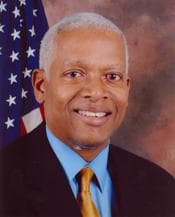
- Henry Johnson
- Cosponsors
- - 21 - 0
- Introduced
- In Committee
What this bill would do
This bill, known as the "Restoring Artistic Protection Act of 2025," seeks to change the Federal Rules of Evidence. It aims to limit the ability of the government to use a defendant's creative or artistic work against them in court. Under this act, such expressions would generally be inadmissible. There are specific exceptions where a court may allow the evidence if the government meets certain standards. These exceptions include proving the defendant intended a literal meaning and that the work refers to specific facts of a case.
Yes· 3 of 4
Does this protect what people are allowed to say in public life?+7
The bill protects creative and artistic expression from being used as evidence against defendants in court.
Does this protect the right to fair treatment by the courts?+6
The bill establishes a higher burden of proof for the government to admit a defendant's artistic works into evidence.
Does this protect people from being watched or searched?+4
The bill restricts the government's ability to use a defendant's personal creative expressions against them.
The opposite
No question was scored the opposite.
Who it would affect, and how
Potential Positive Impacts for People
-
Protection of Creative Expression: The bill would make evidence of a defendant's creative or artistic expression, whether original or derivative, inadmissible against them in court (Section 2(a)(1)). This protects individuals who use music, dance, performance art, visual art, poetry, literature, or film from having their imagination used against them.
-
Strict Standards for Admissibility: If the government wants to use artistic work as evidence, they must prove their case by "clear and convincing evidence" in a hearing held outside the presence of the jury (Section 2(a)(1)(b)). This ensures a higher burden of proof before such evidence can be heard.
-
Prevention of Misinterpretation: The bill requires the government to prove that a defendant intended a literal meaning rather than a figurative or fictional one (Section 2(a)(1)(b)(1)(A)). This could prevent people from being judged based on fictional characters or metaphors.
-
Requirement for Redaction and Instructions: If a court does decide to admit artistic evidence, it must ensure the expression is redacted to limit what the jury sees and must provide limiting instructions to the jury (Section 2(a)(1)(d)). This helps prevent the jury from seeing more than what is specifically allowed.
Potential Negative Impacts for People
-
Limitations on Evidence in Criminal or Civil Cases: The government may be prevented from using creative works that refer to specific facts of a crime or a complaint if they cannot meet the strict requirements of the exception (Section 2(a)(1)(b)(2)). This could limit the evidence available to prove specific facts in a case.
-
Burden of Proof on the Government: The government must prove the expression has distinct probative value not provided by other evidence and that it refers to disputed facts (Section 2(a)(1)(b)(3) and (4)). This creates a specific hurdle for the government when attempting to introduce relevant evidence.
Groups and Interests Ranking
Every group the model scored this bill for, from -10 to +10. Hover a score for the reason it gave.
- Governance And Ideology
- Improves Due Process+6Improves Privacy Rights+4
- Social Issues And Justice
- Improves Freedom Of Speech+7
- Demographic And Interest Groups
- Good For People With Disabilities+3
- 2/20/2026
- 1 Cosponsor added.
- 7/23/2025
- Referred to the House Committee on the Judiciary.
- 20 Cosponsors added.
- Introduced in House
 André Carson
Democrat · Indiana
 Judy Chu
Democrat · California
 Sean Casten
Democrat · Illinois
 Jasmine Crockett
Democrat · Texas
 Maxwell Frost
Democrat · Florida
 Daniel Goldman
Democrat · New York
 Pramila Jayapal
Democrat · Washington
 Sydney Kamlager-Dove
Democrat · California
 Ted Lieu
Democrat · California
 James McGovern
Democrat · Massachusetts
 LaMonica McIver
Democrat · New Jersey
 Alexandria Ocasio-Cortez
Democrat · New York
 Ayanna Pressley
Democrat · Massachusetts
 Delia Ramirez
Democrat · Illinois
 Terri Sewell
Democrat · Alabama
 Melanie Stansbury
Democrat · New Mexico
 Bennie Thompson
Democrat · Mississippi
 Rashida Tlaib
Democrat · Michigan
 Shri Thanedar
Democrat · Michigan
 Nikema Williams
Democrat · Georgia
 Frederica Wilson
Democrat · Florida