Bill · H.R. 4655· House(119-HR-4655)
United States-Israel PTSD Collaborative Research Act
- Introduced
- 7/23/2025
- Last activity
- 7/23/2025 — Referred to the House Committee on Armed Services.
- Sponsored by
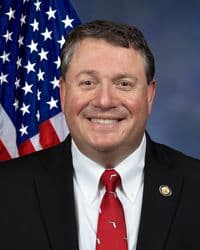
- Randy Fine
- Cosponsors
- - 11 - 1
- Introduced
- In Committee
What this bill would do
This bill, known as the ``United States-Israel PTSD Collaborative Research Act'', directs the Secretary of Defense to establish a grant program. The program aims to increase cooperation on post-traumatic stress disorder research between the United States and Israel. The Secretary of Defense will work in coordination with the Secretaries of Veterans Affairs and State to award these grants. Eligible entities include academic institutions or nonprofit entities located in the United States. These grants are intended for research projects conducted through joint research agreements with entities in Israel. The authority to award these grants will end seven years after the first grant is issued.
Yes· 3 of 9
Would veterans be better off under this, taking everything together?+6
The bill specifically targets research to address high rates of PTSD among various generations of veterans.
Does this make mental health care easier to get?+5
The bill funds collaborative research to develop more effective treatments for post-traumatic stress disorder.
Does this put more money into medical research?+5
The bill establishes a grant program for scientific collaboration on PTSD research.
The opposite
No question was scored the opposite.
Who it would affect, and how
Potential Positive Impacts for People
-
Increased Research for PTSD Treatments: The bill seeks to explore scientific collaboration to find more effective treatments for post-traumatic stress disorder, which current options like cognitive or exposure therapy may not fully address (Section 2, Section 3).
-
Support for Veterans: The bill highlights the need for better research due to high rates of PTSD among veterans of Operation Iraqi Freedom, Operation Enduring Freedom, the Gulf War, and Vietnam (Section 2).
-
Support for Women Veterans: The bill notes that almost 20 percent of women veterans of conflicts in Iraq and Afghanistan have been diagnosed with PTSD, implying a need for research into these issues (Section 2).
Potential Negative Impacts for People
- Time-Limited Program: The authority to award these specific grants is set to terminate seven years after the first grant is awarded, which may limit the long-term duration of the research assistance (Section 3, subsection h).
Groups and Interests Ranking
Every group the model scored this bill for, from -10 to +10. Hover a score for the reason it gave.
- Demographic And Interest Groups
- Good For Veterans+6Good For Women+4Good For Low Income Households+2
- Healthcare
- Improves Mental Health Access+5Increases Research Funding+5
- National Security And Foreign Policy
- Improves Veterans Benefits+5Improves International Alliances+4
- Education And Technology
- Increases Scientific Research Funding+5
- Social Issues And Justice
- Improves Poverty Reduction+2
- 4/20/2026
- 1 Cosponsor added.
- 10/6/2025
- 1 Cosponsor added.
- 8/1/2025
- 1 Cosponsor added.
- 7/25/2025
- 1 Cosponsor added.
- 7/23/2025
- Referred to the House Committee on Armed Services.
- 8 Cosponsors added.
- Introduced in House
 Tom Barrett
Republican · Michigan
 Dan Crenshaw
Republican · Texas
 Josh Gottheimer
Democrat · New Jersey
 Carlos Gimenez
Republican · Florida
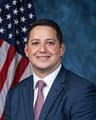 Tony Gonzales
Republican · Texas
 Michael Lawler
Republican · New York
 Dan Newhouse
Republican · Washington
 John Rutherford
Republican · Florida
 Elise Stefanik
Republican · New York
 Pete Stauber
Republican · Minnesota
 Claudia Tenney
Republican · New York
 Daniel Webster
Republican · Florida