Bill · H.R. 4651· House(119-HR-4651)
Immigration Enforcement Staff Body Camera Accountability Act
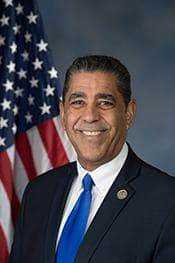
- Introduced
- 7/23/2025
- Last activity
- 7/24/2025 — Referred to the Subcommittee on Border Security and Enforcement.
- Sponsored by
- Adriano Espaillat
- Cosponsors
- - 14 - 0
- Introduced
- In Committee
What this bill would do
The Immigration Enforcement Staff Body Camera Accountability Act requires immigration enforcement staff to wear body cameras during official operations. This includes agents and officers from U.S. Customs and Border Protection, U.S. Immigration and Customs Enforcement, and staff at detention facilities who interact with detainees. The cameras must remain turned on for the entire duration of a staff member's shift. The bill mandates that leadership establish policies for camera use, including the use of artificial intelligence and facial recognition. It also dictates that footage be made available to parties in legal or administrative proceedings. Finally, the act establishes penalties for staff who fail to record footage due to violations of these rules.
Yes· 3 of 9
Does this make what the government does easier for the public to see?+7
Mandating the availability of footage to legal parties significantly increases the transparency of agency operations.
Does this change how police departments operate?+6
The mandate for continuous body camera footage increases accountability for immigration enforcement agents.
Does this protect the right to fair treatment by the courts?+5
The ability to access camera footage assists parties in legal and administrative proceedings.
The opposite
Does this give the government more power to monitor people inside the country?-3
The increased use of cameras and facial recognition technology expands the scope of domestic surveillance.
Who it would affect, and how
Potential Positive Impacts for People
-
Accountability for Officials: The bill requires all immigration enforcement staff to wear body cameras that must remain on for the entire shift, ensuring constant recording during official operations (Section 2(a), 2(c)).
-
Access to Evidence: Footage collected by body cameras can be made available to parties involved in administrative proceedings, civil actions, or criminal prosecutions (Section 2(d)).
-
Protection of Rights: The Secretary of Homeland Security must conduct rulemaking that is consistent with specific civil rights principles and includes comparisons with model acts regarding wearable cameras (Section 2(e)).
-
Privacy Oversight: The Inspector General of the Department of Homeland Security is tasked with conducting an annual privacy impact assessment regarding how footage is collected, maintained, stored, and shared (Section 2(g)).
-
Transparency in Technology: Policies must be established regarding the use of artificial intelligence and facial recognition, including an acknowledgment of the limitations and inaccuracies of those technologies (Section 2(b)).
Potential Negative Impacts for People
-
Penalties for Staff: Immigration enforcement staff may face furlough, reduction in pay or grade, or a suspension of up to 30 days if they violate the requirement to keep their cameras on (Section 2(f)).
-
Burden of Proof for Malfunctions: If a camera fails to record, the Secretary of Homeland Security may not accept a malfunction claim unless the staff member provides sufficient evidence to prove it occurred (Section 2(f)).
-
Lack of New Funding: The bill explicitly states that no additional funding is authorized to carry out these requirements, meaning the program must be funded using existing amounts (Section 2(h)).
Groups and Interests Ranking
Every group the model scored this bill for, from -10 to +10. Hover a score for the reason it gave.
- Governance And Ideology
- Improves Government Transparency+7Improves Due Process+5Increases Federal Power+3Improves Privacy Rights+2
- Demographic And Interest Groups
- Good For Immigrants+5Good For Low Income Households+3
- Social Issues And Justice
- Improves Policing Reform+6Improves Border Security+2
- Education And Technology
- Improves Data Privacy+4
- National Security And Foreign Policy
- Increases Domestic Surveillance-3
- 10/1/2026
- 8 Cosponsors added.
- 9/10/2026
- 1 Cosponsor added.
- 9/2/2026
- 1 Cosponsor added.
- 8/17/2026
- 2 Cosponsors added.
- 8/10/2026
- 1 Cosponsor added.
- 8/3/2026
- 1 Cosponsor added.
- 7/24/2025
- Referred to the Subcommittee on Border Security and Enforcement.
- 7/23/2025
- Referred to the Committee on Homeland Security, and in addition to the Committees on the Judiciary, and Ways and Means, for a period to be subsequently determined by the Speaker, in each case for consideration of such provisions as fall within the jurisdiction of the committee concerned.
- Introduced in House
 Nanette Barragán
Democrat · California
 Yvette Clarke
Democrat · New York
 André Carson
Democrat · Indiana
 Sylvia Garcia
Democrat · Texas
 Daniel Goldman
Democrat · New York
 Pablo Hernández
Democrat · Puerto Rico
 Glenn Ivey
Democrat · Maryland
 Grace Meng
Democrat · New York
 Eleanor Norton
Democrat · District of Columbia
 Mike Quigley
Democrat · Illinois
 Jamie Raskin
Democrat · Maryland
 Lateefah Simon
Democrat · California
 Nydia Velázquez
Democrat · New York
 Debbie Wasserman Schultz
Democrat · Florida