
A Republican bill with 4 Democratic cosponsors · See all 6 cosponsors
Last activity — Referred to the House Committee on Ways and Means.
In committee
Introduced and handed to a committee in the chamber it started in.
The committee holds it, and most bills are never heard from again. A hearing or a committee vote would be news; silence is the usual outcome, and it kills the bill without anyone voting against it.
Its path through Congress
- Introduced
- In Committee
What this bill would do
This bill, known as the "Skills Investment Act of 2025," proposes to amend the Internal Revenue Code of 1986 regarding Coverdell accounts. It seeks to rename "Coverdell education savings accounts" to "Coverdell lifelong learning accounts." The legislation expands the types of eligible expenses that can be covered by these accounts, including specific training, career, and technical education services. It also modifies contribution limits, age restrictions, and rules regarding account balances for individuals over age 30. Additionally, the bill introduces a new tax credit for employers making nonelective contributions to these accounts and allows for certain deductions for beneficiaries.
Yes· 3 of 11
- Scored +5
Would people in their twenties and thirties be better off under this?
The bill increases the age limit for contributions to age 70 and expands the scope of educational expenses for these individuals.
- Scored +5
Does this make college cost less?
The bill expands the types of eligible expenses for these accounts to include training services, technical education, and career services.
- Scored +4
Would people in middle age be better off under this?
The bill increases the annual contribution limit to $4,000 for beneficiaries over age 30.
The opposite
No question was scored the opposite.
Who it would affect, and how
Potential Positive Impacts for People
-
Expanded Use of Funds: The bill expands what the money can be used for, allowing for "qualified educational or skill development expenses" such as training services, career and technical education, career services, youth activities, and adult education and literacy activities. It also allows for expenses related to transportation, testing, and certain computer-related equipment or services (Section 2. (b)).
-
Increased Contribution Limits for Adults: For beneficiaries who have attained age 30, the annual contribution limit is increased from $2,000 to $4,000 (Section 2. (c)(3)(A)).
-
Extended Age for Contributions: The age limit for making contributions to these accounts is increased from age 18 to age 70 (Section 2. (c)(2)).
-
Employer Tax Credits: Employers can receive a tax credit equal to 25 percent of nonelective contributions made to a Coverdell lifelong learning account for an employee (Section 2. (d)(1)).
-
Tax Deductions for Beneficiaries: Individuals who are designated beneficiaries of these accounts and are at least 18 years old may be allowed a deduction for the amount of contributions made to the account (Section 2. (e)(1)).
Potential Negative Impacts for People
-
Account Balance Restrictions: For beneficiaries who have attained age 30, the bill establishes a limit where a contribution cannot result in the account balance exceeding $10,000 (Section 2. (c)(1)(A)).
-
Changes to Beneficiary Rules: After the age of 30, there are specific restrictions placed on changing the beneficiary of an account (Section 2. (c)(4)).
-
Increased Tax Rate on Certain Distributions: The additional tax rate for certain distributions is increased from 10 percent to 20 percent (Section 2. (e)(2)(A)(i)).
Groups and Interests Ranking
Every group the model scored this bill for, from -10 to +10. Tap or hover a score for the reason it gave.
- Demographic And Interest Groups
- Would people in their twenties and thirties be better off under this? — The bill increases the age limit for contributions to age 70 and expands the scope of educational expenses for these individuals. Would people in middle age be better off under this? — The bill increases the annual contribution limit to $4,000 for beneficiaries over age 30. Would middle-income households be better off under this? — The bill provides new tax deductions and increased contribution limits for educational savings. Would business owners be better off under this? — The bill offers a 25 percent tax credit for employers making nonelective contributions to employee accounts. Would households on low incomes be better off under this? — The bill expands the use of funds to include adult education and literacy activities which may benefit low-income individuals. Would people over 65 be better off under this? — The bill extends the age for making contributions to these accounts up to age 70.
- Economy And Finance
- Does this cut taxes for middle-income families? — The bill allows for tax deductions for contributions made to lifelong learning accounts by beneficiaries at least 18 years old. Does this make it easier to run a small business? — The bill provides a 25 percent tax credit to employers making contributions to employee learning accounts. Does this cut taxes for small businesses? — Employers can receive a 25 percent tax credit for nonelective contributions made to these accounts for their employees.
- Education And Technology
- Does this make college cost less? — The bill expands the types of eligible expenses for these accounts to include training services, technical education, and career services. Does this get reliable internet to more people? — The bill allows for the use of account funds for internet access and related services used for qualified educational activities.
- 9/16/2025
- 1 Cosponsor added.
- 3/3/2025
- 1 Cosponsor added.
- 1/31/2025
- 1 Cosponsor added.
- 1/15/2025
- Sponsor introductory remarks on measure. (CR H159)
- Referred to the House Committee on Ways and Means.
- 3 Cosponsors added.
- Introduced in House
One bill Congress.gov lists as related to this one — companions in the other chamber, earlier versions, and bills this one absorbed or was folded into.
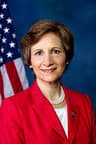 Suzanne Bonamici
Democrat · Oregon
 Mike Bost
Republican · Illinois
 Brian Fitzpatrick
Republican · Pennsylvania
 Kristen McDonald Rivet
Democrat · Michigan
 Bradley Schneider
Democrat · Illinois
 Eugene Vindman
Democrat · Virginia