Bill · H.R. 4575· House(119-HR-4575)
Jobs in the Woods Act
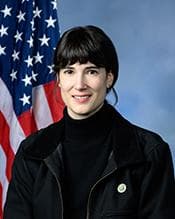
- Introduced
- 7/21/2025
- Last activity
- 7/21/2025 — Referred to the House Committee on Education and Workforce.
- Sponsored by
- Marie Perez
- Cosponsors
- - 7 - 9
- Introduced
- In Committee
What this bill would do
The ``Jobs in the Woods Act'' directs the Secretary of Agriculture to create a competitive grant program. This program is designed to fund career pathway training programs focused on forestry operations and forestry products industries. Grants will be awarded to eligible entities for terms of up to four years. The amount of each grant must be between $500,000 and $2,000,000. The bill authorizes $10,000,000 for each fiscal year from 2026 through 2030.
Yes· 3 of 10
Would people in their twenties and thirties be better off under this?+5
The bill provides career pathway training and addresses youth migration through targeted grants.
Would people in rural areas be better off under this?+5
The bill focuses on workforce development in nonmetropolitan and rural areas.
Is this likely to create jobs?+5
The bill establishes a competitive grant program to fund career pathway training for forestry operations and products industries.
The opposite
No question was scored the opposite.
Who it would affect, and how
Potential Positive Impacts for People
-
Career Training Opportunities: The bill establishes grant programs to carry out career pathway training programs regarding forestry operations and forestry products industries (Section 2(c)).
-
Support for Specific Demographic Issues: Priority is given to entities that propose activities to address the issues of an aging workforce and youth migration (Section 2(b)(2)(A)).
-
Educational Partnerships: The Secretary will prioritize entities that intend to partner with secondary schools, vocational or technical schools, or junior or community colleges (Section 2(b)(2)(B)).
-
Workforce Placement: Priority is given to entities that demonstrate an ability to assist with forestry workforce placement and hiring (Section 2(b)(2)(C)).
-
Targeted Economic Support: Grants are intended for eligible areas, which include nonmetropolitan areas that qualify as low-income communities (Section 2(d)(2)(A)).
Potential Negative Impacts for People
- No specific negative impacts or burdens are explicitly stated in the provided text.
Groups and Interests Ranking
Every group the model scored this bill for, from -10 to +10. Hover a score for the reason it gave.
- Demographic And Interest Groups
- Good For Rural Residents+5Good For Young Adults+5Good For Low Income Households+4Good For Seniors+3Good For Children+2
- Economy And Finance
- Increases Job Creation+5Improves Economic Growth+3
- Environment Energy And Infrastructure
- Improves Rural Development+5
- Social Issues And Justice
- Improves Poverty Reduction+3
- Education And Technology
- Improves College Affordability+2
- 7/27/2026
- 1 Cosponsor added.
- 4/2/2026
- 1 Cosponsor added.
- 3/4/2026
- 1 Cosponsor added.
- 12/18/2025
- 1 Cosponsor added.
- 10/31/2025
- 1 Cosponsor added.
- 10/17/2025
- 2 Cosponsors added.
- 9/26/2025
- 1 Cosponsor added.
- 9/4/2025
- 1 Cosponsor added.
- 8/1/2025
- 1 Cosponsor added.
- 7/22/2025
- 1 Cosponsor added.
- 7/21/2025
- Referred to the House Committee on Education and Workforce.
- 5 Cosponsors added.
- Introduced in House
 Janelle Bynum
Democrat · Oregon
 Robert Bresnahan
Republican · Pennsylvania
 Brian Fitzpatrick
Republican · Pennsylvania
 Jared Golden
Democrat · Maine
 Maggie Goodlander
Democrat · New Hampshire
 Val Hoyle
Democrat · Oregon
 Jennifer Kiggans
Republican · Virginia
 Michael Lawler
Republican · New York
 Barry Moore
Republican · Alabama
 John McGuire
Republican · Virginia
 Chellie Pingree
Democrat · Maine
 David Rouzer
Republican · North Carolina
 Pete Stauber
Republican · Minnesota
 Kim Schrier
Democrat · Washington
 Andrea Salinas
Democrat · Oregon
 Glenn Thompson
Republican · Pennsylvania