Bill · H.R. 4557· House(119-HR-4557)
BEACON Act
- Introduced
- 7/21/2025
- Last activity
- 7/21/2025 — Referred to the House Committee on Oversight and Government Reform.
- Sponsored by
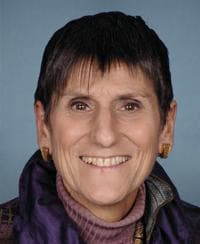
- Rosa DeLauro
- Cosponsors
- - 5 - 0
- Introduced
- In Committee
What this bill would do
The BEACON Act seeks to amend the Inspector General Act of 1978 to establish an Office of Inspector General within the Executive Office of the President. This bill requires the President to appoint an Inspector General for this office within 120 days of the Act's enactment. It grants the President specific authority to control audits or investigations involving confidential sources, intelligence matters, or undercover operations. The bill also mandates semiannual reports to the President and Congress regarding the office's functions and any limitations faced. Additionally, it requires periodic evaluations to assess and address the classification of material within the Executive Office of the President.
Yes· 3 of 5
Does this give the federal government more power?+5
The bill centralizes presidential authority over specific Inspector General investigations and subpoenas.
Does this make what the government does easier for the public to see?+4
The bill mandates semiannual reports to Congress and evaluations of information classification practices.
Does this reduce what the federal government spends?+2
The bill aims to detect and eliminate fraud, waste, and abuse within the Executive Office of the President.
The opposite
No question was scored the opposite.
Who it would affect, and how
Potential Positive Impacts for People
-
Increased Oversight of the Executive Office: The establishment of an Office of Inspector General in the Executive Office of the President provides a mechanism for the detection and elimination of fraud, waste, and abuse in programs and operations (Section 2(b)(1)(D)).
-
Transparency Regarding Information Access: The Inspector General must include a certification in semiannual reports regarding whether they had full and direct access to all relevant information, which provides clarity on the scope of their oversight (Section 2(b)(1)(B)).
-
Accountability for Restricted Investigations: If the President prohibits an investigation or subpoena, they must provide a written notice to the Inspector General stating the reasons for that power, which is then transmitted to Congress (Section 2(b)(1) and Section 2(b)(2)).
-
Monitoring of Information Classification: The bill requires evaluations to identify management practices that may contribute to the persistent misclassification of material, which may help ensure classification policies are followed effectively (Section 2(d)(1)).
Potential Negative Impacts for People
-
Presidential Control Over Specific Investigations: The President is granted authority, direction, and control over the Inspector General regarding audits, investigations, or subpoenas that require access to information concerning confidential sources, intelligence/counterintelligence matters, or undercover operations (Section 2(b)(a)(1)).
-
Power to Prohibit Oversight: The President has the power to prohibit the Inspector General from initiating, carrying out, or completing an audit or investigation, or from issuing a subpoena, if the President determines it is necessary to prevent the disclosure of specific sensitive information (Section 2(b)(a)(2)).
Groups and Interests Ranking
Every group the model scored this bill for, from -10 to +10. Hover a score for the reason it gave.
- Governance And Ideology
- Increases Federal Power+5Improves Government Transparency+4Improves Privacy Rights+1
- Economy And Finance
- Reduces Government Spending+2
- National Security And Foreign Policy
- Improves Cybersecurity Defense+1
- 12/9/2025
- 3 Cosponsors added.
- 7/21/2025
- Referred to the House Committee on Oversight and Government Reform.
- 2 Cosponsors added.
- Introduced in House
2 bills Congress.gov lists as related to this one — companions in the other chamber, earlier versions, and bills this one absorbed or was folded into.
 Daniel Goldman
Democrat · New York
 Eleanor Norton
Democrat · District of Columbia
 Mary Gay Scanlon
Democrat · Pennsylvania
 Hillary Scholten
Democrat · Michigan
 Eugene Vindman
Democrat · Virginia