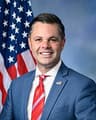
Zachary Nunn (R-IA)
Neutralizing Unfair Chinese Export Subsidies Act of 2025
A Republican bill with no cosponsors
Last activity — Referred to the House Committee on Financial Services.
In committee
Introduced and handed to a committee in the chamber it started in.
The committee holds it, and most bills are never heard from again. A hearing or a committee vote would be news; silence is the usual outcome, and it kills the bill without anyone voting against it.
Its path through Congress
- Introduced
- In Committee
What this bill would do
This bill, titled the "Neutralizing Unfair Chinese Export Subsidies Act of 2025," focuses on increasing China's compliance with OECD export credit standards. It requires the Secretary of the Treasury to develop a strategy and timeline for working with allies to achieve this compliance. The Act also amends the Export-Import Bank Reauthorization Act of 2012 to update goals and shift negotiation responsibilities to the Secretary of the Treasury. Additionally, it provides new criteria for the Secretary of the Treasury to use when determining if China has manipulated its currency exchange rate. Finally, it mandates that the United States oppose increasing China's quota in the International Monetary Fund for one year following a determination of currency manipulation.
Yes· 3 of 11
- Scored +2
Would business owners be better off under this?
Protecting domestic markets from unfair subsidies benefits U.S. business owners.
- Scored +2
Would union members be better off under this?
Countering unfair foreign competition helps protect domestic labor markets.
- Scored +2
Does this strengthen ties with allied countries?
The bill emphasizes working with allies to ensure adherence to OECD standards.
The opposite
No question was scored the opposite.
Who it would affect, and how
Potential Positive Impacts for People
-
Increased Oversight of Export Subsidies: Under Section 2(a), the Secretary of the Treasury must create a strategy to ensure China complies with the financial terms of the OECD Arrangement on Officially Supported Export Credits. This aims to address unfair competition through increased cooperation with allies.
-
More Frequent Negotiations: Section 2(b)(3) amends existing law to require that negotiations be held at least twice per year. This creates a more active schedule for addressing international export subsidies.
-
Specific Criteria for Currency Manipulation: Section 3(a) requires the Secretary of the Treasury to consider factors such as transparency of exchange rate management and government support of specific economic sectors when determining if China has manipulated its currency.
Potential Negative Impacts for People
- Increased Restrictions on IMF Quota: Under Section 3(b), if the Secretary of the Treasury determines that China has manipulated its currency exchange rate, the United States must use its vote to oppose any proposal to increase China's quota in the International Monetary Fund for one year.
Groups and Interests Ranking
Every group the model scored this bill for, from -10 to +10. Tap or hover a score for the reason it gave.
- Demographic And Interest Groups
- Would business owners be better off under this? — Protecting domestic markets from unfair subsidies benefits U.S. business owners. Would union members be better off under this? — Countering unfair foreign competition helps protect domestic labor markets. Would farmers be better off under this? — Trade stability can indirectly benefit agricultural exports by countering unfair subsidies.
- National Security And Foreign Policy
- Does this strengthen ties with allied countries? — The bill emphasizes working with allies to ensure adherence to OECD standards. Does this make trade with other countries easier? — The act aims to reduce unfair trade advantages through increased oversight of export subsidies. Does this favour talking over confrontation abroad? — It establishes more frequent negotiation requirements to address trade disputes.
- Economy And Finance
- Is this likely to create jobs? — By addressing unfair foreign export subsidies, the bill aims to protect domestic industries and jobs. Is this likely to grow the economy? — The bill seeks to level the playing field for US exporters by addressing non-market advantages held by China. Does this make it easier to run a small business? — Reducing unfair international subsidies can help domestic businesses compete more effectively.
- Governance And Ideology
- Does this make what the government does easier for the public to see? — The bill includes criteria for exchange rate transparency to better assess currency manipulation. Does this give the federal government more power? — The bill shifts more responsibility to the Secretary of the Treasury regarding negotiations.
- 7/17/2025
- Referred to the House Committee on Financial Services.
- Introduced in House
2 bills Congress.gov lists as related to this one — companions in the other chamber, earlier versions, and bills this one absorbed or was folded into.