Bill · H.R. 4476· House(119-HR-4476)
Preventing Authoritarian Policing Tactics on America’s Streets Act
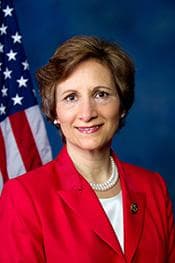
- Introduced
- 7/17/2025
- Last activity
- 7/17/2025 — Referred to the Committee on the Judiciary, and in addition to the Committee on Armed Services, for a period to be subsequently determined by the Speaker, in each case for consideration of such provisions as fall within the jurisdiction of the committee concerned.
- Sponsored by
- Suzanne Bonamici
- Cosponsors
- - 15 - 0
- Introduced
- In Committee
What this bill would do
The ``Preventing Authoritarian Policing Tactics on America's Streets Act'' aims to limit how Federal law enforcement officers and members of the armed forces are used for crowd control. It requires these individuals to display clearly visible identification, including their agency and last name or unique identifier, while performing such duties. The bill prohibits the use of unmarked vehicles for apprehending or arresting civilians during these activities. Furthermore, it restricts crowd control authority primarily to Federal property and its immediate vicinity. There are exceptions for written requests from state and local leaders or the invocation of the Insurrection Act. Finally, the act mandates public notice regarding the deployment of personnel after an incident occurs.
Yes· 3 of 9
Does this change how police departments operate?+7
The bill introduces significant transparency and accountability requirements for federal officers performing crowd control duties.
Does this make what the government does easier for the public to see?+6
The bill mandates public notice of deployments and requires officers to display clearly visible identifying information.
Does this narrow racial gaps in how people are treated?+5
By increasing accountability and visibility of federal law enforcement during protests, the bill seeks to prevent discriminatory or unchecked policing practices.
The opposite
Does this give the federal government more power?-4
The bill restricts the existing authority of federal law enforcement and the military to operate within certain jurisdictional boundaries.
Does this give the government more power to monitor people inside the country?-3
The bill restricts the scope of federal deployment, which could be viewed as a reduction in domestic surveillance and control capabilities.
Who it would affect, and how
Potential Positive Impacts for People
-
Increased Identification and Accountability: Federal law enforcement officers and members of the armed forces must display identifying information, such as their agency and last name or unique identifier, which is clearly visible during crowd control or arrest activities (Section 2(b)(1)). This also prohibits covering or obscuring this information (Section 2(b)(2)(A)).
-
Transparency in Vehicle Use: The bill prevents the use of unmarked vehicles when officers are engaged in the apprehension, detention, or arrest of civilians during protests or riots (Section 2(b)(2)(B)).
-
Defined Jurisdictional Boundaries: Control over crowds and protests is restricted mostly to Federal property and the areas immediately adjacent to it, such as sidewalks and streets near Federal buildings (Section 2(c)(1)).
-
Public Transparency of Deployments: Federal agencies or armed forces must publish a notice on their public-facing website within 24 hours of a deployment. This notice includes the date, the number of personnel in specific locations, the nature of the mission, and the location of any detained civilians (Section 2(e)).
Potential Negative Impacts for People
-
Restricted Arrest Authority: An arrest can be deemed unlawful if the officer or member of the armed forces is acting in violation of the identification or jurisdictional rules established by this bill (Section 2(d)).
-
Exceptions to Limitations: The limitations on where officers can perform crowd control do not apply if the Insurrection Act is invoked, or if there is a joint written request from a Governor and a head of a local government unit (Section 2(c)(2)).
Groups and Interests Ranking
Every group the model scored this bill for, from -10 to +10. Hover a score for the reason it gave.
- Social Issues And Justice
- Improves Policing Reform+7Improves Racial Equity+5Improves Freedom Of Speech+4
- Governance And Ideology
- Improves Government Transparency+6Improves Freedom Of Speech+4Improves Due Process+3Increase States Rights+3Increases Federal Power-4
- Demographic And Interest Groups
- Good For African Americans+4Good For Urban Residents+2
- National Security And Foreign Policy
- Increases Domestic Surveillance-3
- 10/10/2025
- 1 Cosponsor added.
- 8/5/2025
- 1 Cosponsor added.
- 7/21/2025
- 1 Cosponsor added.
- 7/17/2025
- Referred to the Committee on the Judiciary, and in addition to the Committee on Armed Services, for a period to be subsequently determined by the Speaker, in each case for consideration of such provisions as fall within the jurisdiction of the committee concerned.
- 12 Cosponsors added.
- Introduced in House
One bill Congress.gov lists as related to this one — companions in the other chamber, earlier versions, and bills this one absorbed or was folded into.
 Nanette Barragán
Democrat · California
 Janelle Bynum
Democrat · Oregon
 Judy Chu
Democrat · California
 J. Correa
Democrat · California
 Maxine Dexter
Democrat · Oregon
 Val Hoyle
Democrat · Oregon
 Doris Matsui
Democrat · California
 Eleanor Norton
Democrat · District of Columbia
 Ilhan Omar
Democrat · Minnesota
 Chellie Pingree
Democrat · Maine
 Emily Randall
Democrat · Washington
 Andrea Salinas
Democrat · Oregon
 Lateefah Simon
Democrat · California
 Paul Tonko
Democrat · New York
 Nydia Velázquez
Democrat · New York