Bill · H.R. 4399· House(119-HR-4399)
Resilient Transit Act of 2025
- Introduced
- 7/15/2025
- Last activity
- 7/15/2025 — Referred to the House Committee on Transportation and Infrastructure.
- Sponsored by
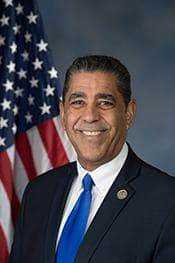
- Adriano Espaillat
- Cosponsors
- - 1 - 0
- Introduced
- In Committee
What this bill would do
The Resilient Transit Act of 2025 aims to amend title 49 of the United States Code to allow "state of good repair" grants to be used for public transportation resilience improvement. This includes funding for activities that protect transportation systems from climate change impacts like flooding, wildfires, and extreme weather. The bill authorizes the Secretary to provide these grants to state and local government authorities. It establishes specific definitions for various underserved and environmental justice communities. Additionally, the bill sets an authorization of $300,000,000 for fiscal year 2026 to carry out these new grant provisions.
Yes· 3 of 12
Does this improve buses, trains and other public transport?+7
The bill specifically allocates $300 million to improve the climate resilience of public transportation systems.
Does this narrow racial gaps in how people are treated?+5
The bill specifically targets environmental justice communities, including communities of color and Tribal communities, for infrastructure resilience.
Would households on low incomes be better off under this?+4
The bill prioritizes underserved and low-income communities for transit resilience improvements.
The opposite
No question was scored the opposite.
Who it would affect, and how
Potential Positive Impacts for People
-
Increased Climate Resilience: The bill allows for activities that increase the resilience of public transportation systems against impacts like sea level rise, flooding, wildfires, and extreme weather events (Section 3, subsection (a)(3)(A)).
-
Flood Prevention and Detection: Grants can be used for installing measures to prevent floodwater intrusion, equipment to detect floods, and replacing equipment prone to flooding (Section 3, subsection (a)(3)(B)(i-iii)).
-
Improved Infrastructure Maintenance: Funding can support the purchase of new equipment for the regular maintenance of drainage and pumping infrastructure (Section 3, subsection (a)(3)(B)(iv)).
-
Temperature Regulation: The bill allows for the replacement of equipment stressed by extreme temperatures and the installation of equipment to regulate and monitor those temperatures (Section 3, subsection (a)(3)(B)(v-vi)).
-
System Reliability: Grants can support the development of backup systems to provide redundancy if a primary power source fails (Section 3, subsection (a)(3)(B)(vii)).
-
Better Planning: Funds can be used for assessing system vulnerabilities to weather and natural disasters and planning improvements and emergency response strategies (Section 3, subsection (a)(3)(B)(viii-ix)).
Potential Negative Impacts for People
- No specific negative impacts are explicitly detailed in the provided text.
Groups and Interests Ranking
Every group the model scored this bill for, from -10 to +10. Hover a score for the reason it gave.
- Demographic And Interest Groups
- Good For Low Income Households+4Good For Native Americans+4Good For African Americans+3Good For Hispanic Americans+3Good For Urban Residents+3
- Environment Energy And Infrastructure
- Improves Public Transit+7Improves Environmental Protections+4Improves Disaster Relief And F E M A+3
- Social Issues And Justice
- Improves Racial Equity+5Improves Poverty Reduction+2
- Governance And Ideology
- Improves Government Transparency+1Increases Federal Power+1
- 7/15/2025
- Referred to the House Committee on Transportation and Infrastructure.
- 1 Cosponsor added.
- Introduced in House
One bill Congress.gov lists as related to this one — companions in the other chamber, earlier versions, and bills this one absorbed or was folded into.
 Eleanor Norton
Democrat · District of Columbia