Bill · H.R. 4310· House(119-HR-4310)
Back the Blue Act of 2025
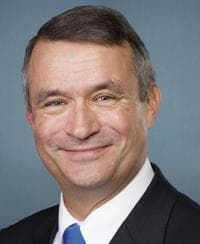
- Introduced
- 7/10/2025
- Last activity
- 7/10/2025 — Referred to the House Committee on the Judiciary.
- Sponsored by
- Don Bacon
- Cosponsors
- - 2 - 2
- Introduced
- In Committee
What this bill would do
The "Back the Blue Act of 2025" aims to increase protections for law enforcement officers, judges, and public safety personnel. It establishes federal crimes and specific penalties for killing or assaulting these individuals, including federally funded public safety officers. The bill implements stricter sentencing guidelines and death penalty aggravating factors for such crimes. It also limits federal habeas corpus relief for those convicted of killing public safety officers or judges. Additionally, the act expands the authority of sworn officers to carry firearms and provides grants to improve community-law enforcement relationships.
Yes
Does this give the federal government more power?+5
The bill increases federal jurisdiction over state and local law enforcement assault cases.
Does this change how police departments operate?+2
The bill provides grants for transparency and community trust-building, though it focuses heavily on officer protection.
Does this protect the right to own guns?+2
The bill expands the authority for various law enforcement officers to carry firearms in specific settings.
The opposite· 3 of 4
Does this protect the right to fair treatment by the courts?-5
The bill imposes significant limitations on federal habeas relief and sentencing claims.
Does this shorten or soften prison sentences?-4
The bill imposes much harsher sentencing and death penalty options for crimes against public safety officers.
Does this leave more decisions to the states?-3
The bill allows the federal government to take jurisdiction over certain state crimes.
Who it would affect, and how
Potential Positive Impacts for People
-
Enhanced Protection for Law Enforcement and Judicial Officers: The bill creates new federal offenses for killing or attempting to kill United States judges, Federal law enforcement officers, and federally funded public safety officers (Sec. 2(a)). It also provides penalties for assaults on these individuals (Sec. 2(b)).
-
Protection for Former Officers: The law extends protections to individuals who formerly served as United States judges, Federal law enforcement officers, or federally funded public safety officers if the crime is related to their past performance of official duties (Sec. 2(a)(b)(2) and Sec. 2(b)(2)).
-
Self-Defense Capabilities: The bill expands the authority of sworn officers to carry firearms while performing official duties, including while depositing them in secure storage at Federal facilities (Sec. 5(a)). It also allows qualified law enforcement officers and retired officers to carry firearms and ammunition in certain civilian public access facilities (Sec. 5(g)).
-
Community Relationship Improvements: Through grants of up to $20,000,000 annually from 2026 through 2030, the bill aims to promote trust, transparency, and accountability between law enforcement and the communities they serve (Sec. 6(a)).
-
Officer Wellness: The bill encourages the implementation of practices that support officer wellness and safety, specifically through the reevaluation of officer shift hours (Sec. 6(a)(6)).
Potential Negative Impacts for People
-
Strict Penalties and Increased Sentencing: The bill introduces severe penalties, including life imprisonment or the death penalty for killing law enforcement officers or judges (Sec. 2(a)(c)). It also establishes significant prison terms for assaults on federally funded State or local law enforcement officers (Sec. 2(b)(c)).
-
Limitations on Habeas Corpus Relief: For people in custody following a State court judgment for the killing of a public safety officer or judge, the bill imposes time limitations on writ of habeas corpus applications and prohibits courts from considering certain sentencing claims adjudicated in State court (Sec. 4(a)(1)).
-
Federal Jurisdiction Overreach: The Attorney General must certify certain conditions before the United States can prosecute assaults on State or local law enforcement officers, such as when a State lacks jurisdiction or the federal interest in addressing bias-motivated violence is unvindicated (Sec. 2(b)(d)).
-
Statute of Limitations Restrictions: For assaults on law enforcement officers that do not result in death, the bill limits prosecution to a 7-year window following the offense (Sec. 2(b)(e)(1)).
Groups and Interests Ranking
Every group the model scored this bill for, from -10 to +10. Hover a score for the reason it gave.
- Governance And Ideology
- Increases Federal Power+5Improves Due Process-5Increase States Rights-3
- Social Issues And Justice
- Improves Policing Reform+2Improves Second Amendment Protections+2Improves Criminal Sentencing Reform-4Improves Gun Control Measures-3
- 5/12/2026
- 2 Cosponsors added.
- 10/31/2025
- 1 Cosponsor added.
- 7/10/2025
- Referred to the House Committee on the Judiciary.
- 1 Cosponsor added.
- Introduced in House
One bill Congress.gov lists as related to this one — companions in the other chamber, earlier versions, and bills this one absorbed or was folded into.
 Josh Gottheimer
Democrat · New Jersey
 Jared Golden
Democrat · Maine
 Michael Lawler
Republican · New York
 Ryan Mackenzie
Republican · Pennsylvania