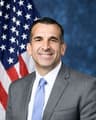
Sam Liccardo (D-CA)
Remittance Expense Minimization and Integrity for Transfers Act
A Democratic bill with 8 Democratic cosponsors · See all 8 cosponsors
Last activity — Referred to the Committee on Ways and Means, and in addition to the Committee on Financial Services, for a period to be subsequently determined by the Speaker, in each case for consideration of such provisions as fall within the jurisdiction of the committee concerned.
In committee
Introduced and handed to a committee in the chamber it started in.
The committee holds it, and most bills are never heard from again. A hearing or a committee vote would be news; silence is the usual outcome, and it kills the bill without anyone voting against it.
Its path through Congress
- Introduced
- In Committee
What this bill would do
The REMIT Act of 2025 aims to limit how the Federal Government imposes excise taxes and fees on money transmitting businesses. Under this bill, the government cannot require these taxes or fees unless the Secretary of the Treasury provides specific certifications to Congress. These certifications must ensure that the taxes do not increase the risk of money laundering or financial crimes. Additionally, the Secretary must certify that the taxes do not create an undue burden on the businesses. The bill defines money transmitting businesses broadly to include licensed senders and informal money transfer systems.
Yes· 3 of 10
- Scored +5
Would business owners be better off under this?
Protects money transmitting businesses from undue tax and fee burdens.
- Scored +5
Would immigrants be better off under this?
Facilitates more affordable and predictable remittance processes for diaspora populations.
- Scored +5
Does this cut taxes for small businesses?
The bill prevents new excise taxes or fees that would impose an undue burden on money transmitting businesses.
The opposite
- Scored -2
Does this give the federal government more power?
The bill restricts the government's ability to impose certain taxes without specific certifications.
Who it would affect, and how
Potential Positive Impacts for People
-
Protection against financial crime risks: By requiring the Secretary of the Treasury to certify that taxes will not increase the potential for money laundering or other financial crime activities, the bill seeks to prevent the shift of funds to unregulated methods (Section 3(a)(1)).
-
Prevention of undue burdens on businesses: The bill prohibits taxes or fees that would impose an undue burden on money transmitting businesses (Section 3(a)(2)).
Potential Negative Impacts for People
- No specific negative impacts are detailed within the provided text.
Groups and Interests Ranking
Every group the model scored this bill for, from -10 to +10. Tap or hover a score for the reason it gave.
- Demographic And Interest Groups
- Would business owners be better off under this? — Protects money transmitting businesses from undue tax and fee burdens. Would immigrants be better off under this? — Facilitates more affordable and predictable remittance processes for diaspora populations. Would Asian Americans be better off under this? — Supports the stable movement of remittances which are often vital to diaspora communities. Would Hispanic Americans be better off under this? — Supports the stable movement of remittances which are often vital to diaspora communities. Would households on low incomes be better off under this? — Ensures more affordable and secure remittance channels for diaspora community members.
- Economy And Finance
- Does this make it easier to run a small business? — It protects money transmitting businesses from undue financial burdens caused by new federal excise taxes. Does this cut taxes for small businesses? — The bill prevents new excise taxes or fees that would impose an undue burden on money transmitting businesses. Does this give people more protection from unfair business practices? — By maintaining licit remittance channels, it helps prevent consumers from being pushed toward unregulated and riskier transfer methods.
- Social Issues And Justice
- Is this likely to lift people out of poverty? — Protecting remittance flows can help stabilize economies and assist in the global elimination of poverty.
- Governance And Ideology
- Does this make what the government does easier for the public to see? — Requires Treasury certification and reporting to Congress regarding the necessity of taxes/fees. Does this give the federal government more power? — The bill restricts the government's ability to impose certain taxes without specific certifications.
- 7/14/2025
- 1 Cosponsor added.
- 7/2/2025
- Referred to the Committee on Ways and Means, and in addition to the Committee on Financial Services, for a period to be subsequently determined by the Speaker, in each case for consideration of such provisions as fall within the jurisdiction of the committee concerned.
- 7 Cosponsors added.
- Introduced in House
 J. Correa
Democrat · California
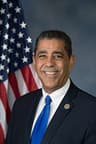 Adriano Espaillat
Democrat · New York
 Vicente Gonzalez
Democrat · Texas
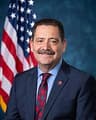 Jesús García
Democrat · Illinois
 Darren Soto
Democrat · Florida
 Suhas Subramanyam
Democrat · Virginia
 Ritchie Torres
Democrat · New York
 Juan Vargas
Democrat · California