Bill · H.R. 426· House(119-HR-426)
Housing Survivors of Major Disasters Act
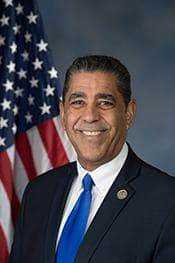
- Introduced
- 1/15/2025
- Last activity
- 1/16/2025 — Referred to the Subcommittee on Economic Development, Public Buildings, and Emergency Management.
- Sponsored by
- Adriano Espaillat
- Cosponsors
- - 1 - 2
- Introduced
- In Committee
What this bill would do
The "Housing Survivors of Major Disasters Act" aims to provide necessary disaster assistance to families affected by major disasters. It expands the criteria for assistance by allowing the President to consider "constructive ownership" for individuals who lack documented ownership of their primary residence. The bill outlines various forms of evidence that can be used to prove this ownership to the Administrator of FEMA. Additionally, the act amends existing disaster relief laws regarding housing assistance and repair standards. These changes focus on providing assistance for properties damaged by a major disaster, rather than just those rendered uninhabitable.
Yes· 3 of 8
Does this improve help for people hit by a disaster?+7
The bill expands assistance criteria for 'constructive ownership' and broadens the scope of qualifying property damage.
Would households on low incomes be better off under this?+5
The expanded definition of constructive ownership helps low-income individuals without formal deeds access disaster relief.
Does this make housing cost less?+5
The bill expands housing assistance eligibility to those whose homes are merely damaged by a disaster rather than completely uninhabitable.
The opposite
No question was scored the opposite.
Who it would affect, and how
Potential Positive Impacts for People
-
Expanded Assistance Eligibility: The bill allows the President to consider an individual or household's claim of "constructive ownership" when they do not have documented ownership rights in their primary residence (Section 3(a)(1)). This could help families who occupy homes without traditional deeds or titles.
-
Flexible Evidence Requirements: The Administrator is directed to consider a wide variety of evidence to establish ownership, such as mortgage booklets, property tax receipts, homeowners insurance, or even receipts for major repairs (Section 3(a)(2)). This provides multiple ways for people to prove their connection to a property.
-
Simplified Declarative Process: If evidence is insufficient, individuals may provide a signed statement under penalty of perjury to describe their constructive ownership, and the Administrator is prohibited from requiring that this statement be notarized (Section 3(a)(3)).
-
Broader Housing Assistance Criteria: By amending the language from "rendered uninhabitable" to "damaged by a major disaster," the bill expands the scope of who can receive housing assistance (Section 4(a)).
Potential Negative Impacts for People
-
Discretionary Determination: The determination of "constructive ownership" is left to the discretion of the Administrator (Section 3(b)), which means assistance is not guaranteed and depends on their determination that a residence is owner-occupied.
-
Burden of Proof: While the bill provides a list of evidence, the individual or household is still responsible for providing documentation to link themselves to the property (Section 3(a)(2)).
Groups and Interests Ranking
Every group the model scored this bill for, from -10 to +10. Hover a score for the reason it gave.
- Demographic And Interest Groups
- Good For Low Income Households+5Good For Hispanic Americans+2Good For Middle Class Households+2Good For Urban Residents+1
- Social Issues And Justice
- Improves Affordable Housing+5Improves Poverty Reduction+3
- Environment Energy And Infrastructure
- Improves Disaster Relief And F E M A+7
- Economy And Finance
- Improves Economic Growth+1
- 12/9/2025
- 1 Cosponsor added.
- 3/6/2025
- 1 Cosponsor added.
- 1/16/2025
- Referred to the Subcommittee on Economic Development, Public Buildings, and Emergency Management.
- 1/15/2025
- Referred to the Committee on Transportation and Infrastructure, and in addition to the Committee on the Budget, for a period to be subsequently determined by the Speaker, in each case for consideration of such provisions as fall within the jurisdiction of the committee concerned.
- 1 Cosponsor added.
- Introduced in House
 Brian Fitzpatrick
Republican · Pennsylvania
 Pablo Hernández
Democrat · Puerto Rico
 Young Kim
Republican · California