Bill · H.R. 4179· House(119-HR-4179)
Countering Wrongful Detention Act of 2025
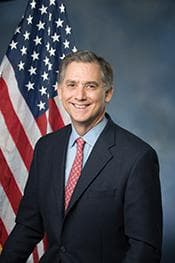
- Introduced
- 6/26/2025
- Last activity
- 6/26/2025 — Referred to the Committee on Foreign Affairs, and in addition to the Committee on the Judiciary, for a period to be subsequently determined by the Speaker, in each case for consideration of such provisions as fall within the jurisdiction of the committee concerned.
- Sponsored by
- J. Hill
- Cosponsors
- - 4 - 3
- Introduced
- In Committee
What this bill would do
The Countering Wrongful Detention Act of 2025 aims to give the United States government more power to stop foreign countries or non-state actors from holding U.S. citizens for political leverage. It allows the Secretary of State to designate certain countries as "State Sponsors of Unlawful or Wrongful Detention" if they are involved in such detentions. Once a country is designated, the Secretary must review available tools to respond to and deter these actions. The bill includes specific criteria for making a designation and rules for how that designation can be terminated. It also requires various reports and briefings to Congress to ensure oversight.
Yes
Does this make what the government does easier for the public to see?+6
The bill requires public listing of designated countries and mandatory reporting to Congress.
Does this give the federal government more power?+5
The bill expands the Secretary of State's authority to designate foreign countries and implement various restrictions.
The opposite
No question was scored the opposite.
Who it would affect, and how
Potential Positive Impacts for People
-
Increased Deterrence for U.S. Nationals: The bill provides the Secretary of State with a mechanism to designate countries that engage in or support the detention of U.S. citizens, which aims to deter these actions (Section 2, subsection (a)).
-
Enhanced Accountability through Oversight: The bill requires the Secretary of State to submit reports to congressional committees within 7 days of a designation, including the justification and actions taken to deter detentions (Section 2, subsection (d)(1)).
-
Increased Transparency for the Public: The Secretary is required to maintain a list of designated countries on a publicly accessible Department of State website (Section 2, subsection (d)(5)).
-
Expanded Response Options: The Secretary must conduct a review of available authorities to respond to and deter wrongful detentions, which include visa restrictions, sanctions, and assistance restrictions (Section 2, subsection (e)).
-
Specific Targeted Oversight: The bill mandates an initial briefing on specific countries, such as Afghanistan, Iran, and China, to determine if they should be designated (Section 2, subsection (d)(2)(A)).
Potential Negative Impacts for People
-
Potential for Unintended Economic or Diplomatic Consequences: While not explicitly stated as a negative, the bill directs the Secretary to review various restrictions including inadmissibilities, sanctions, and restrictions on assistance or exports, which are tools used to respond to a designation (Section 2, subsection (e)).
-
Automatic Termination Risk: A designation expires after 6 months unless a joint resolution of approval is enacted into law, which could lead to a loss of the designation and its associated deterrent effects if Congress does not act (Section 2, subsection (b)(2)).
Groups and Interests Ranking
Every group the model scored this bill for, from -10 to +10. Hover a score for the reason it gave.
- Governance And Ideology
- Improves Government Transparency+6Increases Federal Power+5
- 10/17/2025
- 1 Cosponsor added.
- 8/26/2025
- 1 Cosponsor added.
- 7/22/2025
- 1 Cosponsor added.
- 6/26/2025
- Referred to the Committee on Foreign Affairs, and in addition to the Committee on the Judiciary, for a period to be subsequently determined by the Speaker, in each case for consideration of such provisions as fall within the jurisdiction of the committee concerned.
- 4 Cosponsors added.
- Introduced in House
 Josh Gottheimer
Democrat · New Jersey
 Thomas Kean
Republican · New Jersey
 Michael Lawler
Republican · New York
 Jared Moskowitz
Democrat · Florida
 Richard McCormick
Republican · Georgia
 Addison McDowell
Republican · North Carolina
 Eugene Vindman
Democrat · Virginia