Bill · H.R. 4154· House(119-HR-4154)
Employee Rights Act
- Introduced
- 6/26/2025
- Last activity
- 6/26/2025 — Referred to the Committee on Education and Workforce, and in addition to the Committee on the Judiciary, for a period to be subsequently determined by the Speaker, in each case for consideration of such provisions as fall within the jurisdiction of the committee concerned.
- Sponsored by
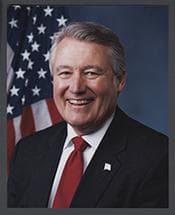
- Rick Allen
- Cosponsors
- - 13 - 0
- Introduced
- In Committee
What this bill would do
This bill, called the "Employee Rights Act", seeks to reform labor laws by modifying the National Labor Relations Act, the Labor Management Relations Act, the Labor-Management Reporting and Disclosure Act, and the Fair Labor Standards Act. The proposed changes include requiring secret ballot elections for collective bargaining, restricting voting rights for employees without lawful immigration status, protecting employee privacy regarding personal information, and redefining the criteria for determining employee status. It also addresses tribal sovereignty, independent negotiating, diversity initiatives, union violence, and unlawful harassment.
Yes· 3 of 4
Would business owners be better off under this?+2
The bill includes provisions that could reduce employer liability and increase flexibility.
Does this protect people from being watched or searched?+2
The bill includes provisions to enhance employee privacy regarding their personal information.
Does this give people more control over their personal data?+2
Employee privacy measures regarding personal information and union activities are a positive.
The opposite· 3 of 12
Would immigrants be better off under this?-5
Excluding undocumented workers from union representation and voting is a significant negative.
Would union members be better off under this?-5
Overall, the bill weakens union power and collective bargaining rights.
Would households on low incomes be better off under this?-3
Redefining employee status could lead to fewer benefits for low-income workers.
Who it would affect, and how
Potential Positive Impacts for People
-
Enhanced Employee Rights for Lawful Workers (Section 2): Requiring secret ballot elections for selecting collective bargaining representatives could be viewed as a positive step, ensuring that the selection process is more democratic and reflects the true will of the employees.
-
Employee Privacy (Section 4): Provisions protecting the personal information of employees during organizing drives and restricting the use of such information could be seen as a positive for individual privacy rights. Specifically, Section 4(a) requires employers to provide a voter list to a labor organization that petitioned to represent such employees. Section 4(c) ensures that no employee's labor organization dues can be used for nonrepresentational activities without written consent.
-
Freedom from Union Violence Act (Section 9): Amending Section 1951 of title 18, United States Code, seeks to address violence related to labor disputes, and could protect individuals from threats or physical harm.
-
Unlawful Harassment (Section 10): This section allows employers to take action against discriminatory, harassing, or demeaning language or conduct, which can create a safer and more respectful work environment.
Potential Negative Impacts for People
-
Union Voting for Employees Who Do Not Have Lawful Status (Section 3): Excluding employees without lawful immigration status from voting in union elections or being considered for representation could negatively impact these workers by limiting their ability to collectively bargain for better wages and working conditions.
-
Employment Relationships (Section 5): Redefining the criteria for determining employee status under the Fair Labor Standards Act could lead to more workers being classified as independent contractors, potentially denying them benefits and protections afforded to employees. Section 5(c) changes the terms of who can be considered a joint employer, making it more difficult to hold multiple entities accountable for labor violations.
-
Independent Negotiating (Section 7): Allowing individual employees to engage in independent negotiating in covered states could undermine the collective bargaining power of unions and potentially create disparities in wages and working conditions among employees within the same unit.
-
Diversity, Equity, or Inclusion (Section 8): Restricting the inclusion of diversity, equity, or inclusion initiatives in collective bargaining agreements, unless required by law, could limit efforts to address workplace inequality and promote a more inclusive environment.
Groups and Interests Ranking
Every group the model scored this bill for, from -10 to +10. Hover a score for the reason it gave.
- Demographic And Interest Groups
- Good For Business Owners+2Good For Immigrants-5Good For Union Workers-5Good For Low Income Households-3Good For African Americans-1Good For Asian Americans-1Good For Hispanic Americans-1Good For Middle Class Households-1Good For Women-1
- Social Issues And Justice
- Improves Pathway To Citizenship-3Improves Gender Equality-2Improves Racial Equity-2
- Economy And Finance
- Improves Union Protections-3
- Governance And Ideology
- Improves Privacy Rights+2Improves Electoral Process+1
- Education And Technology
- Improves Data Privacy+2
- 9/16/2025
- 1 Cosponsor added.
- 9/8/2025
- 1 Cosponsor added.
- 9/2/2025
- 2 Cosponsors added.
- 7/15/2025
- 1 Cosponsor added.
- 6/26/2025
- Referred to the Committee on Education and Workforce, and in addition to the Committee on the Judiciary, for a period to be subsequently determined by the Speaker, in each case for consideration of such provisions as fall within the jurisdiction of the committee concerned.
- 8 Cosponsors added.
- Introduced in House
5 bills Congress.gov lists as related to this one — companions in the other chamber, earlier versions, and bills this one absorbed or was folded into.
 Aaron Bean
Republican · Florida
 Earl Carter
Republican · Georgia
 Mark Harris
Republican · North Carolina
 Brian Jack
Republican · Georgia
 Julia Letlow
Republican · Louisiana
 John Moolenaar
Republican · Michigan
 Ralph Norman
Republican · South Carolina
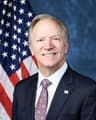 Robert Onder
Republican · Missouri
 Scott Perry
Republican · Pennsylvania
 David Rouzer
Republican · North Carolina
 John Rose
Republican · Tennessee
 Marlin Stutzman
Republican · Indiana
 Joe Wilson
Republican · South Carolina