Bill · H.R. 403· House(119-HR-403)
Preventing Our Next Natural Disaster Act
- Introduced
- 1/14/2025
- Last activity
- 1/15/2025 — Referred to the Subcommittee on Economic Development, Public Buildings, and Emergency Management.
- Sponsored by
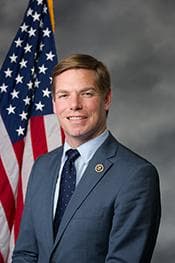
- Eric Swalwell
- Cosponsors
- - 6 - 0
- Introduced
- In Committee
What this bill would do
The "Preventing Our Next Natural Disaster Act" aims to improve disaster mitigation efforts to prevent future natural disasters. It updates the Robert T. Stafford Disaster Relief and Emergency Assistance Act by introducing new definitions for high hazard risk, environmental justice, and small impoverished communities. The bill directs the FEMA Administrator to develop guidance on incorporating climate change into risk indices and building standards. It also establishes priority for assistance to specific vulnerable communities. Additionally, the bill increases funding percentages for national public infrastructure and enhances community outreach. Finally, it mandates the creation of a central Federal database to track disaster spending and project evaluations.
Yes· 3 of 14
Does this improve help for people hit by a disaster?+8
The bill enhances predisaster mitigation through updated risk indices, priority for vulnerable communities, and increased funding percentages.
Does this better protect air, water and wildlife?+7
The bill directs FEMA to incorporate climate change projections into risk indices and building standards.
Would Native Americans be better off under this?+6
The bill explicitly includes Tribal and indigenous communities within the definition of environmental justice communities for prioritized assistance.
The opposite
No question was scored the opposite.
Who it would affect, and how
Potential Positive Impacts for People
-
Prioritized Assistance for Vulnerable Groups: The bill directs that priority be given to high hazard risk communities, environmental justice communities, and those with low tax revenue or low rates of code adoption and enforcement (Section 4).
-
Increased Federal Support for Specific Communities: The President may contribute up to 90 percent of the total cost of mitigation activities in small impoverished communities or environmental justice communities (Section 5).
-
Climate-Resilient Infrastructure: The Administrator can issue guidance to ensure projects are designed around future climate change projections and built to withstand flooding, wildfires, or other natural disasters (Section 3).
-
Enhanced Community Outreach: FEMA, in collaboration with various organizations, will provide outreach to help high-risk and disadvantaged communities learn how to plan, prioritize, and successfully administer grant applications (Section 7).
-
Improved Data Transparency and Accountability: A new central Federal database will consolidate funding data from various agencies and include post-project evaluations to analyze what was saved through proper mitigation (Section 8).
Potential Negative Impacts for People
- No specific negative impacts or burdens are explicitly stated in the provided text.
Groups and Interests Ranking
Every group the model scored this bill for, from -10 to +10. Hover a score for the reason it gave.
- Demographic And Interest Groups
- Good For Native Americans+6Good For African Americans+5Good For Asian Americans+5Good For Hispanic Americans+5Good For Low Income Households+5Good For Rural Residents+4
- Environment Energy And Infrastructure
- Improves Disaster Relief And F E M A+8Improves Environmental Protections+7Improves Roads And Bridges+3
- Social Issues And Justice
- Improves Racial Equity+6Improves Poverty Reduction+4
- Governance And Ideology
- Improves Government Transparency+6
- Economy And Finance
- Improves Fiscal Responsibility+5
- Education And Technology
- Increases Scientific Research Funding+2
- 10/8/2025
- 1 Cosponsor added.
- 9/10/2025
- 1 Cosponsor added.
- 6/26/2025
- 1 Cosponsor added.
- 3/31/2025
- 1 Cosponsor added.
- 2/4/2025
- 1 Cosponsor added.
- 1/15/2025
- Referred to the Subcommittee on Economic Development, Public Buildings, and Emergency Management.
- 1 Cosponsor added.
- 1/14/2025
- Referred to the House Committee on Transportation and Infrastructure.
- Introduced in House
 Wesley Bell
Democrat · Missouri
 Ed Case
Democrat · Hawaii
 Jared Huffman
Democrat · California
 Sydney Kamlager-Dove
Democrat · California
 Kevin Mullin
Democrat · California
 Eleanor Norton
Democrat · District of Columbia