Bill · H.R. 4023· House(119-HR-4023)
American Dream for All Act
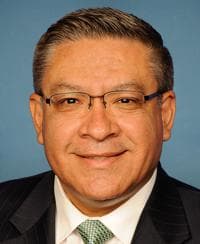
- Introduced
- 6/17/2025
- Last activity
- 6/17/2025 — Referred to the House Committee on Financial Services.
- Sponsored by
- Salud Carbajal
- Cosponsors
- - 3 - 0
- Introduced
- In Committee
What this bill would do
The "American Dream for All Act" directs the Secretary of Housing and Urban Development to create a pilot program for down payment assistance loans. This program provides capitalization grants to eligible entities like State agencies and Indian tribes to establish revolving loan funds. These funds are used to provide loans to specific borrowers for home purchases. The amount of the loan is tied to a percentage of the home's purchase price. Borrowers are required to repay the loan upon the sale of their home. This legislation includes provisions for determining loan limits based on the cost of living in different areas.
Yes· 3 of 6
Would households on low incomes be better off under this?+8
The bill specifically targets individuals with incomes up to 150 percent of the area median income for down payment assistance.
Does this make housing cost less?+7
The bill provides significant down payment assistance to help low-income and first-generation individuals purchase homes.
Would Native Americans be better off under this?+5
The bill explicitly includes Indian tribes as eligible entities to receive grants for these loan funds.
The opposite
No question was scored the opposite.
Who it would affect, and how
Potential Positive Impacts for People
-
Assistance for Homebuyers: The bill provides down payment assistance loans to eligible borrowers, which can be between 3 percent and 20 percent of the purchase price of a home (Sec. 2(d)(1)(B)).
-
Targeted Support for Specific Groups: The program specifically defines and targets assistance toward first-time homebuyers and first-generation homebuyers (Sec. 2(h)(1)-(3)).
-
Support for Low-Income Individuals: Assistance is directed toward individuals with an income not more than 150 percent of the area median income (Sec. 2(h)(1)(F)).
-
Flexible Distribution Methods: Loans can be distributed to eligible borrowers on a first-come, first-serve basis or through a lottery option (Sec. 2(d)(1)(C)).
-
Support for Vulnersable Populations: The definition of a first-generation homebuyer includes individuals who have been placed in foster care or institutional care (Sec. 2(h)(3)(B)).
Potential Negative Impacts for People
-
Repayment Obligations on Appreciation: For a home that increases in value, the borrower must repay the original loan amount plus an amount equal to a percentage of the home's appreciation (Sec. 2(e)(1)(A)(i)).
-
Loan Amount Limits Based on Location: Maximum loan amounts are capped at different levels depending on whether a State or Indian tribe is classified as high-cost ($150,000), medium-cost ($100,000), or low-cost ($50,000) (Sec. 2(e)(2)(A)).
-
Strict Eligibility Requirements: Borrowers must complete a homebuyer education course and obtain a certificate of completion from an approved agency (Sec. 2(h)(1)(C)-(D)).
Groups and Interests Ranking
Every group the model scored this bill for, from -10 to +10. Hover a score for the reason it gave.
- Demographic And Interest Groups
- Good For Low Income Households+8Good For Native Americans+5Good For Immigrants+2Good For Middle Class Households+2
- Social Issues And Justice
- Improves Affordable Housing+7Improves Poverty Reduction+3
- 10/9/2026
- 1 Cosponsor added.
- 4/20/2026
- 1 Cosponsor added.
- 7/10/2025
- 1 Cosponsor added.
- 6/17/2025
- Referred to the House Committee on Financial Services.
- Introduced in House
 Jim Costa
Democrat · California
 Eleanor Norton
Democrat · District of Columbia
 Brad Sherman
Democrat · California