
A Democratic bill with 2 Republican cosponsors · See all 8 cosponsors
Last activity — Referred to the House Committee on Energy and Commerce.
In committee
Introduced and handed to a committee in the chamber it started in.
The committee holds it, and most bills are never heard from again. A hearing or a committee vote would be news; silence is the usual outcome, and it kills the bill without anyone voting against it.
Its path through Congress
- Introduced
- In Committee
What this bill would do
The "Increasing Behavioral Health Treatment Act" aims to amend the Social Security Act regarding Medicaid. It seeks to remove the exclusion of items and services for patients in an institution for mental diseases from Medicaid medical assistance. To do this, states must submit a plan to provide appropriate outpatient care for these patients. The bill also requires states to demonstrate specific policies regarding screening, crisis services, and data sharing. Additionally, it mandates reporting on costs, utilization, and the length of stay for these individuals.
Yes· 3 of 12
- Scored +8
Does this make mental health care easier to get?
The bill mandates increased access to outpatient, community-based, and crisis stabilization services.
- Scored +7
Does this put more money into Medicaid, the health coverage for people on low incomes?
The bill expands Medicaid coverage to include services for patients in institutions for mental diseases.
- Scored +7
Would people with disabilities be better off under this?
The bill enhances support for those with serious mental illnesses and other behavioral health disorders.
The opposite
No question was scored the opposite.
Who it would affect, and how
Potential Positive Impacts for People
-
Increased Medicaid coverage for specific patients: By removing the exclusion, the bill allows for medical assistance for items and services for patients in an institution for mental diseases (Section 2(a)(1)).
-
Improved access to outpatient care: The bill requires states to plan for increased access to outpatient and community-based behavioral health care, specifically for those transitioning out of an institution (Section 2(b)(1)(D)(i)).
-
Better crisis response: States must provide plans for increased availability of services like crisis call centers, mobile crisis units, and coordinated community crisis response (Section 2(b)(1)(D)(ii)).
-
Enhanced coordination of care: The bill aims for improved data sharing and coordination between physical health, mental health, and addiction treatment providers and first responders (Section 2(b)(1)(D)(iii)).
-
Comprehensive health screening: The bill requires state policies to ensure individuals in psychiatric hospitals or residential treatment are screened for co-morbid physical health conditions and substance use disorders (Section 2(b)(1)(E)(i)).
-
Targeted support for vulnerable groups: States must establish strategies for identifying and engaging individuals experiencing a serious mental illness, serious emotional disturbance, or substance use disorder crisis, particularly adolescents and young adults (Section 2(b)(1)(E)(ii)).
-
Appropriate levels of care: The bill mandates utilization review policies to ensure individuals receive treatment at clinically appropriate levels and in the least restrictive environment (Section 2(b)(1)(E)(iii)).
Potential Negative Impacts for People
- No specific negative impacts are explicitly detailed in the text provided.
Groups and Interests Ranking
Every group the model scored this bill for, from -10 to +10. Tap or hover a score for the reason it gave.
- Healthcare
- Does this make mental health care easier to get? — The bill mandates increased access to outpatient, community-based, and crisis stabilization services. Does this put more money into Medicaid, the health coverage for people on low incomes? — The bill expands Medicaid coverage to include services for patients in institutions for mental diseases. Does this make health care easier to get in general? — The bill improves overall healthcare access for those in mental health institutions through better screening and coordination. Does this do more about addiction and overdose deaths? — The bill addresses substance use disorder crises through improved community-based services and care coordination.
- Demographic And Interest Groups
- Would people with disabilities be better off under this? — The bill enhances support for those with serious mental illnesses and other behavioral health disorders. Would households on low incomes be better off under this? — Increased Medicaid coverage directly benefits low-income individuals requiring mental health services. Would people in their twenties and thirties be better off under this? — The bill specifically targets strategies to engage adolescents and young adults in crisis.
- Social Issues And Justice
- Does this expand the rights of people with disabilities? — By expanding Medicaid services for mental health, the bill supports the rights of those with mental disabilities to receive care. Does this change how police departments operate? — The bill involves law enforcement in coordinated community crisis response efforts. Is this likely to reduce homelessness? — Increased access to community-based behavioral health services can support stability for vulnerable populations.
- Governance And Ideology
- Does this make what the government does easier for the public to see? — The bill requires states to report specific data regarding costs, utilization, and patient stays. Does this give the federal government more power? — The bill increases federal oversight via state plan requirements and reporting to the Secretary.
- 11/18/2026
- 1 Cosponsor added.
- 4/27/2026
- 1 Cosponsor added.
- 4/13/2026
- 1 Cosponsor added.
- 9/3/2025
- 1 Cosponsor added.
- 8/22/2025
- 1 Cosponsor added.
- 8/1/2025
- 1 Cosponsor added.
- 6/23/2025
- 1 Cosponsor added.
- 6/17/2025
- Referred to the House Committee on Energy and Commerce.
- 1 Cosponsor added.
- Introduced in House
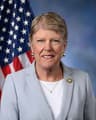 Julia Brownley
Democrat · California
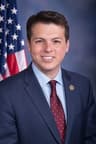 Brendan Boyle
Democrat · Pennsylvania
 Don Bacon
Republican · Nebraska
 Nanette Barragán
Democrat · California
 Brian Fitzpatrick
Republican · Pennsylvania
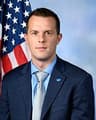 Jared Golden
Democrat · Maine
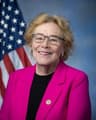 Zoe Lofgren
Democrat · California
 Mike Levin
Democrat · California