Bill · H.R. 4012· House(119-HR-4012)
National Airport Supersonic Readiness Act of 2025
- Introduced
- 6/13/2025
- Last activity
- 6/14/2025 — Referred to the Subcommittee on Aviation.
- Sponsored by
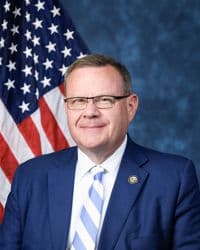
- Tim Moore
- Cosponsors
- - 1 - 2
- Introduced
- In Committee
What this bill would do
This bill, titled the "National Airport Supersonic Readiness Act of 2025," directs the FAA Administrator to study how prepared certain airports are for high-speed air travel. The study focuses on whether large hub airports can handle aircraft traveling at supersonic or hypersonic speeds. The Administrator must evaluate things like runway length, ground equipment, and air traffic control systems. This study should also consider environmental regulations regarding noise and emissions. A final report including results, policy recommendations, and estimated costs must be submitted to Congress within one year.
Yes· 3 of 7
Is this likely to create jobs?+1
The study on high-speed air travel infrastructure could lead to future job creation in the aviation and construction sectors.
Is this likely to grow the economy?+1
Assessing readiness for high-speed travel aims to identify potential economic benefits and growth drivers in the aviation industry.
Does this give the federal government more power?+1
The bill expands the scope of the FAA Administrator's evaluation and reporting responsibilities.
The opposite
No question was scored the opposite.
Who it would affect, and how
Potential Positive Impacts for People
-
Reduced Travel Times: Supersonic and hypersonic commercial airliners have the potential to significantly reduce long-shaul flight times (Section 2).
-
Infrastructure Preparedness: The study aims to evaluate if major United States airports can accommodate high-speed aircraft safely and efficiently (Section 2).
-
Economic Insight: The Administrator is required to evaluate potential economic benefits of accommodating high-speed aircraft at airports (Section 3(b)(5)).
Potential Negative Impacts for People
-
Environmental and Noise Concerns: The study must evaluate environmental regulations, including those relating to noise pollution or emissions, which may prevent the use of high-speed aircraft at certain airports (Section 3(b)(4)).
-
Economic Challenges: The study is tasked with evaluating potential economic challenges related to accommodating high-speed aircraft at airports (Section 3(b)(5)).
Groups and Interests Ranking
Every group the model scored this bill for, from -10 to +10. Hover a score for the reason it gave.
- Economy And Finance
- Improves Economic Growth+1Increases Job Creation+1
- Governance And Ideology
- Improves Government Transparency+1Increases Federal Power+1
- Demographic And Interest Groups
- Good For Urban Residents+1
- Education And Technology
- Increases Scientific Research Funding+1
- Environment Energy And Infrastructure
- Improves Public Transit+1
- 10/17/2025
- 1 Cosponsor added.
- 7/17/2025
- 1 Cosponsor added.
- 7/2/2025
- 1 Cosponsor added.
- 6/14/2025
- Referred to the Subcommittee on Aviation.
- 6/13/2025
- Referred to the House Committee on Transportation and Infrastructure.
- Introduced in House
 Alma Adams
Democrat · North Carolina
 Jay Obernolte
Republican · California
 Eugene Vindman
Democrat · Virginia