
William Keating (D-MA)
To ensure that certain short-term rentals are equipped with a smoke detector and a carbon monoxide detector, and for other purposes.
A Democratic bill with 1 Democratic cosponsor · See the cosponsor
Last activity — Referred to the House Committee on Energy and Commerce.
In committee
Introduced and handed to a committee in the chamber it started in.
The committee holds it, and most bills are never heard from again. A hearing or a committee vote would be news; silence is the usual outcome, and it kills the bill without anyone voting against it.
Its path through Congress
- Introduced
- In Committee
What this bill would do
This bill requires that certain short-term rentals be equipped with both a smoke detector and a carbon monoxide detector. It defines short-term rentals as properties providing temporary lodging for less than 30 days that are promoted or sold in interstate commerce. The Federal Trade Commission is authorized to create regulations to carry out these requirements. Violations of these rules will be treated as unfair or deceptive acts or practices under the Federal Trade Commission Act. The mandate for these safety devices takes effect one year after the act is passed.
Yes
- Scored +6
Does this give people more protection from unfair business practices?
The mandate ensures consumers have essential life-safety equipment in temporary lodging.
- Scored +3
Does this give the federal government more power?
The bill expands the Federal Trade Commission's authority to regulate short-term rental safety requirements.
- Scored +3
Would children be better off under this?
Increased safety detectors in rental properties provide a safer environment for children.
The opposite
- Scored -3
Would business owners be better off under this?
Short-term rental owners face new regulatory burdens and potential penalties for non-compliance.
- Scored -2
Does this make it easier to run a small business?
Small business owners operating short-term rentals will face new compliance costs and regulatory risks.
Who it would affect, and how
Potential Positive Impacts for People
- Safety Equipment Requirements: Under Section 1(a), short-term rentals must be equipped with a smoke detector and a carbon monoxide detector, which ensures these safety devices are present in many lodging facilities.
Potential Negative Impacts for People
-
Regulatory Oversight: Under Section 1(b), the Federal Trade Commission is authorized to promulgate regulations, which gives this agency the power to create rules to carry out the section.
-
Penalties for Violations: According to Section 1(c), any person who violates the requirement or its regulations may be subject to penalties provided in the Federal Trade Commission Act, as violations are treated as unfair or deceptive acts or practices.
Groups and Interests Ranking
Every group the model scored this bill for, from -10 to +10. Tap or hover a score for the reason it gave.
- Economy And Finance
- Does this give people more protection from unfair business practices? — The mandate ensures consumers have essential life-safety equipment in temporary lodging. Does this make it easier to run a small business? — Small business owners operating short-term rentals will face new compliance costs and regulatory risks.
- Governance And Ideology
- Does this give the federal government more power? — The bill expands the Federal Trade Commission's authority to regulate short-term rental safety requirements.
- Demographic And Interest Groups
- Would children be better off under this? — Increased safety detectors in rental properties provide a safer environment for children. Would business owners be better off under this? — Short-term rental owners face new regulatory burdens and potential penalties for non-compliance.
- 7/2/2025
- 1 Cosponsor added.
- 6/11/2025
- Referred to the House Committee on Energy and Commerce.
- Introduced in House
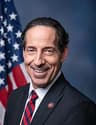 Jamie Raskin
Democrat · Maryland