
Glenn Grothman (R-WI)
Stop the Baseline Bloat Act of 2025
A Republican bill with 5 Democratic cosponsors · See all 9 cosponsors
Last activity — Referred to the House Committee on the Budget.
In committee
Introduced and handed to a committee in the chamber it started in.
The committee holds it, and most bills are never heard from again. A hearing or a committee vote would be news; silence is the usual outcome, and it kills the bill without anyone voting against it.
Its path through Congress
- Introduced
- In Committee
What this bill would do
This bill, known as the "Stop the Baseline Bloat Act of 2025," seeks to amend the Balanced Budget and Emergency Deficit Control Act of 1985. It proposes changes to how the Congressional Budget Office (CBO) calculates baseline projections for discretionary appropriations. Specifically, it aims to exclude resources designated as an emergency requirement from these projections. It also seeks to exclude any resources provided through supplemental appropriations laws.
Yes· 3 of 4
- Scored +3
Does this make the government pay for what it commits to?
It aims to improve budget clarity by excluding non-standard appropriations from standard baseline estimates.
- Scored +3
Does this make what the government does easier for the public to see?
The bill enhances budget transparency by providing a clearer picture of standard discretionary spending.
- Scored +2
Does this reduce what the federal government owes?
The bill promotes fiscal transparency by preventing emergency spending from inflating baseline projections.
The opposite
- Scored -2
Does this improve help for people hit by a disaster?
By excluding emergency requirements from baseline projections, it may obscure the true long-term cost of disaster relief needs.
Who it would affect, and how
Potential Positive Impacts for People
- Changes in the Baseline (Section 2): By excluding resources designated as an emergency requirement or provided in supplemental appropriations laws from CBO baseline projections, the bill changes how budget projections are calculated for discretionary appropriations.
Potential Negative Impacts for People
- Changes in the Baseline (Section 2): This section amends Section 257(c) of the Balanced Budget and Emergency Deficit Control Act of 1985 to exclude specific resource types from baseline projections.
Groups and Interests Ranking
Every group the model scored this bill for, from -10 to +10. Tap or hover a score for the reason it gave.
- Economy And Finance
- Does this make the government pay for what it commits to? — It aims to improve budget clarity by excluding non-standard appropriations from standard baseline estimates. Does this reduce what the federal government owes? — The bill promotes fiscal transparency by preventing emergency spending from inflating baseline projections. Does this reduce what the federal government spends? — By changing baseline calculations, it may create pressure for more disciplined discretionary spending.
- Governance And Ideology
- Does this make what the government does easier for the public to see? — The bill enhances budget transparency by providing a clearer picture of standard discretionary spending.
- Environment Energy And Infrastructure
- Does this improve help for people hit by a disaster? — By excluding emergency requirements from baseline projections, it may obscure the true long-term cost of disaster relief needs.
- 9/15/2025
- 1 Cosponsor added.
- 6/27/2025
- 1 Cosponsor added.
- 6/11/2025
- Referred to the House Committee on the Budget.
- 7 Cosponsors added.
- Introduced in House
 Ed Case
Democrat · Hawaii
 Ben Cline
Republican · Virginia
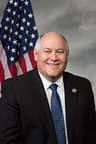 Ron Estes
Republican · Kansas
 Jared Golden
Democrat · Maine
 Marie Perez
Democrat · Washington
 Adam Gray
Democrat · California
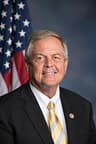 Ralph Norman
Republican · South Carolina
 Marlin Stutzman
Republican · Indiana
 Eugene Vindman
Democrat · Virginia