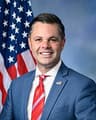
Zachary Nunn (R-IA)
SNAP Anti-Theft and Victim Compensation Act of 2025
A Republican bill with 2 Republican cosponsors · See all 2 cosponsors
Last activity — Referred to the House Committee on Agriculture.
In committee
Introduced and handed to a committee in the chamber it started in.
The committee holds it, and most bills are never heard from again. A hearing or a committee vote would be news; silence is the usual outcome, and it kills the bill without anyone voting against it.
Its path through Congress
- Introduced
- In Committee
What this bill would do
The bill is called the SNAP Anti-Theft and Victim Compensation Act of 2025. It gives the Inspector General of the Department of Agriculture full authority to investigate and coordinate efforts to stop the theft and misuse of SNAP benefits. The bill allows states to use SNAP benefit funds to reimburse households whose benefits were stolen through no fault of their own. It also creates a civil penalty for anyone who knowingly steals SNAP benefits, making them pay twice the value of the stolen benefits.
Yes· 3 of 6
- Scored +8
Would households on low incomes be better off under this?
The bill directly benefits low-income households by allowing them to recover stolen SNAP benefits.
- Scored +6
Does this better protect the country from computer attacks?
The bill expands investigative authority to combat cyber-enabled theft such as skimming and phishing.
- Scored +5
Does this give people more protection from unfair business practices?
The bill protects consumers by establishing a mechanism for reimbursement of stolen benefits.
The opposite
- Scored -2
Does this give the government more power to monitor people inside the country?
Expanded investigative and subpoena powers may increase domestic surveillance capabilities of the USDA Inspector General.
- Scored -2
Does this leave more decisions to the states?
The bill centralizes more investigative and enforcement authority at the federal level.
Who it would affect, and how
Potential Positive Impacts for People
-
Section 3 allows states to reimburse households for stolen SNAP benefits if the theft happened through no fault of their own, which helps everyday people get back food money they lost through crimes like skimming or cloning.
-
Section 3 ensures that getting a reimbursement will not affect a household's monthly allotment or ongoing eligibility for benefits.
-
Section 4 creates a civil penalty requiring thieves to pay back twice the value of the stolen benefits, and those recovered funds are used to help offset the cost of reimbursing victims.
Potential Negative Impacts for People
Based on the provided text, there are no specific negative impacts or burdens identified for individuals or groups of people in the United States.
Groups and Interests Ranking
Every group the model scored this bill for, from -10 to +10. Tap or hover a score for the reason it gave.
- Demographic And Interest Groups
- Would households on low incomes be better off under this? — The bill directly benefits low-income households by allowing them to recover stolen SNAP benefits.
- Economy And Finance
- Does this give people more protection from unfair business practices? — The bill protects consumers by establishing a mechanism for reimbursement of stolen benefits.
- Social Issues And Justice
- Is this likely to lift people out of poverty? — The bill aids poverty reduction by providing a way for vulnerable households to recover stolen food assistance.
- Education And Technology
- Does this give people more control over their personal data? — The bill addresses the theft of electronic benefits via cyber-enabled methods like phishing.
- National Security And Foreign Policy
- Does this better protect the country from computer attacks? — The bill expands investigative authority to combat cyber-enabled theft such as skimming and phishing. Does this give the government more power to monitor people inside the country? — Expanded investigative and subpoena powers may increase domestic surveillance capabilities of the USDA Inspector General.
- Governance And Ideology
- Does this give the federal government more power? — The bill expands the authority of the federal USDA Inspector General to investigate and prosecute. Does this leave more decisions to the states? — The bill centralizes more investigative and enforcement authority at the federal level.
- 11/9/2026
- 1 Cosponsor added.
- 9/24/2026
- 1 Cosponsor added.
- 6/10/2025
- Referred to the House Committee on Agriculture.
- Introduced in House
 H. Griffith
Republican · Virginia
 John McGuire
Republican · Virginia