Bill · H.R. 3862· House(119-HR-3862)
Clean Water SRF Parity Act of 2025
- Introduced
- 6/10/2025
- Last activity
- 6/11/2025 — Referred to the Subcommittee on Water Resources and Environment.
- Sponsored by
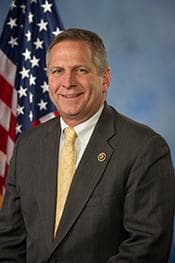
- Mike Bost
- Cosponsors
- - 4 - 3
- Introduced
- In Committee
What this bill would do
The Clean Water SRF Parity Act of 2025 aims to amend the Federal Water Pollution Control Act. It seeks to expand the types of projects and activities eligible for financial assistance through a State water pollution control revolving fund. Specifically, it includes qualified nonprofit entities for assistance regarding treatment works or other specific activities. The bill also establishes a special rule for providing financial assistance to owners or operators of privately owned treatment works. This assistance can cover improvements, water conservation, energy efficiency, and security measures.
Yes· 3 of 4
Does this better protect air, water and wildlife?+5
By expanding financial assistance for water treatment and conservation, it strengthens water quality management.
Does this cut the pollution that drives climate change?+3
The bill encourages water conservation and energy efficiency in water treatment works.
Would households on low incomes be better off under this?+3
The bill supports water treatment works that primarily and directly benefit the individuals served.
The opposite
No question was scored the opposite.
Who it would affect, and how
Potential Positive Impacts for People
-
Assistance for Nonprofits: Qualified nonprofit entities may receive assistance for the construction, acquisition, or improvement of treatment works, or other specific activities (Section 2, subsection (c)(13)).
-
Support for Privately Owned Treatment Works: Financial assistance may be provided to owners or operators of privately owned treatment works for various needs (Section 2, subsection (l)(1)).
-
Water Conservation and Efficiency: Assistance may be used for measures that reduce the demand for treatment works capacity through water conservation, efficiency, or reuse (Section 2, subsection (l)(1)(C)).
-
Energy and Security Improvements: Funds may be used for measures intended to reduce energy consumption needs or to increase the security of privately owned treatment works (Section 2, subsection (l)(1)(D) and (E)).
-
Direct Benefits to Served Communities: Financial assistance for privately owned treatment works is intended to primarily and directly benefit the individuals or entities served by those works (Section 2, subsection (l)(2)).
Potential Negative Impacts for People
- Restrictions on Subsidization: States are prohibited from providing additional subsidization to qualified nonprofit entities for the assistance described in the new provisions (Section 2, subsection (i)(3)(E)).
Groups and Interests Ranking
Every group the model scored this bill for, from -10 to +10. Hover a score for the reason it gave.
- Environment Energy And Infrastructure
- Improves Environmental Protections+5Reduces Carbon Emissions+3
- Demographic And Interest Groups
- Good For Low Income Households+3Good For Business Owners+2
- 8/20/2026
- 1 Cosponsor added.
- 7/13/2026
- 1 Cosponsor added.
- 4/6/2026
- 1 Cosponsor added.
- 9/4/2025
- 1 Cosponsor added.
- 7/29/2025
- 1 Cosponsor added.
- 7/2/2025
- 1 Cosponsor added.
- 6/11/2025
- Referred to the Subcommittee on Water Resources and Environment.
- 6/10/2025
- Referred to the House Committee on Transportation and Infrastructure.
- 1 Cosponsor added.
- Introduced in House
 Robert Bresnahan
Republican · Pennsylvania
 Herbert Conaway
Democrat · New Jersey
 John Garamendi
Democrat · California
 Thomas Kean
Republican · New Jersey
 Michael Lawler
Republican · New York
 Donald Norcross
Democrat · New Jersey
 Glenn Thompson
Republican · Pennsylvania