Bill · H.R. 3861· House(119-HR-3861)
Mobilizing Against Sanctuary Cities Act
- Introduced
- 6/10/2025
- Last activity
- 6/10/2025 — Referred to the Committee on the Judiciary, and in addition to the Committee on Oversight and Government Reform, for a period to be subsequently determined by the Speaker, in each case for consideration of such provisions as fall within the jurisdiction of the committee concerned.
- Sponsored by
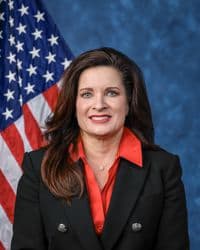
- Sheri Biggs
- Cosponsors
- - 19 - 0
- Introduced
- In Committee
What this bill would do
This bill, known as the "Mobilizing Against Sanctuary Cities Act," aims to stop sanctuary cities from receiving federal money. The Attorney General is required to identify jurisdictions that do not comply with specific immigration laws or fail to comply with Department of Homeland Security detainers or notifications. Once a jurisdiction is found to be out of compliance, it becomes ineligible for federal financial assistance for at least one year. To regain eligibility, the Attorney General must certify that the jurisdiction is now in compliance. Additionally, the Attorney General must report these findings to Congress annually.
Yes
Does this give the federal government more power?+7
The bill significantly expands federal authority by using financial penalties to dictate local immigration enforcement policies.
Does this tighten control of the border?+5
The bill strengthens border enforcement by penalizing jurisdictions that fail to cooperate with federal immigration authorities.
The opposite· 3 of 7
Does this leave more decisions to the states?-7
The bill reduces state sovereignty by coercing local jurisdictions to comply with federal immigration mandates through fund withholding.
Would immigrants be better off under this?-6
The bill increases pressure on immigrant communities through increased local law enforcement cooperation with federal authorities.
Would Hispanic Americans be better off under this?-5
Increased enforcement and loss of local resources may negatively impact immigrant-heavy communities.
Who it would affect, and how
Potential Positive Impacts for People
-
Increased Compliance with Immigration Laws: By penalizing jurisdictions that do not follow section s642 of the Illegal Immigration Reform and Immigrant Responsibility Act, the bill seeks to ensure local authorities adhere to federal requirements (Section 2(a)(1)).
-
Improved Cooperation with Federal Authorities: The bill targets jurisdictions that do not comply with requests from the Department of Homeland Security regarding detainers or notifications about the release of individuals, which could lead to better communication between local and federal agencies (Section 2(a)(2)).
Potential Negative Impacts for People
-
Loss of Federal Financial Assistance: Any jurisdiction identified as being out of compliance will be ineligible to receive federal financial assistance for at least one year (Section 2(b)).
-
Delayed Re-eligibility for Funds: A jurisdiction cannot receive federal money again until the Attorney General personally certifies that the jurisdiction is in compliance (Section 2(b)).
Groups and Interests Ranking
Every group the model scored this bill for, from -10 to +10. Hover a score for the reason it gave.
- Demographic And Interest Groups
- Good For Immigrants-6Good For Hispanic Americans-5Good For Urban Residents-4Good For Low Income Households-3Good For Students-2
- Education And Technology
- Increases Public School Funding-5
- Social Issues And Justice
- Improves Border Security+5
- Governance And Ideology
- Increases Federal Power+7Increase States Rights-7
- 5/21/2026
- 1 Cosponsor added.
- 1/7/2026
- 1 Cosponsor added.
- 12/10/2025
- 1 Cosponsor added.
- 10/31/2025
- 1 Cosponsor added.
- 10/17/2025
- 1 Cosponsor added.
- 10/10/2025
- 1 Cosponsor added.
- 7/2/2025
- 1 Cosponsor added.
- 6/23/2025
- 1 Cosponsor added.
- 6/12/2025
- 1 Cosponsor added.
- 6/10/2025
- Referred to the Committee on the Judiciary, and in addition to the Committee on Oversight and Government Reform, for a period to be subsequently determined by the Speaker, in each case for consideration of such provisions as fall within the jurisdiction of the committee concerned.
- 10 Cosponsors added.
- Introduced in House
 Jack Bergman
Republican · Michigan
 John Carter
Republican · Texas
 Byron Donalds
Republican · Florida
 Chuck Edwards
Republican · North Carolina
 Randy Fine
Republican · Florida
 Brandon Gill
Republican · Texas
 Ashley Hinson
Republican · Iowa
 Anna Paulina Luna
Republican · Florida
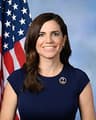 Nancy Mace
Republican · South Carolina
 Barry Moore
Republican · Alabama
 John McGuire
Republican · Virginia
 Addison McDowell
Republican · North Carolina
 Troy Nehls
Republican · Texas
 Ralph Norman
Republican · South Carolina
 John Rose
Republican · Tennessee
 Derek Schmidt
Republican · Kansas
 Claudia Tenney
Republican · New York
 Rudy Yakym
Republican · Indiana
 Ryan Zinke
Republican · Montana