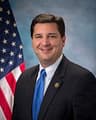
David Rouzer (R-NC)
Reducing Regulatory Burdens Act of 2025
A Republican bill with 9 Republican cosponsors · See all 9 cosponsors
Last activity — Referred to the Subcommittee on Water Resources and Environment.
In committee
Introduced and handed to a committee in the chamber it started in.
The committee holds it, and most bills are never heard from again. A hearing or a committee vote would be news; silence is the usual outcome, and it kills the bill without anyone voting against it.
Its path through Congress
- Introduced
- In Committee
What this bill would do
The Reducing Regulatory Burdens Act of 2025 aims to amend the Federal Insecticide, Fungicide, and Rodenticide Act and the Federal Water Pollution Control Act. The bill seeks to clarify Congressional intent regarding how pesticides used in or near navigable waters are regulated. Specifically, it limits the ability of the Administrator or a State to require permits for discharges from a point source into navigable waters of authorized pesticides. This applies to the pesticide itself or its residue resulting from application. Certain exceptions to these rules are established to maintain specific regulatory requirements.
Yes· 3 of 5
- Scored +5
Would farmers be better off under this?
Provides significant relief by exempting authorized pesticide applications from permit requirements.
- Scored +4
Would business owners be better off under this?
Significantly reduces regulatory compliance costs for pesticide users.
- Scored +3
Does this make it easier to run a small business?
Reduces regulatory and permitting burdens for pesticide application.
The opposite· 3 of 8
- Scored -5
Does this better protect air, water and wildlife?
Reduces federal permit requirements for pesticide discharges into navigable waters.
- Scored -3
Does this give the federal government more power?
Limits the authority of the EPA Administrator and States to require permits.
- Scored -3
Does this leave more decisions to the states?
Restricts the ability of States to require permits for authorized pesticide discharges.
Who it would affect, and how
Potential Positive Impacts for People
- Reduced Permitting Requirements: Under Section 2 and Section 3(t)(1), the Administrator or a State would not be able to require a permit for a discharge from a point source into navigable waters for pesticides that are authorized for sale, distribution, or use under the Federal Insecticide, Fungicide, and Rodenticide Act. This applies to both the pesticide and its residue resulting from application.
Potential Negative Impacts for People
- Exceptions to Permit Exemptions: Under Section 3(t)(2), certain discharges would still require regulation or permits, which may limit the scope of the new rule. These include:
- Violations: Discharges resulting from pesticide applications that violate the Federal Insecticide, Fungicide, and Rodenticide Act in ways that affect water quality (Section 3(t)(2)(A)).
- Stormwater: Stormwater discharges subject to regulation under subsection (p) (Section 3(t)(2)(B)).
- Industrial and Vessel Operations: Manufacturing or industrial effluent, treatment works effluent, and discharges incidental to the normal operation of a vessel, such as ballasting or biofouling prevention (Section 3(t)(2)(C)).
Groups and Interests Ranking
Every group the model scored this bill for, from -10 to +10. Tap or hover a score for the reason it gave.
- Demographic And Interest Groups
- Would farmers be better off under this? — Provides significant relief by exempting authorized pesticide applications from permit requirements. Would business owners be better off under this? — Significantly reduces regulatory compliance costs for pesticide users. Would people in rural areas be better off under this? — Reduces regulatory burdens which may benefit the rural agricultural economy. Would Native Americans be better off under this? — Potential negative impact on water resources important to many indigenous communities. Would children be better off under this? — Potential reduction in water quality oversight could impact environmental health. Would households on low incomes be better off under this? — Environmental changes may disproportionately affect communities near water sources.
- Governance And Ideology
- Does this leave more decisions to the states? — Restricts the ability of States to require permits for authorized pesticide discharges. Does this give the federal government more power? — Limits the authority of the EPA Administrator and States to require permits.
- Environment Energy And Infrastructure
- Does this invest in rural communities? — Likely benefits agricultural stakeholders in rural areas by easing regulatory burdens. Does this better protect air, water and wildlife? — Reduces federal permit requirements for pesticide discharges into navigable waters. Does this better protect public land such as parks and forests? — May reduce oversight for pesticide-related impacts on public water resources.
- Economy And Finance
- Does this make it easier to run a small business? — Reduces regulatory and permitting burdens for pesticide application. Does this give people more protection from unfair business practices? — Potential reduction in oversight regarding pesticide runoff into water sources.
- 9/3/2025
- 1 Cosponsor added.
- 7/2/2025
- 1 Cosponsor added.
- 6/17/2025
- 2 Cosponsors added.
- 6/13/2025
- Referred to the Subcommittee on Water Resources and Environment.
- 6/9/2025
- 1 Cosponsor added.
- 6/6/2025
- Referred to the Committee on Transportation and Infrastructure, and in addition to the Committee on Agriculture, for a period to be subsequently determined by the Speaker, in each case for consideration of such provisions as fall within the jurisdiction of the committee concerned.
- 4 Cosponsors added.
- Introduced in House
 Troy Balderson
Republican · Ohio
 Gabe Evans
Republican · Colorado
 Celeste Maloy
Republican · Utah
 Dan Newhouse
Republican · Washington
 John Rose
Republican · Tennessee
 Pete Sessions
Republican · Texas
 Adrian Smith
Republican · Nebraska
 Derek Schmidt
Republican · Kansas
 Rudy Yakym
Republican · Indiana