Bill · H.R. 3712· House(119-HR-3712)
Complete Streets Act of 2025
- Introduced
- 6/4/2025
- Last activity
- 6/5/2025 — Referred to the Subcommittee on Highways and Transit.
- Sponsored by
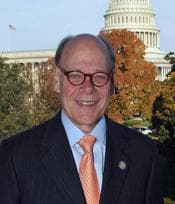
- Steve Cohen
- Cosponsors
- - 12 - 0
- Introduced
- In Committee
What this bill would do
The Complete Streets Act of 2025 requires every State to establish a complete streets program to fund design, construction, and technical assistance for local transportation projects. Under this bill, eligible local entities must adopt approved complete streets policies and prioritization plans to qualify for grants. The Secretary of Transportation must develop benchmarks, guidance, and new design standards for roads to safely accommodate all users, including pedestrians, bicyclists, and transit riders. States are required to set aside 5 percent of certain apportioned federal funds to carry out their complete streets programs. The legislation also updates federal accessibility standards to improve access for individuals with vision, hearing, cognitive, and language needs.
Yes· 3 of 31
Would people with disabilities be better off under this?+8
The bill mandates high accessibility standards for all mobility devices and users.
Does this expand the rights of people with disabilities?+7
The bill mandates accessibility standards for vision, hearing, cognitive ability, and language access.
Would people over 65 be better off under this?+6
The bill focuses on accessibility and safety for older individuals.
The opposite
No question was scored the opposite.
Who it would affect, and how
Potential Positive Impacts for People
-
Grants and Funding for Local Projects: Section 2(b)(1) and Section 2(g)(1) allow eligible local entities to seek and receive grants of up to $20,000,000 or 20 percent of a State's complete streets program funding for the design and construction of complete streets. This helps local communities improve their public roads and infrastructure.
-
Improved Safety for Vulnerable Road Users: Section 2(h) requires States to give priority in selecting grant projects to intersections and corridors where nonmotorized users face the highest risk and are most vulnerable. This aims to protect pedestrians and bicyclists.
-
Equitable Access for Underserved Communities: Section 2(b)(3)(E) sets a goal for the complete streets program to ensure that underserved municipalities, rural areas, Tribal communities, low-income people, and communities of color are served equitably. Additionally, Section 2(f)(2)(I) requires prioritization plans to improve connections and access to jobs and services for these groups.
-
Enhanced Accessibility Standards: Section 2(i) directs the Secretary of Transportation and the Attorney General to update regulations to adopt specific accessibility guidelines for pedestrian facilities. These new standards include provisions for vision, hearing, cognitive ability, and language access.
-
Dedicated Infrastructure and Design Standards: Section 4 adds new complete streets design standards under title 23, United States Code, which require dedicated and protected bike lanes, sidewalks, crosswalks, and proper lighting and signalization. This creates safer and more integrated travel options for all road users.
Potential Negative Impacts for People
-
Exclusion from Grant Programs: Section 2(e)(2)(B) states that if a State or metropolitan planning organization does not certify an eligible entity's complete streets policy, that entity is barred from participating in the grant program. This could deny funding to local communities whose policies fail to meet state or federal requirements.
-
Mandatory Funding Set-Asides: Section 2(j) mandates that each State must obligate 5 percent of specific apportioned federal highway funds to carry out its complete streets program. This restricts how States can allocate existing federal transportation dollars, potentially taking money away from other road projects.
Groups and Interests Ranking
Every group the model scored this bill for, from -10 to +10. Hover a score for the reason it gave.
- Demographic And Interest Groups
- Good For People With Disabilities+8Good For Retirees+6Good For Seniors+6Good For Children+5Good For Low Income Households+5Good For Native Americans+5Good For Urban Residents+5Good For African Americans+4Good For Hispanic Americans+4Good For Students+4Good For Immigrants+3Good For Middle Class Households+3Good For Rural Residents+3Good For Young Adults+3Good For Asian Americans+2Good For Business Owners+2Good For Farmers+2Good For Men+2Good For Middle Aged+2Good For White Americans+2Good For Women+2
- Environment Energy And Infrastructure
- Improves Public Transit+6Improves Roads And Bridges+5Improves Rural Development+3Reduces Carbon Emissions+3Improves Environmental Protections+2
- Social Issues And Justice
- Improves Disability Rights+7Improves Racial Equity+6Improves Poverty Reduction+4
- Governance And Ideology
- Increases Federal Power+2Improves Government Transparency+1
- 9/24/2026
- 1 Cosponsor added.
- 7/27/2026
- 1 Cosponsor added.
- 3/4/2026
- 1 Cosponsor added.
- 1/16/2026
- 1 Cosponsor added.
- 11/20/2025
- 1 Cosponsor added.
- 7/16/2025
- 1 Cosponsor added.
- 6/23/2025
- 1 Cosponsor added.
- 6/9/2025
- 1 Cosponsor added.
- 6/5/2025
- Referred to the Subcommittee on Highways and Transit.
- 6/4/2025
- Referred to the House Committee on Transportation and Infrastructure.
- 4 Cosponsors added.
- Introduced in House
One bill Congress.gov lists as related to this one — companions in the other chamber, earlier versions, and bills this one absorbed or was folded into.
 Jake Auchincloss
Democrat · Massachusetts
 Troy Carter
Democrat · Louisiana
 Adriano Espaillat
Democrat · New York
 Valerie Foushee
Democrat · North Carolina
 Josh Gottheimer
Democrat · New Jersey
 Jahana Hayes
Democrat · Connecticut
 Jonathan Jackson
Democrat · Illinois
 George Latimer
Democrat · New York
 Eleanor Norton
Democrat · District of Columbia
 Mary Gay Scanlon
Democrat · Pennsylvania
 Mike Thompson
Democrat · California
 Dina Titus
Democrat · Nevada