Bill · H.R. 3687· House(119-HR-3687)
To amend the Internal Revenue Code of 1986 to renew and enhance opportunity zones, and for other purposes.
- Introduced
- 6/3/2025
- Last activity
- 6/3/2025 — Referred to the House Committee on Ways and Means.
- Sponsored by
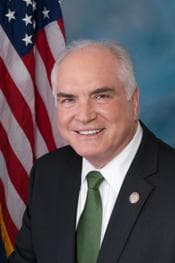
- Mike Kelly
- Cosponsors
- None
- Introduced
- In Committee
What this bill would do
This bill seeks to amend the Internal Revenue Code of 1986 to renew and enhance the opportunity zone program. It introduces a new round of qualified opportunity zone designations, which includes a specific focus on rural areas. The legislation modifies the definition of low-income communities and creates new incentives for investments made after 2026. It also establishes specific rules for "qualified rural opportunity funds" to encourage development in rural locations. Additionally, the bill implements new information reporting requirements for qualified opportunity funds and their associated businesses. Finally, it mandates annual public reporting by the Secretary of the Treasury regarding the impact and outcomes of these investments.
Yes· 3 of 16
Would people in rural areas be better off under this?+7
The bill specifically prioritizes rural areas with enhanced incentives and required proportions of designations.
Does this invest in rural communities?+6
The bill explicitly provides enhanced incentives for qualified rural opportunity funds to encourage development in rural areas.
Would high-income households be better off under this?+5
The bill provides significant tax incentives for investors in opportunity zones.
The opposite
No question was scored the opposite.
Who it would affect, and how
Potential Positive Impacts for People
-
Enhanced Incentives for Rural Development: The bill increases the basis adjustment for investments held for at least 5 years to 30 percent specifically for qualified rural opportunity funds, which is higher than the standard 10 percent increase (Section 1(c)(1)(vi)).
-
Support for Rural Areas: A portion of new opportunity zone designations must be comprised entirely of a rural area, ensuring that rural communities have access to these designated zones (Section 1(b)(2)(A)).
-
Incentives for Improving Existing Structures: The bill provides a rule for the adjusted basis of property in a qualified opportunity zone comprised entirely of a rural area, specifically including data centers (Section 1(c)(3)).
-
Increased Investment Opportunities: The bill allows for a new round of designations that can remain in effect from January 1, 2027, through December 31, 2033 (Section 1(b)(2)(4)).
-
Expanded Definition of Low-Income Communities: The bill modifies the definition of low-income communities by substituting '70 percent' for '80 percent' in certain applications (Section 1(a)(1)(2)).
Potential Negative Impacts for People
-
Penalties for Reporting Failures: Qualified opportunity funds that fail to file complete and correct returns face a penalty of $500 for each day the failure continues, with maximum penalties reaching up to $50,000, or $250,000 in cases of intentional disregard (Section 1(d)(2)(A)).
-
Restrictions on Certain Census Tracts: Certain population census tracts are disallowed from being considered low-income communities if the median family income reaches specific thresholds relative to statewide or metropolitan area medians (Section 1(a)(1)(C)).
Groups and Interests Ranking
Every group the model scored this bill for, from -10 to +10. Hover a score for the reason it gave.
- Demographic And Interest Groups
- Good For Rural Residents+7Good For Billionaires+5Good For High Income Households+5Good For High Net Worth Individuals+5Good For Ultra High Net Worth Individuals+5Good For Business Owners+4Good For Low Income Households+4Good For Urban Residents+2
- Economy And Finance
- Improves Economic Growth+5Reduces Capital Gains Tax+5Increases Job Creation+4Improves Small Business Support+3
- Social Issues And Justice
- Improves Poverty Reduction+4Improves Affordable Housing+3
- Environment Energy And Infrastructure
- Improves Rural Development+6
- Governance And Ideology
- Improves Government Transparency+5
- 6/3/2025
- Referred to the House Committee on Ways and Means.
- Introduced in House
One bill Congress.gov lists as related to this one — companions in the other chamber, earlier versions, and bills this one absorbed or was folded into.