Bill · H.R. 3658· House(119-HR-3658)
911 Community Crisis Responders Act of 2025
- Introduced
- 5/29/2025
- Last activity
- 5/29/2025 — Referred to the House Committee on Energy and Commerce.
- Sponsored by
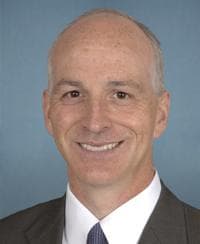
- Adam Smith
- Cosponsors
- - 8 - 1
- Introduced
- In Committee
What this bill would do
The ``911 Community Crisis Responders Act of 2025'' authorizes the Secretary of Health and Human Services to award grants to various government entities to establish unarmed mobile crisis response programs. These programs are designed to have unarmed professional service providers respond to nonviolent emergency calls instead of law enforcement agencies. The bill allows for the use of funds for hiring, training, and updating 911 response systems to include triage. Grantees must follow specific requirements, such as dispatching providers in groups of two or more and providing services like de-escalation and referrals. Recipients are also required to submit biannual reports to the Secretary regarding their activities and the populations served.
Yes· 3 of 20
Would people with disabilities be better off under this?+7
The bill provides specialized training and response for people with developmental or intellectual disabilities.
Does this change how police departments operate?+7
The bill reduces law enforcement involvement in nonviolent emergency calls by providing unarmed alternatives.
Does this make mental health care easier to get?+7
The bill specifically funds mobile crisis response for mental health, addiction, and developmental disabilities.
The opposite
No question was scored the opposite.
Who it would affect, and how
Potential Positive Impacts for People
-
Alternative Crisis Response: The bill allows nonviolent emergency calls to be handled by unarmed professional service providers instead of law enforcement agencies (Section 2(a)).
-
Comprehensive Care Services: Program requirements include providing screening, assessment, de-escalation, trauma-informed culturally competent services, and transportation to necessary treatment (Section 2(b)(2)).
-
Specialized Training: Funds can be used to train providers to understand and respond to signs of mental illnesses, physical disabilities, developmental or intellectual disabilities, and substance use disorders (Section 2(c)(2)).
-
Community Connections: The program aims to connect individuals to local service providers, including health care, housing, and community-based organizations (Section 2(c)(2)).
-
Improved Triage Systems: Funds can be used to update 911 response systems to help triage between nonviolent calls and those requiring law enforcement (Section 2(c)(3)).
-
Support for Diverse Needs: The bill includes provisions for building capacity to provide multilingual and culturally competent services (Section 2(c)(6)(B)).
Potential Negative Impacts for People
-
Lack of Oversight: The bill specifies that these unarmed mobile crisis response programs shall not be subject to oversight of State, Tribal, or local law enforcement agencies (Section 2(b)(4)).
-
Grant Limitations: Applicants that do not meet all the specified program requirements may not receive the full grant amount (Section 2(g)).
Groups and Interests Ranking
Every group the model scored this bill for, from -10 to +10. Hover a score for the reason it gave.
- Demographic And Interest Groups
- Good For People With Disabilities+7Good For Low Income Households+5Good For Native Americans+5Good For African Americans+4Good For Asian Americans+4Good For Hispanic Americans+4Good For L G B T Q Community+3Good For Urban Residents+3
- Social Issues And Justice
- Improves Policing Reform+7Improves Disability Rights+6Improves Racial Equity+4Improves Affordable Housing+3Reduces Homelessness+3
- Healthcare
- Improves Mental Health Access+7Improves Opioid Crisis Response+6Improves Healthcare Access+5Reduces Hospital Costs+3
- Governance And Ideology
- Improves Government Transparency+4Increases Federal Power+2
- Economy And Finance
- Increases Job Creation+3
- 3/24/2026
- 1 Cosponsor added.
- 7/17/2025
- 1 Cosponsor added.
- 6/23/2025
- 3 Cosponsors added.
- 5/29/2025
- Referred to the House Committee on Energy and Commerce.
- 4 Cosponsors added.
- Introduced in House
 Ed Case
Democrat · Hawaii
 Brian Fitzpatrick
Republican · Pennsylvania
 Ro Khanna
Democrat · California
 Eleanor Norton
Democrat · District of Columbia
 David Scott
Democrat · Georgia
 Marilyn Strickland
Democrat · Washington
 Rashida Tlaib
Democrat · Michigan
 Jill Tokuda
Democrat · Hawaii
 Bonnie Watson Coleman
Democrat · New Jersey