Bill · H.R. 3637· House(119-HR-3637)
Locally Led Restoration Act of 2025
- Introduced
- 5/29/2025
- Last activity
- 5/29/2025 — Referred to the Committee on Agriculture, and in addition to the Committee on Natural Resources, for a period to be subsequently determined by the Speaker, in each case for consideration of such provisions as fall within the jurisdiction of the committee concerned.
- Sponsored by
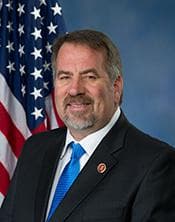
- Doug LaMalfa
- Cosponsors
- - 2 - 1
- Introduced
- In Committee
What this bill would do
The Locally Led Restoration Act of 2025 aims to amend several existing forest management laws. It updates the Healthy Forests Restoration Act of 2003 to include rules for third-party contracts regarding the removal of wildfire hazard fuel. These changes include specific requirements for salvage material and new notification processes for proposals. Additionally, the bill amends the National Forest Management Act of 1976 to adjust the threshold for advertised timber sales. This adjustment is intended to account for inflation.
Yes· 3 of 12
Does this better protect public land such as parks and forests?+3
The bill streamlines processes for private-public partnerships in forest stewardship and management.
Does this improve help for people hit by a disaster?+2
By facilitating fuel removal, the bill proactively reduces the severity of future wildfire disasters.
Would business owners be better off under this?+2
The bill provides more avenues for private and business entities to engage in forest stewardship projects.
The opposite
No question was scored the opposite.
Who it would affect, and how
Potential Positive Impacts for People
-
Increased opportunity for stewardship project proposals: The bill allows private persons or other public and private entities to submit proposals for stewardship contracting projects (Section 2(a)(9)(A)).
-
Greater transparency in the proposal process: If a proposal is denied, the response may include the specific factors that caused the denial and potential courses of action to overcome those issues (Section 2(a)(9)(B)(ii)).
-
Predictable response timelines: The Chief and the Director are required to provide a response to a submitted proposal no later than 120 days after receiving it (Section 2(a)(9)(B)(i)).
-
Adjusted thresholds for timber sales: The threshold for advertised timber sales is increased from $10,000 to $55,000 to reflect inflation (Section 3(b)(1)).
Potential Negative Impacts for People
-
Restrictions on where vegetation removal can occur: Contracts and agreements may not be carried out on acres included in the National Wilderness Preservation System, within inventoried roadless areas, or in areas where vegetation removal is prohibited by Federal statute (Section 2(a)(12)(B)).
-
Requirement for specific vegetation types: For a stewardship contracting project to be entered into, at least 10 percent of the vegetation proposed to be removed must be salvage, which includes wildfire kill, beetle kill, and dead or dying organic material (Section 2(a)(8)).
Groups and Interests Ranking
Every group the model scored this bill for, from -10 to +10. Hover a score for the reason it gave.
- Environment Energy And Infrastructure
- Improves Public Land Management+3Improves Disaster Relief And F E M A+2Improves Environmental Protections+1Improves Rural Development+1
- Demographic And Interest Groups
- Good For Business Owners+2Good For Rural Residents+2Good For Farmers+1
- Economy And Finance
- Improves Small Business Support+2Increases Job Creation+2Improves Economic Growth+1
- Governance And Ideology
- Improves Government Transparency+2Improves Due Process+1
- 6/10/2025
- 1 Cosponsor added.
- 5/29/2025
- Referred to the Committee on Agriculture, and in addition to the Committee on Natural Resources, for a period to be subsequently determined by the Speaker, in each case for consideration of such provisions as fall within the jurisdiction of the committee concerned.
- 2 Cosponsors added.
- Introduced in House
 Jim Costa
Democrat · California
 Earl Carter
Republican · Georgia
 Jeff Hurd
Republican · Colorado