
A Republican bill with 3 Republican cosponsors · See all 3 cosponsors
Last activity — Referred to the House Committee on Education and Workforce.
In committee
Introduced and handed to a committee in the chamber it started in.
The committee holds it, and most bills are never heard from again. A hearing or a committee vote would be news; silence is the usual outcome, and it kills the bill without anyone voting against it.
Its path through Congress
- Introduced
- In Committee
What this bill would do
This bill, known as the "TEENS Act," seeks to amend the Fair Labor Standards Act of 1938. The primary goal is to expand the working hours allowed for employees between the ages of 14 and 16. These changes would specifically apply during periods when schools are in session. Under this proposal, certain hour limits that might otherwise be considered oppressive child labor would be adjusted.
Yes· 3 of 9
- Scored +4
Would people in their twenties and thirties be better off under this?
Provides more opportunities for 14-16 year olds to earn income through increased working hours.
- Scored +3
Would business owners be better off under this?
Allows for more flexible and expanded labor usage for employees aged 14-16.
- Scored +3
Is this likely to create jobs?
The expansion of permissible working hours may increase employment opportunities and labor supply for teenagers.
The opposite
- Scored -2
Would children be better off under this?
The bill increases the work load for children/minors, which may impact their development or schoolwork.
- Scored -1
Would union members be better off under this?
Expanding youth work hours could potentially create downward pressure on wages or competition for older workers.
Who it would affect, and how
Potential Positive Impacts for People
- Expanded working hours for teenagers: The bill allows employees between the ages of 14 and 16 to work up to 24 hours in a week during school sessions (Section 2). This change is intended to expand working hours for this age group.
Potential Negative Impacts for People
- Restrictions on work start and end times: Employees between the ages of 14 and 16 would be subject to restrictions where they cannot begin work earlier than 7:00 a.m. or end work later than 9:00 p.m. (Section 2).
Groups and Interests Ranking
Every group the model scored this bill for, from -10 to +10. Tap or hover a score for the reason it gave.
- Demographic And Interest Groups
- Would people in their twenties and thirties be better off under this? — Provides more opportunities for 14-16 year olds to earn income through increased working hours. Would business owners be better off under this? — Allows for more flexible and expanded labor usage for employees aged 14-16. Would households on low incomes be better off under this? — Increased earning potential for teenagers can assist low-income family budgets. Would students be better off under this? — Allows students to work more hours during the school year to support themselves or their families. Would children be better off under this? — The bill increases the work load for children/minors, which may impact their development or schoolwork. Would union members be better off under this? — Expanding youth work hours could potentially create downward pressure on wages or competition for older workers.
- Economy And Finance
- Is this likely to create jobs? — The expansion of permissible working hours may increase employment opportunities and labor supply for teenagers. Does this make it easier to run a small business? — Increased flexibility in youth labor hours can provide more scheduling options for businesses. Is this likely to grow the economy? — Allowing more hours of work for the youth demographic can marginally contribute to economic activity.
- Governance And Ideology
- Does this give the federal government more power? — The bill amends a federal law (FLSA) to change labor standards.
- Social Issues And Justice
- Is this likely to lift people out of poverty? — Increased work hours may provide more income for working-age youth.
- 10/22/2026
- 1 Cosponsor added.
- 5/21/2025
- Referred to the House Committee on Education and Workforce.
- 2 Cosponsors added.
- Introduced in House
 Glenn Grothman
Republican · Wisconsin
 Tracey Mann
Republican · Kansas
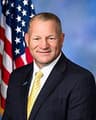 Troy Nehls
Republican · Texas